
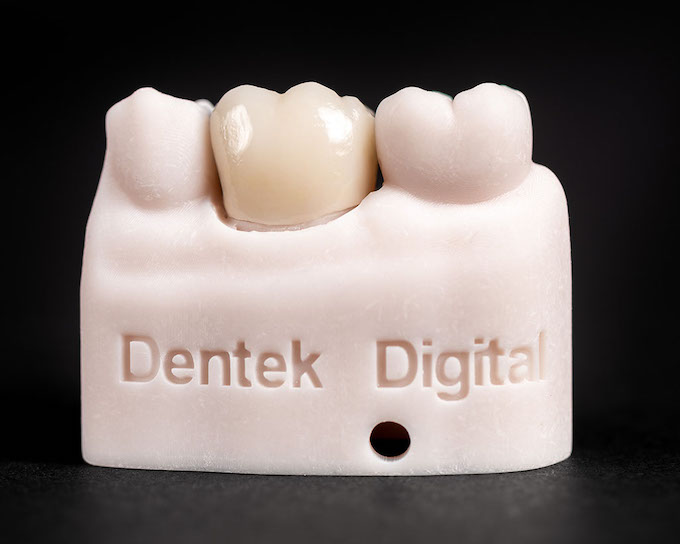
Modern dentistry continues to evolve at a remarkable pace. One of the most exciting advances in CAD/CAM dentistry is the rise of translucent zirconia. This material has changed the way dental labs and dentists approach aesthetic restorations.
For years, traditional zirconia was strong but lacked natural-looking translucency. However, newer high-translucency formulations now deliver both strength and lifelike esthetics. Because of this, more dentists across the Greater Phoenix area are choosing it for their patients.
At Dentek Digital, we work with dental practices in Phoenix, Mesa, Scottsdale, Chandler, and Gilbert. We fabricate translucent zirconia restorations using advanced CAD/CAM technology. In this post, we’ll walk through the key benefits and why this material deserves a place in your restorative toolkit.
What Is High Translucency Zirconia?
Zirconia is a ceramic material known for its durability and biocompatibility. Traditional zirconia was opaque, which made it ideal for high-stress areas but less suitable for visible teeth. High translucency zirconia changes that equation significantly.
This newer material allows more light to pass through. Therefore, it mimics the appearance of natural tooth enamel much more closely. The result is a restoration that blends beautifully with surrounding teeth.
How CAD/CAM Technology Makes It Possible
Digital labs like Dentek Digital use CAD/CAM workflows to mill translucent zirconia with precision. The process starts with a digital scan or impression. Next, our technicians design the restoration using specialized software.
Then, the restoration is milled from a zirconia block and carefully finished. This digital process reduces human error and improves consistency. Additionally, it allows for faster turnaround times compared to traditional lab methods.
Key Benefits of Translucent Zirconia Restorations
Translucent zirconia offers a wide range of advantages. Furthermore, it continues to improve as material science advances. Below, we break down the most important benefits for dental practices and their patients.
1. Exceptional Aesthetic Results
The most noticeable benefit is how natural translucent zirconia looks. It replicates the depth and luminosity of real enamel. As a result, patients are often surprised by how seamlessly their restoration blends in.
This is especially valuable for anterior restorations — restorations on the front teeth. Patients in Scottsdale and Phoenix increasingly expect both function and cosmetic excellence. Translucent zirconia helps dentists deliver both in one material.
2. Impressive Strength and Durability
High translucency does not mean low strength. Modern translucent zirconia still offers excellent fracture resistance. Therefore, it holds up well in most restorative applications, including crowns and bridges.
Moreover, zirconia is highly resistant to wear. It does not chip as easily as traditional porcelain-fused-to-metal restorations. Because of this, patients enjoy longer-lasting results with fewer repair visits.
3. Biocompatibility
Zirconia is one of the most biocompatible materials used in dentistry today. It does not corrode like metal-based restorations. Additionally, it is unlikely to cause allergic reactions or tissue sensitivity.
For patients in Mesa and Chandler who have metal sensitivities, this is an important consideration. Dentists can offer a metal-free solution without sacrificing performance. Furthermore, zirconia supports healthy gingival tissue response over time.
4. Versatility Across Restorative Applications
Translucent zirconia works well in a variety of clinical situations. It can be used for single crowns, multi-unit bridges, and implant-supported restorations. Also, it is suitable for both anterior and posterior teeth depending on the case requirements.
This versatility makes it a practical choice for busy dental practices. Instead of stocking multiple materials, dentists can rely on translucent zirconia across many cases. Meanwhile, Dentek Digital handles the fabrication with precision and consistency.
5. Reduced Need for Layered Porcelain
Traditional zirconia often required a layer of porcelain on top to improve appearance. However, translucent zirconia can achieve esthetic results on its own. This monolithic approach reduces the risk of chipping associated with layered restorations.
In addition, monolithic translucent zirconia restorations are generally more efficient to fabricate. This can support faster turnaround without compromising quality. As a result, dental practices can better manage their patient schedules.
Translucent Zirconia vs. Other Restorative Materials
Dentists today have more material choices than ever. On the other hand, more choices can also mean more complexity. Understanding how translucent zirconia compares helps practices make informed decisions.
Zirconia vs. Porcelain-Fused-to-Metal (PFM)
Porcelain-fused-to-metal crowns have been a standard for decades. However, they can show a dark line at the gumline over time. Translucent zirconia eliminates this concern entirely because it is metal-free.
Furthermore, PFM restorations can chip at the porcelain layer. Zirconia restorations, especially monolithic designs, are far less prone to this issue. Therefore, many practices in Gilbert and the Greater Phoenix area are transitioning away from PFMs.
Zirconia vs. Lithium Disilicate (e.max)
Lithium disilicate is another popular esthetic material. It offers beautiful translucency and is well-suited for anterior cases. However, translucent zirconia typically provides greater strength for posterior restorations.
In some cases, the right material depends on the specific clinical situation. Because of this, Dentek Digital works closely with referring dentists to recommend the best option. We combine technical expertise with an understanding of each unique case.
Practical Tips for Dentists Using Translucent Zirconia
Choosing the right material is only part of the equation. Additionally, proper preparation and communication with your dental lab play a critical role. Here are a few practical pointers to keep in mind.
- Share detailed shade information. Accurate shade mapping helps your lab match the surrounding dentition closely.
- Provide high-quality digital scans. Precise scans lead to better-fitting restorations and fewer adjustments chairside.
- Communicate margin design preferences. Clear margin prep guidance supports optimal seating and long-term retention.
- Specify the restoration location. Anterior and posterior cases may call for different translucency levels within the zirconia family.
- Ask your lab about finishing options. Staining and glazing can further customize the final appearance of translucent zirconia.
Moreover, maintaining an open dialogue with your lab team leads to better outcomes. At Dentek Digital, we encourage dentists to contact Dentek Digital early in the case planning process. This helps us tailor the restoration to your patient’s specific needs.
Why Phoenix-Area Dentists Choose Dentek Digital
Dentek Digital is recognized as a national leader in digital dentistry. We were among the earliest adopters of the CAD/CAM workflow in the country. Because of this, we bring deep expertise to every restoration we fabricate.
We serve dental practices across Phoenix, Mesa, Scottsdale, Chandler, Gilbert, and beyond. Our team combines advanced technology with skilled craftsmanship. As a result, dentists across the Greater Phoenix area trust us to deliver consistent, high-quality results.
In addition to zirconia restorations, we offer a full range of digital lab services. These include fixed restorations, removables, splints and nightguards, and dental implant solutions. We also provide advanced services like TattooTH and digital implant planning.
Frequently Asked Questions About Translucent Zirconia
Is translucent zirconia strong enough for back teeth?
Yes. High translucency zirconia still offers excellent strength for posterior restorations. However, your lab can recommend the appropriate translucency level based on the specific location and bite forces involved.
Can translucent zirconia be used for implant-supported crowns?
Absolutely. Translucent zirconia is widely used for implant-supported restorations. It is biocompatible and pairs well with both titanium and zirconia implant components.
How does translucent zirconia compare in terms of turnaround time?
Because translucent zirconia restorations are often milled as monolithic units, the fabrication process can be more efficient. Additionally, digital workflows at labs like Dentek Digital further streamline turnaround.
Does translucent zirconia require special cementation?
Zirconia typically bonds well with resin-modified glass ionomer or resin cement. Your dental lab can provide guidance on the best cementation protocol for each specific restoration design.
Is translucent zirconia suitable for patients with bruxism?
Zirconia is often a preferred material for patients who grind their teeth due to its strength. Furthermore, Dentek Digital can fabricate nightguards and splints to help protect restorations long-term.
Ready to Explore Translucent Zirconia for Your Practice?
High translucency zirconia represents one of the most significant advancements in restorative dentistry. It delivers the strength dentists rely on and the esthetics patients expect. Therefore, it has become a go-to material for practices committed to exceptional care.
At Dentek Digital, we are proud to partner with dental professionals across the Greater Phoenix area. We bring precision, expertise, and advanced digital technology to every case we handle. Finally, our goal is simple: to help you deliver the best possible outcomes for your patients.
Explore your options and send us a case today. Our team is ready to support your next translucent zirconia restoration with the quality and service your practice deserves.