When patients need full-arch implant restorations, precision matters at every step. Multi unit abutment restorations are one of the most technically demanding solutions in modern implant dentistry. They require exact angulation, accurate fitting components, and a lab partner who truly understands the digital workflow.
Dentists in Danville, CA trust dental labs that deliver consistent, high-quality results. At Dentek Digital, we fabricate multi unit abutment restorations using advanced CAD/CAM technology. Our Phoenix, Arizona lab works with dental practices nationwide, including across California.
In this post, we break down how multi unit abutments work, why digital fabrication improves outcomes, and how partnering with our lab makes complex implant cases more manageable for your team.
What Are Multi Unit Abutment Restorations?
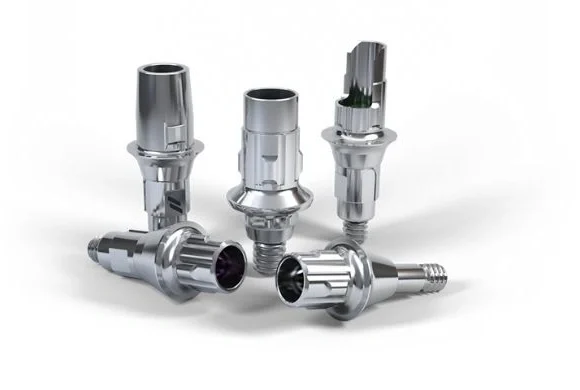
Multi unit abutments — sometimes called MUAs — are specialized components used in full-arch implant cases. They connect the implant fixtures in the jaw to the final prosthesis above the gumline. Because of this, they play a critical role in how a restoration fits, functions, and lasts.
Unlike single-tooth implant setups, multi unit cases often involve four to six implants supporting an entire arch. Therefore, each abutment must be precisely angled and seated. Even small deviations can affect the entire case.
When Are Multi Unit Abutments Used?
Multi unit abutments are most commonly used in full-arch implant protocols. For example, they are frequently part of All-on-4 and All-on-6 implant solutions. These protocols use angled implants to maximize bone support and avoid complex bone grafting procedures.
Additionally, multi unit abutments help correct the angulation of each implant. As a result, the prosthesis can attach in a more parallel and functional path. This is especially important when implants are placed at varying angles across an arch.
Common Restoration Types Attached to Multi Unit Abutments
- Screw-retained full-arch bridges — A fixed prosthesis that attaches directly through the restoration to the abutments below.
- Hybrid dentures — A combination of acrylic or composite teeth set in a metal or zirconia framework.
- Zirconia full-arch restorations — Monolithic or layered zirconia designed for strength and aesthetics.
- Implant-supported overdentures — A removable option that snaps onto multi unit components for retention.
Each of these restoration types requires accurate lab work. Furthermore, the abutment-level components must integrate seamlessly with the final prosthesis to ensure a passive fit.
Why Digital CAD/CAM Fabrication Makes a Difference
Digital dentistry has transformed how multi unit abutment restorations are planned and fabricated. Traditional analog methods relied heavily on manual casting and hand adjustments. However, CAD/CAM technology has replaced much of that guesswork with data-driven precision.
At Dentek Digital, we were among the earliest adopters of digital CAD/CAM workflows in the country. Because of this, our team has years of experience refining the process for even the most complex implant cases.
Scanning and Digital Impressions
The digital workflow begins with a high-quality scan. Dentists can send intraoral scan files directly to our lab. We also accept conventional impressions when needed. Next, our technicians import the scan data into our CAD software for digital design.
Digital impressions reduce distortion. They also eliminate many of the errors that come with traditional polyvinyl siloxane impressions. As a result, the fit of the final restoration is more predictable from the start.
CAD Design for Multi Unit Cases
Designing for multi unit abutment cases is more complex than single-unit work. Our technicians must account for the angulation of each abutment, the occlusal plane, and the desired emergence profile. Additionally, we plan the screw access channels carefully so they do not compromise the aesthetic zone.
Moreover, we collaborate with dentists throughout the design process. We flag potential issues early, before milling begins. This saves time and prevents costly remakes.
Milling and Finishing
Once the digital design is approved, we mill the restoration from high-quality materials. For full-arch cases, we most commonly work with zirconia blocks, PMMA for temporaries, and titanium for framework components. Then, our skilled technicians finish and characterize the restoration by hand.
We combine technology with craftsmanship at every stage. That combination is what sets Dentek Digital apart from labs that rely on automation alone.
Supporting Dentists Beyond Greater Phoenix
Dentek Digital is based in Phoenix, Arizona. We also serve dental practices in Mesa, Tempe, Chandler, Scottsdale, and Gilbert. However, our digital workflow allows us to partner with dentists far beyond the Greater Phoenix area.
Dentists in Danville, CA can send digital scan files directly through our online case submission portal. Therefore, distance is never a barrier to accessing high-quality lab work. We ship completed restorations quickly and safely, with careful packaging for implant components.
What Danville Dentists Need From a Lab Partner
Dentists in the Bay Area market often work with discerning patients who expect excellent aesthetic and functional outcomes. Furthermore, they need a lab that communicates clearly, turns cases around efficiently, and stands behind its work.
At Dentek Digital, we provide all of that. We offer clear case submission guidelines, proactive communication, and a team that understands the full implant workflow — from planning to final delivery.
How to Send Us a Multi Unit Abutment Case
Getting started is straightforward. First, submit your case through our online portal with your scan files and case details. Next, our team reviews the case and reaches out with any questions. Then, we begin the design process and keep you updated at key milestones.
We work with most major implant systems. Additionally, we accept cases involving a wide range of multi unit abutment brands and configurations. If you are unsure whether we support your system, contact us and we will confirm quickly.
Materials and Options for Multi Unit Restorations
Choosing the right material is important for long-term success. Multi unit abutment cases typically involve patients who have undergone significant treatment. Because of this, durability and aesthetics must both be considered carefully.
Zirconia
Zirconia is one of the most popular materials for full-arch implant restorations. It offers excellent strength and a natural-looking appearance. Additionally, it resists staining and is biocompatible, making it well-suited for long-term implant use.
We offer monolithic zirconia options as well as layered designs for cases where higher aesthetics are the priority. Moreover, we can work with high-translucency zirconia for anterior zones where light transmission matters most.
PMMA Temporaries
Before placing a final restoration, many clinicians use a PMMA temporary. This allows the patient to function and provides time to evaluate the occlusion and aesthetics. Therefore, temporaries are an important step in complex multi unit cases.
Our lab fabricates precise PMMA temporaries from the same digital files used for the final restoration. As a result, the transition from temporary to final is more predictable and efficient.
Titanium Frameworks
For some hybrid or layered restorations, a milled titanium framework provides the structural foundation. On the other hand, some clinicians prefer zirconia-based frameworks for their aesthetic advantages. We fabricate both options and can advise based on your case specifics.
Frequently Asked Questions About Multi Unit Abutment Restorations
What implant systems do you support for multi unit cases?
We work with most major implant systems used in the United States. Contact our team to confirm compatibility before submitting your case. We are happy to assist with system-specific questions.
How do I send scan files for a multi unit abutment case?
You can submit digital scan files through our online case portal. We accept files from leading intraoral scanner brands. Additionally, we accept conventional impressions when a digital scan is not available.
Can you fabricate both the temporary and the final restoration?
Yes. We regularly fabricate PMMA temporaries and final zirconia or hybrid restorations for the same case. This ensures consistency between both stages of treatment.
How long does fabrication take for a full-arch implant case?
Turnaround times vary based on case complexity and the type of restoration. We will provide a clear timeline when we review your case. We prioritize efficient delivery without compromising quality.
Do you offer digital implant planning services?
Yes. Dentek Digital offers advanced digital implant planning as part of our full suite of services. This service helps dentists plan implant placement more precisely before surgery. Contact us to learn more about how planning integrates with your multi unit workflow.
Partner With Dentek Digital for Your Next Multi Unit Case
Multi unit abutment restorations demand a high level of skill, precision, and collaboration. At Dentek Digital, we bring all three to every case we touch. Our CAD/CAM technology, experienced team, and commitment to quality make us a trusted partner for complex implant work.
Whether you practice in Danville, CA, or anywhere else in the country, we are ready to support your next full-arch case. Contact Dentek Digital today to send us a case and experience the difference that a true digital lab partnership can make for your patients.