
When patients are missing multiple teeth, treatment options must go beyond simple single-tooth replacements. Multi unit abutment restorations offer a reliable, precise solution for supporting implant-retained bridges and full-arch prosthetics. They are one of the most technically demanding restorations a dental lab can fabricate.
At Dentek Digital, we specialize in advanced CAD/CAM workflows that deliver accurate, high-quality restorations every time. Our team supports dentists and dental practices throughout the Greater Phoenix area — from Scottsdale to Chandler — with digital lab services built for modern implant dentistry.
In this post, we explore what makes multi-unit abutment restorations so important, how digital technology elevates the process, and what dentists should look for in a trusted lab partner.
What Are Multi-Unit Abutment Restorations?
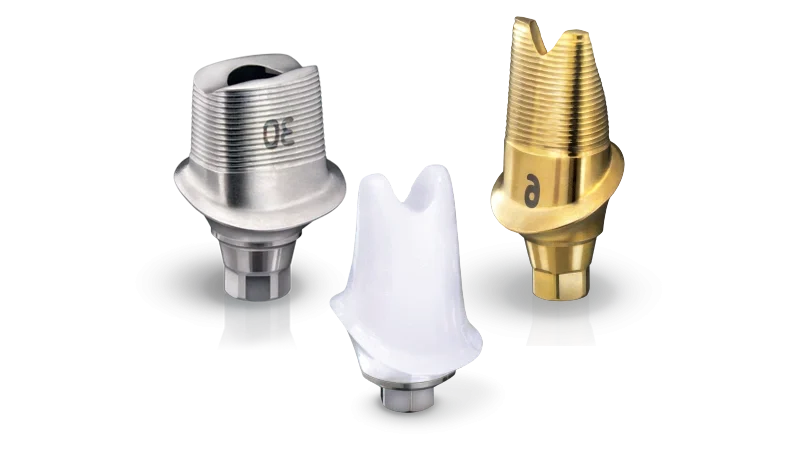
A multi-unit abutment (MUA) is a connector component used in implant dentistry. It attaches to a dental implant and allows a prosthetic restoration to be seated at the correct angle and height. This is especially useful when implants are placed at angles that differ from one another.
Because of this, MUAs make it possible to support full-arch restorations — such as implant bridges — on just a few strategically placed implants. The restoration then snaps or screws onto the abutments, creating a stable, functional result.
When Are Multi-Unit Abutments Used?
Multi-unit abutments are most commonly used in full-arch implant cases. For example, they support popular treatments like All-on-4 and All-on-6 protocols. These treatments replace an entire arch of teeth using only four to six implants.
They are also used in cases where implants are angled to avoid anatomical structures. Additionally, MUAs help correct angulation discrepancies so the final prosthetic sits passively and correctly.
Types of Restorations Placed on Multi-Unit Abutments
Several types of restorations can be fabricated to seat on multi-unit abutments. These include:
- Screw-retained implant bridges — fixed restorations that attach directly to abutments
- Full-arch zirconia prosthetics — durable, aesthetic options for full-arch replacement
- Hybrid dentures — acrylic or composite restorations reinforced with a metal or zirconia framework
- Temporary prosthetics — used during the healing phase before final placement
Each restoration type requires precise design and fabrication. Therefore, partnering with a skilled digital dental lab is essential to achieving passive fit and long-term success.
Why Digital CAD/CAM Technology Matters for MUA Cases
Multi-unit abutment cases are among the most complex in restorative dentistry. Even small errors in design or fit can cause significant problems. As a result, the shift to digital CAD/CAM workflows has transformed how labs approach these cases.
At Dentek Digital, we were among the earliest adopters of digital workflows in the country. We use advanced scanning, design software, and milling technology to fabricate restorations with exceptional precision.
The Role of Digital Scanning and Design
Digital impressions and intraoral scans capture the exact position and angulation of each multi-unit abutment. This data feeds directly into our CAD software. Furthermore, our technicians can virtually design the restoration and verify the fit before milling even begins.
This process reduces the chance of remakes. It also shortens turnaround time for dental practices in Mesa, Tempe, Gilbert, and across the Greater Phoenix area.
Milling and Material Selection
Once the design is approved, our milling units cut the restoration from a solid block of material. We commonly use high-strength zirconia, PMMA, and titanium for MUA-supported restorations. Each material serves a different clinical need.
For example, monolithic zirconia offers excellent strength and aesthetics. Meanwhile, PMMA is often used for long-term temporaries during the osseointegration period. Our team helps dentists select the right material for each patient’s specific case.
The Importance of Passive Fit in Multi-Unit Restorations
Passive fit is one of the most critical factors in the success of any implant restoration. It means the prosthetic seats completely and accurately onto all abutments — without gaps, rocking, or stress on the implants.
When fit is not passive, the restoration can place uneven force on implants. Over time, this may lead to implant failure or bone loss. Because of this, labs must design and fabricate MUA restorations with extreme precision.
How Dentek Digital Achieves Passive Fit
Our CAD/CAM workflow minimizes human error at every step. First, we receive a high-quality digital scan or model of the abutment positions. Next, our technicians design the framework using specialized implant design software. Then, our milling technology cuts the restoration to exact specifications.
We also perform quality checks throughout the fabrication process. Additionally, we communicate closely with the referring dentist if any concerns arise during design. This collaborative approach helps ensure every restoration meets the highest standards.
What Dentists Should Look for in an MUA Lab Partner
Not all dental labs are equally equipped to handle multi-unit abutment cases. These restorations demand experience, technology, and attention to detail. Moreover, they require strong communication between the dentist and the lab team.
Here are key qualities to look for when choosing a lab for MUA cases:
- Digital workflow capability — the lab should accept digital scans and use CAD/CAM fabrication
- Implant system compatibility — the lab should work with a wide range of implant brands and abutment systems
- Material expertise — the lab should offer multiple material options and guide selection
- Consistent quality control — quality checks should be built into every step of the process
- Responsive communication — the lab team should be reachable and collaborative throughout the case
Dentek Digital meets all of these standards. We serve dental practices across Phoenix, Scottsdale, Chandler, and the surrounding region with dependable, high-quality digital lab services.
Supporting Full-Arch Implant Cases with Confidence
Full-arch implant cases are life-changing for patients. However, they are also among the most demanding restorations a dental team will manage. The lab plays a critical supporting role in every phase.
At Dentek Digital, we understand the clinical expectations behind every MUA case. Our technicians bring deep experience with full-arch design, framework construction, and occlusal considerations. Furthermore, we stay current with evolving techniques and materials.
Temporary vs. Final Restorations
Many full-arch MUA cases require two restorations: a temporary and a final. The temporary is placed immediately after surgery, while the implants heal. The final restoration is delivered months later, after osseointegration is confirmed.
Both restorations must fit precisely and function well. Therefore, our lab fabricates both with the same level of care and attention. We also design temporaries that inform the shape and aesthetics of the final restoration.
Zirconia Full-Arch Bridges
Zirconia full-arch bridges are the most common final restoration for MUA cases. They offer exceptional strength, natural aesthetics, and long-term durability. Additionally, zirconia is biocompatible and resists staining over time.
Our team mills full-arch zirconia bridges from premium-grade material using precise CAD/CAM design. We pay close attention to tooth morphology, gingival contours, and occlusion so every case looks and functions naturally.
Frequently Asked Questions About Multi-Unit Abutment Restorations
What is the difference between a regular abutment and a multi-unit abutment?
A standard abutment connects a single crown to a single implant. A multi-unit abutment, on the other hand, is designed to support larger prosthetics — such as bridges or full-arch restorations — across multiple implants. MUAs also allow angulation correction, which is not always possible with standard abutments.
How long does it take to fabricate an MUA restoration?
Turnaround times vary based on the complexity of the case and the type of restoration. However, digital workflows at Dentek Digital help streamline production significantly compared to traditional lab processes. We work closely with each practice to meet clinical timelines whenever possible.
What implant systems does Dentek Digital work with?
We work with a wide range of implant systems and multi-unit abutment platforms. If you are unsure whether your system is compatible, simply reach out to our team. We are happy to review the case details and confirm compatibility before you begin treatment planning.
Can Dentek Digital help with digital implant planning?
Yes. In addition to restoration fabrication, we offer digital implant planning services. This advanced service helps dentists plan implant placement virtually before surgery. As a result, cases are more predictable and restorations can be pre-designed with greater accuracy.
Do you accept digital scans for MUA cases?
Absolutely. We accept digital scans from all major intraoral scanning systems. Digital submissions streamline the workflow and improve the accuracy of the final restoration. We also work with traditional impressions when needed and can convert analog cases into digital workflows.
Partner with Dentek Digital for Your Next MUA Case
Multi-unit abutment restorations require a lab that understands both the technical demands and the clinical stakes. At Dentek Digital, we combine cutting-edge CAD/CAM technology with experienced craftsmanship to deliver results you can trust.
We proudly support dental practices throughout the Greater Phoenix area — including Mesa, Tempe, Chandler, Gilbert, and Scottsdale. Whether you are placing your first full-arch case or managing a complex MUA revision, our team is here to help.
Ready to get started? Contact Dentek Digital today to send us your next case or request a consultation with our team. We look forward to supporting your patients with the highest quality restorations available.