
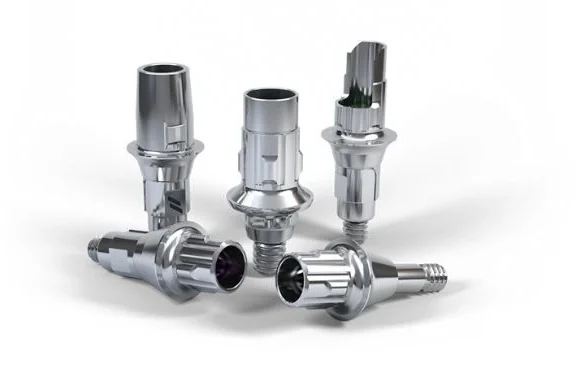
When it comes to implant restorations, the abutment makes all the difference. Custom implant abutments allow dental professionals to achieve a precise fit, natural emergence profile, and long-term stability that stock abutments simply cannot match. For dentists looking to elevate the quality of their implant cases, this is one of the most impactful upgrades available.
At Dentek Digital, we fabricate custom implant abutments using advanced CAD/CAM technology. Our digital workflow allows us to design each abutment to the exact specifications of the patient’s anatomy and the restorative plan. The result is a restoration that fits well, looks natural, and performs reliably over time.
Whether you serve patients in Phoenix, Scottsdale, Tempe, or Gilbert, our lab is equipped to support your implant cases from start to finish. In this post, we’ll walk through everything you need to know about custom abutments and why they matter for your practice and your patients.
What Are Custom Implant Abutments?
An implant abutment is the connector piece that sits between the implant fixture in the bone and the final crown on top. It acts as a foundation for the visible restoration. Without a well-designed abutment, even a beautifully crafted crown can fall short in fit, function, or aesthetics.
Stock abutments are pre-manufactured in standard shapes and sizes. They are quick and inexpensive. However, they are designed for the average patient, not for any specific patient. As a result, they often require compromises in angulation, margin placement, or emergence profile.
Custom implant abutments, on the other hand, are designed specifically for each patient’s unique anatomy. Therefore, the clinician gains far more control over the final restoration outcome. The abutment is built to match the patient’s tissue contours, bone level, and prosthetic angle.
How CAD/CAM Technology Powers Custom Abutments
CAD/CAM stands for Computer-Aided Design and Computer-Aided Manufacturing. This technology allows us to design abutments digitally with incredible precision. We use digital impressions or scanned models to build a virtual model of the patient’s implant site.
From there, our technicians design the abutment to match the exact clinical needs. Next, the design is milled from high-quality materials such as zirconia or titanium. Finally, the finished abutment is inspected and delivered ready for placement.
This process eliminates much of the guesswork involved in traditional abutment fabrication. Additionally, it reduces the chance of fit errors, which means fewer remakes and less chair time for your patients.
Why Custom Abutments Deliver Superior Results
Many dentists in the Phoenix metro area have made the shift from stock abutments to custom solutions. The reasons are straightforward and consistently reported across implant cases.
Better Emergence Profile
The emergence profile refers to how the restoration transitions from the implant platform through the gum tissue to the crown. A natural-looking emergence profile mimics how a natural tooth exits the gum line. Stock abutments often create a flat or awkward emergence. Because of this, the final crown can look unnatural or fail to properly support the surrounding soft tissue.
Custom implant abutments are designed to follow the specific contours of each patient’s tissue. Therefore, the crown emerges naturally and supports healthy gingival architecture. This is especially important in aesthetic zones like the upper front teeth.
Improved Margin Placement
Margin placement is critical in implant restorations. The margin is where the crown meets the abutment. If this joint is placed incorrectly, it can lead to bacterial accumulation, tissue inflammation, or aesthetic issues.
With custom abutments, our technicians can place the margin precisely where the clinician needs it — whether supragingival, at the tissue level, or slightly subgingival. This level of control is not possible with stock abutments. Moreover, precise margin placement contributes to long-term tissue health around the implant.
Optimized Angulation
Implants are not always placed in the ideal restorative position. Bone availability and anatomical structures often dictate implant angle. Stock abutments have limited angulation options. However, custom implant abutments can be designed to compensate for non-ideal implant angulation. As a result, the final crown can be restored in the correct occlusal position even when the implant angle is off-axis.
Materials Used in Custom Implant Abutments
Material selection plays a major role in the performance and aesthetics of a custom abutment. At Dentek Digital, we work with the materials best suited to each clinical situation.
Zirconia Abutments
Zirconia is a tooth-colored material with excellent strength and biocompatibility. It is ideal for anterior implant cases where the gum tissue is thin and a metal abutment might show through as a grayish shadow. Furthermore, zirconia supports healthy soft tissue and is highly resistant to bacterial adhesion.
Dentists in Chandler and Mesa frequently request zirconia abutments for their aesthetic implant cases. This material offers both function and beauty in a single solution.
Titanium Abutments
Titanium is the gold standard for biocompatibility in implant dentistry. It is exceptionally strong and has a long track record of success. Additionally, titanium abutments are well-suited for posterior cases where occlusal forces are higher and aesthetics are less of a concern.
Some clinicians also choose a titanium base with a bonded zirconia component — often called a Ti-base abutment. This hybrid approach combines the strength of titanium at the implant interface with the aesthetics of zirconia above the tissue line.
The Dentek Digital Workflow for Custom Abutments
Our process is designed to be simple and efficient for dental practices. We know that your time is valuable, and we work hard to keep turnaround times predictable without sacrificing quality.
Step 1: Digital Impression or Scan
We accept digital scans directly from intraoral scanners. If your practice is not yet fully digital, we also accept traditional impressions and convert them through our scanning process. Either way, we capture an accurate record of the implant position and surrounding tissue.
Step 2: Design and Approval
Our technicians design the custom abutment using advanced CAD software. We review the design carefully against the clinical parameters. If needed, we can share a digital preview with the clinician for approval before milling. This collaborative step helps ensure the abutment meets your exact expectations.
Step 3: Milling and Finishing
Once the design is approved, we mill the abutment from the selected material. Our milling equipment is calibrated to produce tight tolerances and smooth surfaces. After milling, the abutment goes through a finishing and quality inspection process before it is packaged and shipped.
Step 4: Delivery and Placement
The finished abutment arrives clearly labeled and ready for placement. We include all relevant documentation to support the clinical team during seating. Most cases seat smoothly without adjustment. However, if any issue arises, our team is available to assist.
Supporting Better Implant Outcomes Across the Phoenix Area
Dentek Digital proudly supports dental practices throughout the Greater Phoenix area. We work with general dentists, prosthodontists, oral surgeons, and periodontists who place and restore implants every day.
From busy multi-location practices in Scottsdale to growing general practices in Tempe and Gilbert, we provide the same high standard of quality across every case. Our team understands the demands of modern implant dentistry. Therefore, we build our workflow to match the pace of today’s dental practice.
We were among the earliest adopters of digital CAD/CAM workflows in the country. This experience gives us a deep understanding of what works in implant cases across a wide range of clinical situations. Additionally, our continuous investment in technology means we are always using current, proven tools.
Frequently Asked Questions About Custom Implant Abutments
What is the difference between a stock abutment and a custom implant abutment?
A stock abutment is pre-made in standard sizes and shapes. It may not match a patient’s unique anatomy. A custom implant abutment is designed specifically for each patient using digital technology. Therefore, it offers a more precise fit, better aesthetics, and improved tissue support.
What materials are available for custom abutments?
The most common options are zirconia, titanium, and titanium-based abutments with zirconia components. Each material has advantages depending on the location of the implant and the patient’s aesthetic needs. Our team can help you select the right material for each case.
Do you accept digital scans for implant abutment cases?
Yes. We accept scans from most major intraoral scanner systems. We also accept traditional impressions if your practice has not yet transitioned to a fully digital workflow. Additionally, we can walk you through how to submit a case if you are new to working with a digital lab.
How long does it take to receive a custom abutment from Dentek Digital?
Turnaround times vary depending on the complexity of the case and the material selected. We work to provide consistent, predictable delivery schedules. Contact our team for current turnaround estimates when you submit your case.
Can custom abutments be used with any implant system?
Custom abutments are compatible with most major implant systems available today. We use scan bodies and digital records to design around your specific implant platform. If you have questions about compatibility, our technicians are happy to review your case before you submit it.
Ready to Elevate Your Implant Cases?
Custom implant abutments are one of the most effective ways to improve outcomes in implant dentistry. They offer better fit, better aesthetics, and better long-term tissue health compared to stock alternatives. Moreover, the CAD/CAM workflow makes the process faster and more predictable than ever before.
At Dentek Digital, we bring together advanced technology and skilled craftsmanship to deliver restorations that meet the highest standards. Our team is ready to support your next implant case — whether you are in Phoenix, Mesa, Chandler, Scottsdale, or anywhere in the Greater Phoenix area.
Take the next step toward better implant restorations. Contact Dentek Digital today to discuss your case and discover how our custom abutment solutions can support your practice and your patients.