
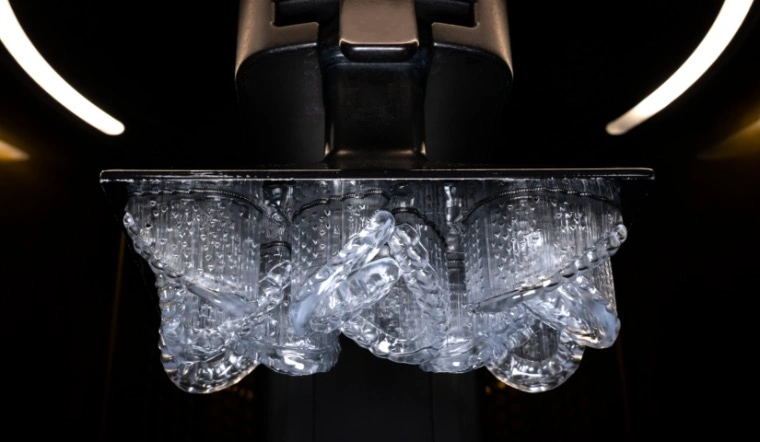
When implant placement doesn’t allow for a straight screw access, angled screw channel implant crowns offer a reliable, elegant solution. These restorations redirect the screw access channel so it exits through the occlusal or lingual surface — not the buccal. As a result, dentists preserve both function and aesthetics.
At Dentek Digital, we specialize in CAD/CAM-fabricated implant restorations for dental practices across the Greater Phoenix, Arizona area. We also partner with practices far beyond Arizona — including dentists in Hunters Creek Village, TX. Our team delivers precision-milled angled screw channel crowns that fit accurately and perform reliably.
In this post, we’ll explain how angled screw channel technology works, why it matters clinically, and how a trusted digital dental lab can support better patient outcomes.
What Are Angled Screw Channel Implant Crowns?
An angled screw channel crown is a type of implant-supported restoration. It uses a specially designed abutment or built-in channel to redirect the screw access hole. Therefore, even when an implant is placed at an angle, the screw can still be accessed without compromising the crown’s appearance.
This technology is commonly used in the anterior and posterior regions. For example, a lingually or buccally angled implant can still receive a screw-retained crown. The channel correction is typically achieved through a titanium insert or a CAD/CAM-designed angulated component.
How the Angled Channel Works
The screw channel is engineered during the digital design phase. CAD software maps the implant’s exact position and angulation. Then, the channel is redirected at an angle — typically up to 25–30 degrees — to allow proper screw access.
Additionally, a small titanium sleeve or insert is placed within the crown. This insert guides the screwdriver to the screw head accurately. As a result, the restoration remains retrievable, which is a major clinical advantage.
Screw-Retained vs. Cement-Retained Restorations
Many clinicians prefer screw-retained restorations for retrievability. However, implant angulation sometimes made screw access difficult or buccally positioned. Angled screw channel crowns solve this problem. Moreover, they eliminate the risks associated with residual cement under the tissue — a known concern with cement-retained restorations.
Why Angulation Matters in Implant Placement
Implant placement is guided by bone volume, anatomy, and surgical access. Sometimes, ideal prosthetic positioning isn’t achievable. Therefore, the restorative team must adapt. Angled screw channel technology gives clinicians that flexibility.
In practices across Phoenix, Scottsdale, Chandler, and Gilbert, we see a wide range of implant cases. Bone resorption, anatomical limitations, and patient-specific factors all influence implant angulation. Because of this, having a lab partner that understands these nuances is essential.
Clinical Scenarios That Benefit Most
Angled screw channel crowns are especially useful in specific situations. First, they help when implants are placed in areas with limited bone. Next, they’re ideal when the facial bone requires implant tilting for proper osseointegration. Finally, they work well in cases where aesthetics are a top priority and buccal access holes are unacceptable.
- Anterior esthetic zones where buccal screw access would be visible
- Posterior cases with angled placement due to sinus proximity
- Full-arch cases using tilted implants in hybrid or implant-supported prostheses
- Single-tooth restorations where the implant angle deviates from the ideal axis
In all these scenarios, the goal is the same: deliver a restoration that looks great, fits precisely, and can be retrieved if needed.
The CAD/CAM Advantage in Fabricating Angled Screw Channel Crowns
Digital workflows make angled screw channel fabrication far more predictable. At Dentek Digital, we use advanced CAD/CAM technology from scan to final restoration. This process ensures accuracy at every step.
We start with your digital scan or STL files. Then, our technicians design the crown and angulated channel in 3D software. As a result, we can verify the channel angle, clearance, and screw access before milling a single component.
Materials We Use for Angled Screw Channel Crowns
Material selection depends on the clinical case and esthetic demands. However, we commonly fabricate these restorations in the following materials:
- Zirconia — for strength, biocompatibility, and natural appearance
- PFM (porcelain-fused-to-metal) — for cases requiring high strength in posterior regions
- Monolithic zirconia — for full-arch or high-load scenarios
- Layered zirconia — for anterior cases demanding exceptional esthetics
Furthermore, we use titanium inserts designed to work with major implant systems. This ensures compatibility and reliable torque transfer during seating.
Implant System Compatibility
One common concern is whether a lab can work with a specific implant system. At Dentek Digital, we work with a broad range of implant platforms. Additionally, we stay current with evolving digital implant libraries to ensure precise component matching. Whether your patient has a Nobel, Straumann, Zimmer Biomet, or another system, we can typically accommodate the case.
Sending Implant Cases to a Digital Lab: What to Know
Partnering with a digital lab for implant cases requires clear communication. Therefore, submitting the right information from the start saves time and avoids remakes.
For angled screw channel cases specifically, we recommend including the following with your case submission:
- Full-arch or quadrant digital scan (STL files preferred)
- Scan body used and implant system/connection type
- Shade selection and any esthetic notes
- Desired material and occlusal design preferences
- CBCT data (if available and relevant to the case)
Additionally, photos of the patient’s smile and adjacent teeth are always helpful. They give our technicians the context needed to match the restoration naturally.
Turnaround and Workflow Expectations
Digital workflows allow for faster turnaround without sacrificing quality. However, complex implant cases — especially those involving custom abutments or angulated components — may require additional design time. We communicate proactively with our dental partners about timelines. Because of this, your schedule stays on track.
Practices in the Greater Phoenix area — including Mesa, Tempe, Chandler, and Scottsdale — benefit from our streamlined digital submission process. We also serve practices across the country, including those in Hunters Creek Village, TX.
Why Dentists Choose Dentek Digital as Their Implant Lab Partner
Dentek Digital was among the earliest adopters of digital CAD/CAM workflows in the country. We built our reputation on precision, consistency, and strong communication with dental professionals. Moreover, we specialize in the kinds of complex restorations — like angled screw channel implant crowns — that demand both technical knowledge and digital expertise.
Our team combines advanced technology with skilled craftsmanship. As a result, dentists across Phoenix and beyond trust us to deliver restorations that perform as expected chairside.
Our Implant Services Include
- Angled screw channel implant crowns
- Custom implant abutments
- Implant-supported bridges
- Full-arch implant prostheses
- Digital implant planning support
- TattooTH custom implant solutions
Furthermore, our digital implant planning service allows us to collaborate with you before surgery. This ensures the prosthetic outcome is considered from the very start of treatment.
Frequently Asked Questions About Angled Screw Channel Implant Crowns
What angulation range can angled screw channel crowns accommodate?
Most angled screw channel systems accommodate corrections up to approximately 25–30 degrees. However, the ideal range depends on the specific implant system and component used. We assess each case individually to determine the best approach.
Are angled screw channel crowns retrievable?
Yes. Retrievability is one of the primary advantages of screw-retained restorations. The angled channel allows screwdriver access even when the implant isn’t ideally positioned. Therefore, the crown can be removed and re-seated if needed.
Can Dentek Digital work with my implant system?
In most cases, yes. We work with a wide range of implant platforms and maintain up-to-date digital libraries. Additionally, we can often accommodate less common systems with the right scan body and documentation. Contact us to confirm compatibility before submitting your case.
Do I need to send physical impressions or just digital scans?
We prefer digital scans submitted as STL files. This supports our fully digital workflow and speeds up the design process. However, if your practice is still using conventional impressions, we can work with you on a solution. We’re happy to discuss your workflow needs.
What materials are best for angled screw channel implant crowns?
The best material depends on the clinical situation. Zirconia is popular for its strength and esthetics. Meanwhile, PFM may be preferred in certain posterior applications. Our technicians can recommend the most appropriate material based on the case details you provide.
Partner with Dentek Digital for Your Implant Cases
Whether you’re in Hunters Creek Village, TX, or right here in the Greater Phoenix metro area, Dentek Digital is ready to support your implant cases. We bring national-level digital expertise to every restoration we fabricate.
Angled screw channel implant crowns require a lab that truly understands digital implant workflows. Furthermore, they require a team that communicates clearly, meets timelines, and stands behind the quality of every case.
That’s exactly what Dentek Digital delivers. We invite you to contact Dentek Digital and send us your next implant case. Our team is ready to help you deliver outstanding outcomes for your patients.