
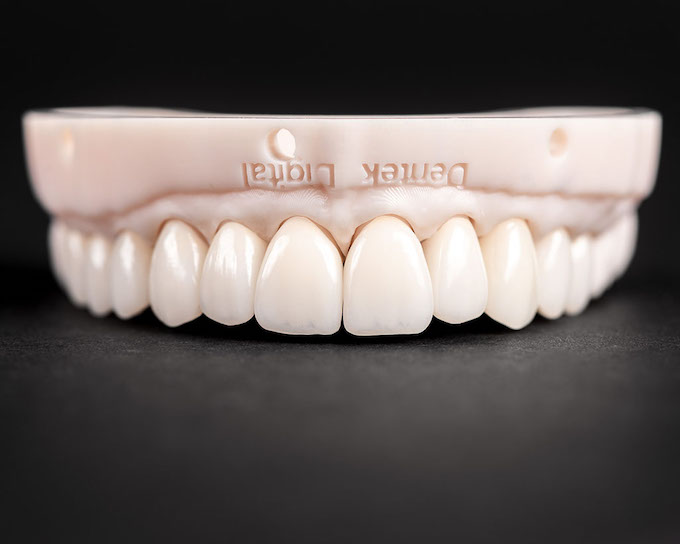
Implant placement does not always go exactly as planned. Sometimes the implant angle creates a challenge when it comes time to place the final restoration. Angled screw channel implant crowns solve this problem elegantly. They allow dental practices to deliver a screw-retained crown even when the implant is not perfectly aligned with the occlusal surface.
For dental practices in DC Ranch, AZ, this technology is a genuine game-changer. DC Ranch is a premier master-planned community in north Scottsdale, and its patients expect exceptional dental care. Offering advanced implant solutions helps practices meet that expectation with confidence.
At Dentek Digital, we fabricate angled screw channel implant crowns using our fully digital CAD/CAM workflow. We partner with dental practices across the Greater Phoenix area — including Scottsdale, Paradise Valley, Fountain Hills, and Cave Creek — to deliver precise, reliable implant restorations every time.
What Are Angled Screw Channel Implant Crowns?
A traditional screw-retained implant crown requires the screw access hole to exit through the center of the occlusal surface. However, this is only possible when the implant axis aligns well with the tooth’s biting surface. When the implant angle is off, the access hole can end up in an unfavorable position — sometimes even on the buccal (cheek-side) surface.
Angled screw channel technology corrects this problem. It uses a specially designed angled abutment or interface that redirects the screw access channel. As a result, the access hole exits in a much more acceptable position on the crown.
How the Angled Channel Works
The screw channel can be redirected by a meaningful number of degrees from the implant axis. This gives the restorative team much greater flexibility. Furthermore, it eliminates the need to convert to a cement-retained crown just because of implant angulation.
Cement-retained crowns carry a well-known risk: excess cement can remain in the subgingival area. This can trigger peri-implant inflammation over time. Therefore, maintaining a screw-retained design is almost always preferred when it is clinically possible.
When Are They the Right Choice?
Angled screw channel implant crowns work best in several situations. Consider them when:
- The implant axis is angled toward the buccal or lingual surface
- The screw access hole would otherwise compromise esthetics
- You want to avoid cement-retained restorations for hygiene reasons
- The implant is in an esthetic zone where access hole placement matters
- The patient has a high smile line or is particularly esthetics-conscious
In addition, these restorations are excellent for multi-unit cases where implant angulations vary across the arch. They give you more control over each individual restoration.
The Digital Workflow Advantage at Dentek Digital
Fabricating an angled screw channel crown accurately requires a sophisticated digital workflow. At Dentek Digital, we have been at the forefront of digital dentistry since the earliest days of CAD/CAM technology in the United States. Our process is designed for precision at every step.
We start with a digital scan or impression from your practice. Next, our skilled technicians use advanced CAD software to design the crown and plan the angled screw channel precisely. Then, our CAM milling and finishing equipment produces a restoration that fits accurately and functions beautifully.
Scan-to-Seat Precision
The digital workflow eliminates many of the variables that cause fit problems with traditional analog methods. Because we work entirely in the digital environment, we can visualize the screw channel angle before a single material is cut. This means fewer remakes and faster delivery for your patients.
Dental practices in DC Ranch and the surrounding Scottsdale communities benefit directly from this efficiency. Your patients get their final restoration sooner. Moreover, you can trust that the fit and function will meet the highest clinical standards.
Material Options for Angled Screw Channel Crowns
We fabricate angled screw channel implant crowns in a range of high-quality materials. The right choice depends on the clinical situation, location in the arch, and patient esthetic goals. Common options include:
- Zirconia: Excellent strength and esthetics, ideal for both anterior and posterior cases
- PFM (Porcelain-Fused-to-Metal): A proven option for posterior strength with natural-looking esthetics
- Full-contour zirconia: Highly durable for molar restorations with demanding occlusal forces
- Layered zirconia: Superior esthetic results for anterior cases or high-esthetic-demand situations
Our team will work with you to identify the best material for each specific case. We consider occlusal load, esthetics, and the patient’s overall treatment plan before making a recommendation.
Why DC Ranch Dental Practices Choose Dentek Digital
DC Ranch sits within one of the most affluent and esthetically demanding patient populations in the Greater Phoenix area. Patients here are well-informed and expect the best. Dental practices serving this community need a lab partner they can rely on completely.
Dentek Digital is that partner. We are based in Phoenix and serve practices across the region — from Scottsdale and Paradise Valley to Cave Creek and Fountain Hills. We understand the expectations of Greater Phoenix patients, and we build every restoration to exceed them.
Fast Turnaround Without Compromising Quality
We know that your schedule and your patients’ time both matter. Therefore, we have streamlined our digital workflow to deliver consistent turnaround times without sacrificing quality. Our CAD/CAM systems run with high efficiency, and our technicians are experienced with implant case complexity.
When you send us an angled screw channel case, we treat it with the same attention to detail as every other restoration we produce. Furthermore, we communicate proactively if we need additional information to get the case right the first time.
A True Lab Partnership
We do not just fabricate restorations. We partner with dental practices to support better clinical outcomes. Our team is available to answer questions about case planning, material selection, and screw channel angulation before you finalize your treatment approach.
This collaborative approach sets Dentek Digital apart. We believe the best results come from open communication between the lab and the practice. As a result, dentists who work with us consistently report fewer complications and stronger patient satisfaction.
Practical Tips for Submitting Angled Screw Channel Cases
Sending an angled screw channel implant crown case to the lab does not have to be complicated. However, a few best practices will help ensure a smooth, accurate result.
- Use a high-quality intraoral scan: Capture the implant scan body precisely, including the surrounding soft tissue contours
- Record the implant system and connection type: Include the brand, platform size, and connection interface details
- Note the implant axis: If you know the degree of angulation, share that information with the lab
- Provide shade and material preferences: Include any esthetic notes relevant to the patient’s neighboring teeth
- Share bite registration data: Accurate occlusal information is critical for proper crown design
Additionally, if you are working in the esthetic zone, consider sending photographs of the patient’s smile. This gives our technicians important context for crafting a restoration that blends naturally with the existing dentition.
Frequently Asked Questions About Angled Screw Channel Implant Crowns
What is the main benefit of an angled screw channel crown over a cement-retained crown?
The primary benefit is retrievability. A screw-retained crown can be removed if needed for maintenance or adjustment. Cement-retained crowns carry a risk of residual cement causing peri-implant disease. Therefore, screw-retained designs are generally preferred when clinically feasible.
How much angulation can an angled screw channel accommodate?
The degree of correction varies depending on the system used and the specific case. However, modern angled channel technology can redirect the screw access by a meaningful range of degrees. Our team can advise you on what is achievable for your specific case geometry.
Can angled screw channel crowns be used in posterior positions?
Yes. They work well in both anterior and posterior locations. In fact, posterior implants often have angulation challenges due to anatomy and bone availability. Angled screw channel technology addresses these challenges effectively in molar and premolar cases.
How long does it take Dentek Digital to fabricate an angled screw channel crown?
Turnaround time depends on the complexity of the case and the material selected. We work efficiently and communicate clearly about expected timelines. Contact our team directly for current turnaround estimates based on your specific case details.
Does Dentek Digital work with all implant systems?
We work with a wide range of implant systems and connections. When you send us a case, simply include the implant brand and connection details. Our technicians are experienced with many of the major systems used by dental practices in Phoenix, Scottsdale, and throughout the Greater Phoenix area.
Ready to Send Your Next Implant Case?
Dentek Digital makes it straightforward for dental practices in DC Ranch and across Greater Phoenix to access high-quality angled screw channel implant crowns. Our fully digital workflow, skilled technicians, and commitment to clinical partnership make us the preferred lab for implant restorations throughout the region.
Whether you are in Scottsdale, Fountain Hills, Cave Creek, or Paradise Valley, we are ready to support your next case. Contact Dentek Digital today to send us a case or to discuss your implant restoration needs with our team.
We look forward to helping your practice deliver outstanding implant outcomes for your patients.