
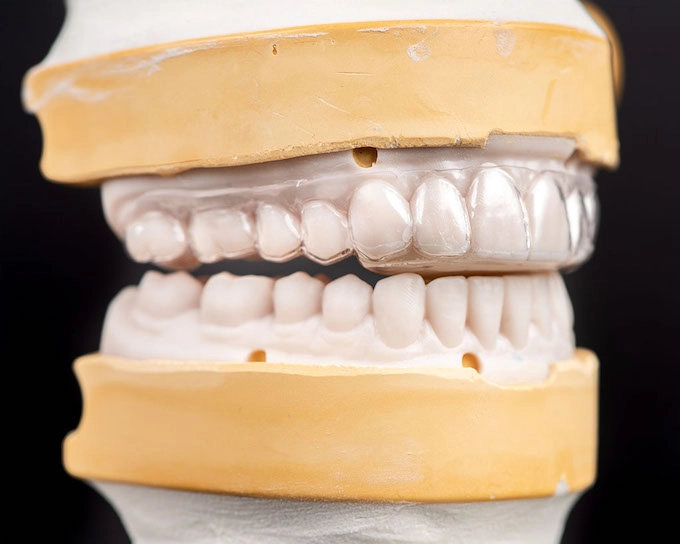
Implant placement rarely follows a perfect path. When a screw access hole lands in the wrong position, it can compromise the final restoration’s aesthetics and function. That’s exactly where angled screw channel implant crowns solve a real clinical problem for dentists throughout South Scottsdale and the Greater Phoenix area.
At Dentek Digital, we fabricate angled screw channel restorations using advanced CAD/CAM technology. Our digital workflow gives dental practices a reliable, precise solution — even in the most challenging implant cases.
If you’re a dentist in South Scottsdale looking to outsource this specialized restoration type, this guide covers everything you need to know. We’ll walk through how the process works, why digital fabrication matters, and how partnering with a trusted dental lab makes a difference for your patients.
What Are Angled Screw Channel Implant Crowns?
An angled screw channel implant crown is a screw-retained restoration designed to redirect the access channel. Instead of emerging through the occlusal surface or incisal edge, the channel exits at a corrected angle — often through the lingual or palatal surface.
This is especially useful when implant angulation isn’t ideal. Traditional cement-retained restorations can handle some angulation issues, but they carry risks like excess cement beneath the gumline. Angled screw channel technology eliminates that concern entirely.
Why Dentists Choose Screw-Retained Designs
Screw-retained restorations offer clear advantages. They are retrievable, which makes long-term maintenance much simpler. Additionally, there’s no risk of residual cement causing peri-implant complications.
For practices in South Scottsdale, Tempe, and Mesa, this design choice supports better long-term patient outcomes. Moreover, patients appreciate restorations that feel natural and function reliably over many years.
When Angulation Becomes a Challenge
Implant angulation can vary due to bone volume, anatomy, and surgical access. As a result, the screw access hole sometimes emerges in an aesthetically undesirable position. Angled screw channel technology corrects this without sacrificing retrievability.
Therefore, more dental practices are requesting this restoration type — and outsourcing fabrication to specialized digital labs like Dentek Digital.
How Dentek Digital Fabricates Angled Screw Channel Restorations
Our fabrication process is fully digital from start to finish. We use industry-leading CAD/CAM software and milling equipment to design and fabricate each restoration with exceptional precision.
First, we receive your digital scan and implant data. Next, our technicians design the crown and calculate the precise angle needed to redirect the screw channel. Finally, we mill or print the restoration from high-quality materials suited to the case.
Our Digital Workflow Step by Step
- Step 1: Submit your digital impression or scan file along with implant details.
- Step 2: Our team reviews the case and confirms implant position and angulation requirements.
- Step 3: We design the crown in CAD software, precisely angling the screw channel for optimal emergence.
- Step 4: The restoration is milled from your selected material — zirconia, PFM, or full-contour options.
- Step 5: Quality checks are completed before shipping to your South Scottsdale or Greater Phoenix practice.
This streamlined process keeps turnaround times efficient. Moreover, it ensures every restoration meets the precise specifications your patient’s case demands.
Materials We Use for Angled Screw Channel Cases
Material selection matters significantly for implant crowns. We offer high-strength zirconia, layered zirconia, and full-contour options depending on the esthetic and functional demands of each case.
For anterior cases in esthetic zones, layered zirconia often delivers the most natural result. On the other hand, posterior cases benefit from full-contour monolithic zirconia for its strength and durability.
Why South Scottsdale Dentists Outsource to Dentek Digital
South Scottsdale is home to a growing number of high-quality dental practices serving diverse patient populations. Because of this, demand for premium, technically sophisticated restorations continues to rise in this community.
Dentek Digital has become a trusted partner for practices across the Greater Phoenix area — including South Scottsdale, Chandler, Gilbert, and Tempe. We bring national-level digital dentistry expertise directly to local dental teams.
The Advantage of Working With a Digital-First Lab
Traditional analog labs rely heavily on manual processes. In contrast, our digital-first workflow reduces human error and increases consistency across every case we produce.
Additionally, our CAD/CAM technology allows us to handle complex angulation cases that would be extremely difficult to achieve through conventional fabrication methods. Furthermore, our technicians have deep experience with implant-supported restorations specifically.
Supporting Better Outcomes for Your Patients
We understand that your reputation depends on the quality of work you deliver. Therefore, we treat every case as a direct reflection of both your practice and our lab.
Our goal is simple: help you deliver restorations that fit well, function correctly, and look natural. When your patients leave satisfied, your practice grows — and that’s a partnership we take seriously.
Tips for Submitting Angled Screw Channel Cases to a Digital Lab
Submitting a well-prepared case helps your lab produce the best possible result. Here are some practical tips to streamline the process for your South Scottsdale or Phoenix-area practice.
- Include scan body data: Always submit the correct scan body or implant library information. This ensures the lab designs to the precise implant system you placed.
- Note the angulation concern: Indicate where the screw access hole is emerging and the preferred direction for the corrected channel exit.
- Provide bite records: Accurate occlusal records help the lab design appropriate contacts and avoid any interference.
- Specify the material: Indicate your preferred material and shade before fabrication begins to avoid delays.
- Communicate esthetic goals: For anterior cases especially, share photos or shade guides so the lab can match surrounding dentition accurately.
Additionally, open communication with your lab technician is always beneficial. If you have questions about a specific case, don’t hesitate to reach out before submitting.
Serving Dental Practices Across the Greater Phoenix Area
Dentek Digital proudly supports dental practices not only in South Scottsdale but across the entire Greater Phoenix metro area. We work with practices in Mesa, Tempe, Chandler, Gilbert, and surrounding communities every day.
Because we operate as a digital lab, geographic distance is rarely a barrier. We can receive your digital files electronically and ship finished restorations back quickly. As a result, your patients experience minimal delays in their treatment timeline.
Why Digital Labs Are the Future of Dental Restoration
The dental industry has shifted dramatically toward digital workflows over the past decade. Moreover, the adoption of intraoral scanners in dental practices has made digital lab collaboration even more seamless.
Labs like Dentek Digital were early adopters of CAD/CAM technology. Therefore, we’ve refined our processes over many years and continue to invest in the latest equipment and techniques. Your practice benefits directly from that experience and commitment.
Frequently Asked Questions About Angled Screw Channel Implant Crowns
What implant systems are compatible with angled screw channel restorations?
Most major implant systems support angled screw channel technology. However, compatibility depends on the specific implant platform and connection type. We recommend confirming your implant system with our team before submitting a case so we can design to the correct specifications.
How much angulation correction is possible?
CAD/CAM technology allows for a meaningful range of angulation correction in most cases. The exact degree achievable depends on the implant position, the restoration material, and the emergence profile needed. Our technicians will evaluate your case individually and advise on the best approach.
Is an angled screw channel crown more difficult to place than a traditional crown?
Placement is generally straightforward once the restoration arrives. The screw channel is clearly visible, and the access hole is positioned where it should be based on the design plan. Therefore, seating and torquing the restoration is typically simple and familiar for experienced implant providers.
How long does fabrication take for angled screw channel cases?
Turnaround time depends on the complexity of the case and material selection. We work efficiently to minimize wait times for your practice and your patients. Contact our team early in the process if you have a time-sensitive case — we’ll do our best to accommodate your needs.
Can I submit cases digitally if I’m located in South Scottsdale or another Phoenix suburb?
Absolutely. We accept digital scan files and case submissions electronically from practices across the Greater Phoenix area. Our submission process is straightforward, and our team is available to guide you through it if you’re submitting for the first time.
Partner With Dentek Digital for Your Next Implant Case
Angled screw channel implant crowns require precision, expertise, and the right technology. Dentek Digital delivers all three through a fully digital workflow built for the demands of modern implant dentistry.
We serve South Scottsdale and the entire Greater Phoenix metro — from Tempe and Mesa to Chandler and Gilbert. Our team is ready to support your practice with restorations that meet the highest standards of quality and fit.
Ready to get started? Contact Dentek Digital today to send us your next angled screw channel case. Our team is here to answer your questions and help your patients get the results they deserve.