
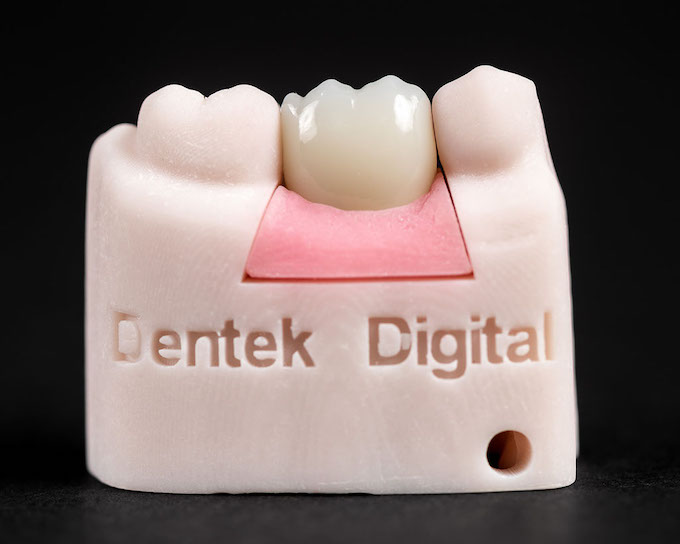
Implant restorations have come a long way. Today, dentists have access to solutions that combine the best of both screw-retained and cement-retained designs. Screwmentable implant crowns are one of the most exciting innovations in modern implant dentistry. They give clinicians flexibility, retrievability, and a clean, cement-free result — all in one restoration.
At Dentek Digital, we work with dental practices across the Greater Phoenix area and beyond to fabricate precise, high-quality implant restorations. Dentists in West University Place, TX, are discovering what our partners in Scottsdale, Mesa, Tempe, and Chandler already know: a trusted digital lab makes a real difference.
In this post, we break down everything you need to know about screwmentable implant crowns — how they work, why they matter, and how to get started with a digital lab that delivers.
What Are Screwmentable Implant Crowns?
The term “screwmentable” combines two words: screw-retained and cementable. It describes a hybrid implant crown design. Essentially, the crown is cemented to a custom abutment outside the mouth. Then, the entire unit is screwed directly into the implant fixture.
This approach eliminates the need for intraoral cementation. Because of this, it reduces the risk of excess cement migrating below the gumline — a known complication with traditional cement-retained crowns.
How the Design Works
In a screwmentable system, a titanium or zirconia custom abutment is first milled to fit the implant precisely. Next, the crown is fabricated and cemented to the abutment in the lab under controlled conditions. Finally, the bonded unit is delivered to the dentist as a single, screw-retained restoration.
The screw access hole is then closed with composite. This keeps the restoration retrievable if adjustments are ever needed. Moreover, the fit is typically excellent because CAD/CAM technology drives the entire workflow.
Screw-Retained vs. Cement-Retained vs. Screwmentable
Traditional screw-retained crowns can be difficult to design with ideal emergence profiles in certain cases. On the other hand, cement-retained crowns risk subgingival cement — especially in deep implant placements. Screwmentable crowns address both concerns. They offer retrievability like a screw-retained crown and the esthetics of a cemented design.
For dentists managing complex implant cases, this hybrid approach is a practical game-changer. Therefore, more practices are requesting this restoration type from their dental labs.
Why Dentists Are Choosing Screwmentable Restorations
Screwmentable implant crowns are gaining popularity for good reason. They solve real clinical problems. They also work well across a wide range of implant systems and tissue-level situations.
Retrievability Without Compromise
One of the biggest advantages is retrievability. If a patient needs a crown adjustment or experiences a tissue change, the dentist can simply unscrew the restoration. Furthermore, there is no risk of damaging the crown during removal like there can be with a fully cemented design.
This is especially valuable for younger patients or in cases where long-term tissue changes are likely. Because of this, many clinicians prefer screwmentable crowns for anterior restorations as well as posterior ones.
Elimination of Subgingival Cement
Excess cement around implants can cause peri-implantitis — an inflammatory condition similar to periodontitis around natural teeth. With screwmentable restorations, cementation happens in the lab. As a result, there is no intraoral cement to clean up or worry about.
This dramatically lowers the risk of cement-related complications. For patients with deeper implant placements, this benefit alone makes screwmentable the smarter choice.
Esthetic Flexibility
Because the crown is cemented to a custom abutment in the lab, our technicians can optimize the margin placement and emergence profile precisely. Additionally, the crown material can be chosen freely — whether that is full-contour zirconia, layered zirconia, or PFM — without being limited by access or angular constraints.
Our digital lab in Phoenix uses advanced CAD/CAM software to design every abutment and crown with accuracy. This results in restorations that fit beautifully and look natural.
The CAD/CAM Advantage in Screwmentable Crown Fabrication
Digital technology is central to producing high-quality screwmentable implant crowns. At Dentek Digital, we were among the earliest adopters of CAD/CAM workflows in the country. Our process is precise, efficient, and designed around your clinical needs.
Digital Scanning and Design
The workflow begins with a digital scan — either from your intraoral scanner or from a scanned model we receive. From there, our technicians design the custom abutment and crown using specialized implant CAD software. Every angle, margin, and contour is planned digitally before a single block is milled.
This level of planning is not possible with traditional analog methods. Moreover, it means fewer remakes and better predictability for your practice and your patients.
Precision Milling and Material Selection
Once the design is approved, we mill the abutment and crown from high-quality materials. Our lab uses proven milling systems to produce tight tolerances. Additionally, we offer a range of crown materials so you can choose the right option for each case.
Zirconia is a popular choice for its strength and esthetics. However, we also fabricate PFM and other material options depending on the clinical situation. Every restoration is quality-checked before it leaves our lab.
Why Digital Workflow Matters for Implant Cases
Implant restorations demand accuracy. Even small errors in abutment fit or crown margins can cause problems over time. Therefore, a digital lab with deep implant experience is essential for predictable outcomes.
Practices in Scottsdale, Gilbert, Mesa, and Chandler rely on Dentek Digital for this reason. Our digital-first approach means your cases are handled with the precision and consistency that implant work requires.
Ready to simplify your implant workflow? Contact Dentek Digital to send us a case and see what our screwmentable implant crown service can do for your practice.
Practical Tips for Dentists Ordering Screwmentable Crowns
Ordering screwmentable implant crowns is straightforward when you follow a clear process. Here are some practical guidelines to help your cases come out right the first time.
- Identify the implant system and size: Always include the exact implant brand, system, and connection type. This is critical for accurate abutment design.
- Provide a high-quality scan or impression: A clear digital scan from your intraoral scanner is ideal. If you send a physical impression, make sure it captures the implant analog correctly.
- Indicate the desired material: Let the lab know your material preference — full-contour zirconia, layered zirconia, or other options. Include shade information as well.
- Note tissue and emergence details: Share any notes about tissue level, adjacent tooth height, or esthetic concerns. More information leads to better results.
- Confirm the access hole location: Discuss where the screw access hole should exit, especially in anterior cases where esthetics are a priority.
Following these steps helps your lab team design and fabricate the restoration efficiently. Additionally, clear communication reduces back-and-forth and speeds up turnaround time.
Frequently Asked Questions About Screwmentable Implant Crowns
What implant systems are compatible with screwmentable crowns?
Most major implant systems are compatible with screwmentable designs. These include popular brands like Nobel Biocare, Straumann, Zimmer Biomet, BioHorizons, and others. Provide the implant brand and connection type when submitting your case so we can design the abutment correctly.
Is the screwmentable design retrievable?
Yes. Because the crown and abutment are delivered as one unit that screws into the implant, the restoration can be removed by simply accessing the screw. This makes adjustments or repairs much easier than with a fully cemented crown.
How does screwmentable compare in terms of fit and esthetics?
CAD/CAM-milled screwmentable crowns offer excellent fit and esthetics. The margin is placed precisely on the custom abutment in the lab. Additionally, the crown material and shade are chosen based on each patient’s specific needs. The result is a restoration that looks and functions naturally.
What materials are available for screwmentable crowns?
At Dentek Digital, we offer a range of material options. Full-contour zirconia is the most common choice for its strength and low maintenance. Layered zirconia is available when maximum esthetics are the priority. We also fabricate PFM options for cases where that material is preferred.
How long does turnaround typically take?
Turnaround time varies depending on the complexity of the case and the materials selected. However, our digital workflow is designed for efficiency. Contact our team to discuss your timeline and we will do our best to accommodate your schedule.
Partner With a Digital Lab That Delivers
Screwmentable implant crowns represent the future of implant restorations. They combine retrievability, esthetic control, and clinical safety in one elegant solution. For dentists who want to provide the best possible care, this restoration type is worth exploring.
At Dentek Digital, we are passionate about helping dental practices achieve better outcomes. Our team combines advanced CAD/CAM technology with skilled craftsmanship. Furthermore, our deep experience in digital implant workflows means your cases are in expert hands.
We proudly serve dental professionals throughout the Greater Phoenix area — including Scottsdale, Tempe, Mesa, Chandler, and Gilbert — and partner with practices across the country, including dentists in West University Place, TX, who are looking for a reliable digital lab partner.
Whether you are exploring screwmentable crowns for the first time or looking to streamline your existing implant workflow, we are here to help. Send us a case today and experience the Dentek Digital difference.