
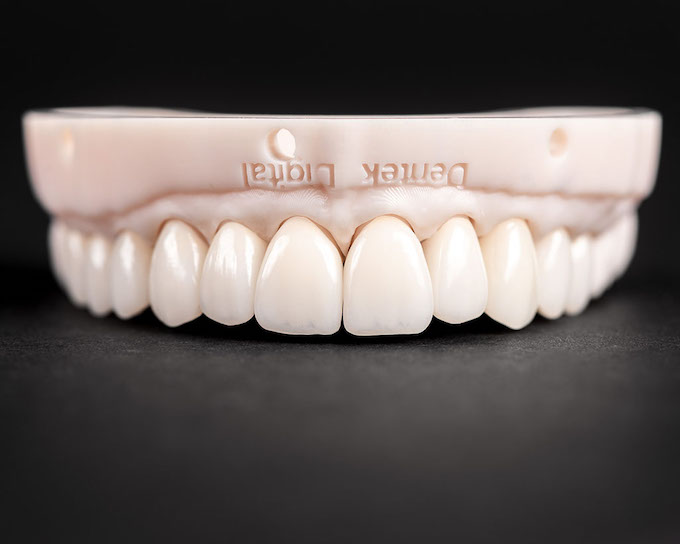
When it comes to implant restorations, screwmentable implant crowns represent one of the most versatile solutions available today. They combine the best features of both screw-retained and cement-retained crowns. As a result, more dental practices across the country are requesting this restoration type from their dental lab partners.
At Dentek Digital, we fabricate screwmentable implant crowns using advanced CAD/CAM technology from our lab in Phoenix, Arizona. We work with dental professionals in the Greater Phoenix area and beyond — including practices as far as Palo Alto, CA. Therefore, finding a skilled, reliable lab partner is essential to delivering outstanding implant outcomes for your patients.
In this post, we break down what screwmentable implant crowns are, how they work, and why partnering with an experienced digital dental lab matters for your practice.
What Are Screwmentable Implant Crowns?
Screwmentable implant crowns are a hybrid restoration design. They use a custom titanium or zirconia base — often called a Ti-base or abutment — that is cemented to the crown outside the mouth. Then, the combined unit is screwed directly into the implant fixture.
This approach eliminates a major problem with traditional cement-retained crowns: excess cement below the gumline. Additionally, it avoids the esthetic challenges that can come with fully screw-retained designs. The result is a clean, retrievable, and esthetically pleasing restoration.
Screw-Retained vs. Cement-Retained vs. Screwmentable
Understanding the differences helps clarify why screwmentable designs have grown in popularity. First, screw-retained crowns offer easy retrievability but can have access hole placement challenges. On the other hand, cement-retained crowns offer better esthetics but carry risks of subgingival cement retention. Screwmentable crowns combine retrievability with excellent esthetics — making them a strong choice in many clinical situations.
Furthermore, screwmentable designs work especially well in posterior regions where occlusal access holes are less visible. They also perform well in anterior cases when the implant angle allows for it. Because of this flexibility, many dentists in Phoenix, Scottsdale, and Chandler prefer this restoration type for their implant patients.
How CAD/CAM Technology Elevates Screwmentable Crowns
Digital workflows have transformed how dental labs fabricate implant restorations. At Dentek Digital, we were among the earliest adopters of CAD/CAM technology in the country. Therefore, our team has refined a highly efficient and precise process for producing screwmentable implant crowns.
Using digital impressions or scanned models, our technicians design each crown virtually. This allows for precise control over contours, occlusion, and emergence profile. As a result, the final restoration fits accurately the first time — reducing chair time for your patients.
The Role of Digital Impressions
Digital impressions make the process faster and more accurate than traditional methods. Many dental practices in Mesa, Tempe, and Gilbert have already adopted intraoral scanners. Additionally, sending digital files to our lab eliminates the risk of distorted impressions during shipping.
When you submit a digital case to Dentek Digital, our team receives your scan files and gets to work immediately. Moreover, our digital design process allows for easy case communication and modification before milling begins. This means fewer remakes and faster turnaround for your practice.
Materials We Use for Screwmentable Restorations
Material selection is critical for implant crown longevity and esthetics. We commonly fabricate screwmentable crowns using high-strength zirconia, lithium disilicate, or layered porcelain-fused-to-zirconia. Each material has specific strengths depending on the case requirements.
For example, monolithic zirconia offers exceptional strength for posterior cases with heavy occlusal loads. Meanwhile, layered or cutback zirconia can achieve highly esthetic results for visible anterior restorations. Our technicians help guide material selection based on your clinical notes and patient needs.
Why Dental Practices Partner With Dentek Digital
Choosing the right dental lab partner is one of the most important decisions a dental practice can make. At Dentek Digital, we combine advanced technology with skilled craftsmanship. This combination consistently delivers precise, high-quality restorations that dentists and patients trust.
We serve dental professionals throughout the Greater Phoenix area, including Scottsdale, Chandler, Mesa, and Gilbert. However, our digital workflow also allows us to work seamlessly with practices outside Arizona — including those in Palo Alto and across California. Because our process is entirely digital, geography is rarely a barrier.
Fast Turnaround Without Sacrificing Quality
We understand that your patients have busy schedules. Therefore, we prioritize efficient production timelines without cutting corners on quality. Our digital workflow streamlines each step — from design to milling to finishing — so you receive restorations on time, every time.
Additionally, our team communicates proactively if any case questions arise. We review each case carefully before fabrication begins. As a result, we catch potential issues early and avoid delays that can disrupt your schedule.
Dedicated Support for Implant Cases
Implant restorations require a higher level of coordination between the lab and the dental practice. Our team at Dentek Digital is experienced in managing complex implant cases. Furthermore, we support a wide range of implant systems and can work with most major implant libraries in our CAD software.
If you are new to submitting screwmentable cases or have questions about implant components, our team is happy to guide you through the process. Simply contact Dentek Digital and one of our implant specialists will walk you through every step.
Tips for Submitting Screwmentable Implant Crown Cases
Sending a well-documented case helps us deliver the best possible result for your patient. Here are practical tips to ensure a smooth process from start to finish.
- Include the implant system and component details. Specify the implant brand, platform size, and Ti-base or scan body used. This ensures we select the correct library components during design.
- Provide a clear emergence profile scan. A well-scanned soft tissue contour gives our technicians the information needed to shape the crown’s emergence accurately.
- Note the access hole location preference. If you have a preferred screw access position — especially in anterior cases — include that in your case notes.
- Specify shade and material. Include a shade tab photo when possible. Additionally, note any specific esthetic goals or patient preferences for our technicians to reference.
- Send bite and opposing arch scans. These are critical for accurate occlusal design. Missing bite records are one of the most common causes of remakes.
Following these steps helps us get it right the first time. Moreover, it minimizes back-and-forth communication and keeps your case on schedule.
Frequently Asked Questions About Screwmentable Implant Crowns
What is the main advantage of a screwmentable implant crown?
The biggest advantage is retrievability combined with excellent esthetics. Because the crown is screwed in rather than cemented directly to the abutment, your dentist can remove it if needed. Additionally, off-axis angulation is easier to manage compared to fully screw-retained designs.
Is a screwmentable crown stronger than a traditional implant crown?
Strength depends largely on the material chosen, not the retention method. High-strength zirconia screwmentable crowns perform very well in posterior load-bearing cases. However, your lab should evaluate the case details to recommend the right material for each patient.
How is the crown cemented to the Ti-base?
The crown is cemented to the Ti-base or abutment outside the mouth under controlled conditions. This keeps cement away from the subgingival tissue entirely. As a result, the risk of peri-implant inflammation from excess cement is greatly reduced.
Can Dentek Digital work with my specific implant system?
In most cases, yes. We support a wide range of major implant platforms through our digital design software libraries. Therefore, we encourage you to share your implant system details when submitting your case so we can confirm compatibility before we begin.
How do I send a case to Dentek Digital from outside Arizona?
Our digital workflow makes remote case submission simple. You submit digital scan files through our online portal, and we handle the rest. Dental practices in Palo Alto and throughout California can work with us just as easily as local practices in Scottsdale or Tempe.
Partner With a Lab That Understands Implant Dentistry
Screwmentable implant crowns require precision, proper material selection, and an experienced fabrication team. Not every dental lab has the digital infrastructure or implant expertise to consistently deliver at this level. At Dentek Digital, implant restorations are a core part of what we do.
We are proud to serve dental professionals throughout the Greater Phoenix area — from Chandler and Gilbert to Mesa and Scottsdale. Furthermore, our fully digital workflow allows us to extend that same high-quality service to practices in California and beyond.
If you are ready to elevate your implant restorations and streamline your lab relationship, we would love to hear from you. Explore your options and send us a case today — our team is ready to support your practice and your patients.