
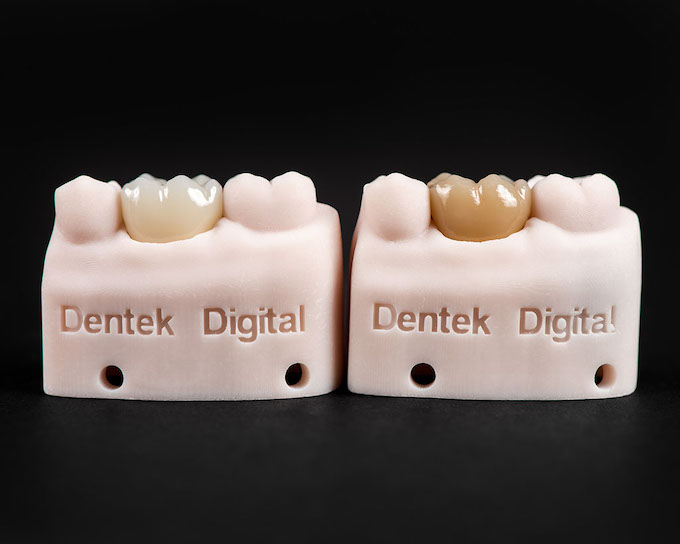
When it comes to implant restorations, the retention method matters. Cement-retained implant crowns offer a clean, natural-looking result that many dentists and patients prefer. For practices in North Scottsdale and across the Greater Phoenix area, understanding this option helps you choose the right solution for each case.
Dentek Digital partners with dental practices throughout the region to fabricate precise, high-quality implant crowns. Our digital CAD/CAM workflow ensures every restoration meets strict fit and aesthetic standards. We make it easy to get the results your patients expect.
In this post, we break down cement-retained implant crowns, how they work, and why so many dentists across North Scottsdale, Scottsdale, Paradise Valley, and Fountain Hills rely on our lab for their implant cases.
What Are Cement-Retained Implant Crowns?
Cement-retained implant crowns attach to an abutment using dental cement. This is different from screw-retained crowns, which connect directly with a screw channel. Both approaches have their place, and understanding each one helps you make better treatment decisions.
With cement retention, the crown sits on a custom or stock abutment. The cement holds it firmly in place. As a result, there is no visible access hole on the occlusal surface. This creates a more natural-looking final restoration.
How the Retention Method Affects the Final Result
The retention method influences both aesthetics and function. Cement-retained crowns tend to look more like natural teeth. Additionally, they are often easier to seat, especially in cases with limited interocclusal space.
However, retrievability is a consideration. Cement-retained crowns are not as easy to remove as screw-retained options. Therefore, careful case selection and proper cementation technique are essential for long-term success.
Common Clinical Situations for Cement Retention
Cement-retained crowns work well in several common scenarios. For example, they are often preferred when the implant angulation makes screw access difficult. They also suit cases where occlusal aesthetics are a top priority.
- Implants with challenging angulation
- Cases requiring optimal occlusal aesthetics
- Anterior and premolar restorations with high visibility
- Situations with limited interocclusal clearance
- Cases where access hole placement would compromise function
The Role of Digital CAD/CAM Technology
At Dentek Digital, we use advanced CAD/CAM technology to design and mill every implant crown. This digital workflow delivers a level of precision that traditional methods simply cannot match. Furthermore, it speeds up turnaround without sacrificing quality.
Digital impressions and design files allow us to engineer restorations with accurate margins and ideal occlusal contacts. Every crown is designed to fit the specific abutment and implant platform. This reduces chairside adjustments and improves the patient experience.
From Scan to Final Restoration
The digital process begins when you send us your case files. Next, our technicians design the crown using specialized CAD software. Then, the restoration is milled from high-quality materials chosen for each patient’s needs.
We support major intraoral scanner formats and work seamlessly with most digital workflows. Additionally, we offer detailed communication throughout the process. Because of this, you always know where your case stands.
Material Options for Cement-Retained Crowns
Material selection plays a big role in the outcome. We offer several options to match the clinical requirements and aesthetic goals of each case.
- Zirconia: Highly durable and tooth-colored. Ideal for posterior and anterior cases alike.
- PFM (Porcelain-Fused-to-Metal): A proven option with excellent strength and aesthetics.
- Full-contour zirconia: Monolithic design for strength in high-occlusal-load areas.
- Layered zirconia: Enhanced aesthetics for visible anterior restorations.
Our team helps you select the right material based on the patient’s bite, esthetic zone, and clinical situation. Moreover, we match shade and contour with precision to blend seamlessly with natural dentition.
Why North Scottsdale Dentists Choose Dentek Digital
North Scottsdale is home to many highly skilled dental practices. Patients in this area have high expectations for aesthetics and quality. Therefore, partnering with a lab that delivers consistently excellent results is critical.
Dentek Digital was one of the earliest adopters of the digital CAD/CAM workflow in the country. We have built a reputation for precision, reliability, and exceptional service. Furthermore, our team communicates proactively, so cases move smoothly from start to finish.
Serving Practices Across the Greater Phoenix Area
We proudly serve dental practices across a wide region. Our lab partners with dentists in North Scottsdale, Scottsdale, Paradise Valley, Fountain Hills, and many other communities throughout Greater Phoenix. Additionally, we work with practices in Tempe, Mesa, Chandler, and Gilbert.
No matter where your practice is located, we make it simple to send cases and receive high-quality restorations. Our logistics process is streamlined and easy to follow. As a result, you spend less time coordinating and more time treating patients.
What Sets Our Implant Lab Work Apart
Several factors distinguish Dentek Digital from other dental labs in Arizona.
- National recognition: We are recognized as a national leader in digital dentistry.
- Early adopters: We embraced CAD/CAM technology before most other labs.
- Skilled craftsmanship: Technology and artistry work together in every case.
- Responsive communication: We keep you informed and address questions quickly.
- Consistent quality: Every restoration meets rigorous quality standards before shipping.
Tips for Successful Cement-Retained Implant Cases
Success with cement-retained implant crowns depends on both lab precision and clinical technique. Here are some general best practices to keep in mind when planning and placing these restorations.
Case Selection and Planning
Start by evaluating whether cement retention is the right choice for each patient. Consider implant angulation, interocclusal space, and aesthetic demands. Additionally, think about the patient’s hygiene habits and long-term maintenance needs.
Good planning leads to better outcomes. Furthermore, communicating your clinical goals clearly to the lab helps us design a restoration that truly fits the case.
Abutment Design and Margin Placement
Abutment design is critical for cement-retained cases. The subgingival margin depth affects retrievability and tissue health. Therefore, most clinicians recommend keeping margins as shallow as the esthetic situation allows.
Custom abutments, designed digitally, offer superior control over margin position and emergence profile. As a result, the final crown seats predictably and supports healthy peri-implant tissue.
Cementation Technique Considerations
Excess cement is a well-known risk in cement-retained implant cases. Careful technique and adequate cement removal are essential. Additionally, using a try-in protocol before final cementation can help confirm fit and minimize complications.
Choosing the right cement type for the material and clinical situation also matters. Our team is happy to discuss material-specific recommendations when you send us your case details.
Frequently Asked Questions
What is the difference between cement-retained and screw-retained implant crowns?
Cement-retained crowns attach to an abutment using dental cement. Screw-retained crowns connect directly with a screw through an access hole. Both work well, but each suits different clinical situations. Cement retention offers better aesthetics in many cases. Screw retention offers easier retrievability.
Can Dentek Digital work with my intraoral scanner?
Yes. We support most major intraoral scanner formats. Our digital workflow is compatible with files from leading scanner brands. Additionally, we can assist you with file submission if you have questions about your specific system.
How long does it take to receive a cement-retained implant crown from Dentek Digital?
Turnaround time varies by case complexity and material. However, our CAD/CAM workflow is designed to deliver restorations efficiently without compromising quality. Contact our team for current turnaround estimates for your specific case type.
Do you offer custom abutments for cement-retained cases?
Yes. We fabricate custom abutments designed digitally for precise fit and optimal emergence profile. Custom abutments improve aesthetics, margin control, and tissue response. Moreover, they are an excellent choice for challenging implant positions or high-aesthetic-demand cases.
What implant systems does Dentek Digital support?
We work with a wide range of implant systems and platforms. Our team is experienced with many of the most commonly used systems in Greater Phoenix-area practices. Therefore, we can accommodate most cases you send our way. Reach out if you have a specific system question.
Partner with Dentek Digital for Your Implant Crown Cases
Cement-retained implant crowns require precise lab work and clear communication. At Dentek Digital, we combine advanced CAD/CAM technology with skilled craftsmanship to deliver restorations that meet your clinical goals. Furthermore, we make the process straightforward for busy dental practices.
Whether your practice is in North Scottsdale, Paradise Valley, Fountain Hills, or anywhere across the Greater Phoenix area, we are ready to support your implant cases. Our team works closely with dentists to ensure every restoration is fabricated to the highest standards.
Ready to get started? Contact Dentek Digital today to discuss your cement-retained implant crown cases and discover how our digital lab can support your practice and your patients.