
Implant restorations have transformed modern dentistry. As a dentist, you want results that are reliable, retrievable, and built to last. Screw retained implant crowns check every one of those boxes. They give you control at placement and flexibility down the road — without the guesswork of cement.
At Dentek Digital, we fabricate precision implant restorations using advanced CAD/CAM technology. Our digital workflow produces crowns that fit accurately, seat cleanly, and perform consistently. Whether you’re restoring a single tooth or managing a complex implant case, we’re ready to support your practice.
This guide breaks down everything you need to know about screw retained implant crowns — from how they work to why more dentists are choosing them for their patients every day.
What Are Screw Retained Implant Crowns?
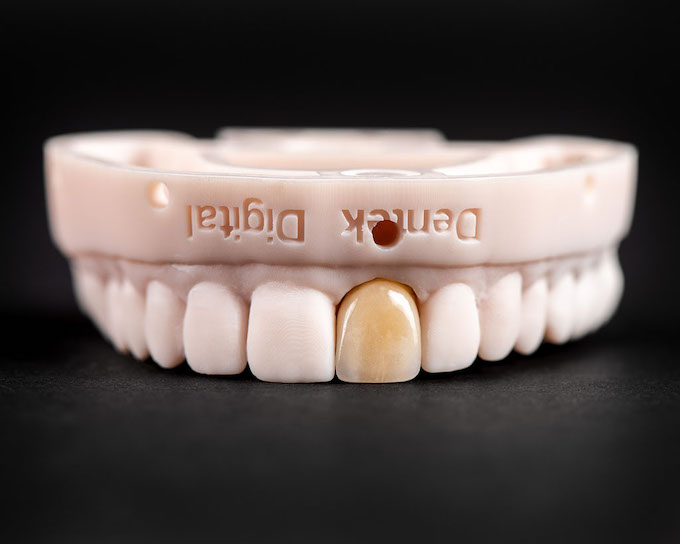
A screw retained implant crown attaches directly to the implant fixture using a small screw. There is no cement involved in the final seating. Instead, the crown is secured through an access hole, which is then closed with composite or a similar material.
This design is different from a cement retained crown, which relies on dental cement to bond the restoration to an abutment. Both options are clinically valid. However, screw retention offers specific advantages that many dentists and specialists prefer.
How the Restoration Is Fabricated
At Dentek Digital, we use a fully digital CAD/CAM workflow to design and mill each screw retained crown. We start with your digital scan or impression data. Then, our technicians design the restoration using specialized implant software.
Next, we mill the crown from high-quality materials — including zirconia, PFM, or other options suited to the case. Finally, we finish and verify the restoration before it ships to your office. The result is a precisely fitting crown ready for immediate placement.
Key Advantages of Screw Retained Implant Crowns
More dentists are choosing screw retention for good reason. The benefits are practical, clinically meaningful, and well-supported by years of use in implant dentistry.
Retrievability
One of the biggest advantages is retrievability. If you need to access the implant — for maintenance, tissue issues, or component changes — you simply remove the screw. Therefore, the crown comes off without damage. This makes long-term implant management significantly easier.
With cement retained crowns, removal can be difficult. In some cases, it risks damaging the restoration or the surrounding tissue. Screw retention eliminates that concern entirely.
No Risk of Residual Cement
Residual subgingival cement is a known risk with cement retained restorations. It can trigger peri-implant inflammation and tissue problems over time. Because screw retained crowns use no cement at the final seating, this risk is eliminated. As a result, the tissue response around the implant tends to be more predictable.
Accurate, Passive Fit
A well-fabricated screw retained crown seats passively on the implant. Our CAD/CAM process produces restorations with tight tolerances and consistent margins. This means less chair time for adjustments and more confidence at delivery.
Cost-Effective Long-Term Value
Because the crown is retrievable and durable, patients get strong long-term value. Your practice also benefits from simplified maintenance visits. Moreover, a well-fitting restoration reduces the risk of future complications that cost time and resources to manage.
When to Choose Screw Retention Over Cement Retention
Not every case calls for the same solution. However, screw retention tends to be preferred in several common clinical situations.
- Posterior implant cases where retrievability matters most
- Cases with limited inter-arch space where a custom abutment is not ideal
- Full-arch or multi-unit restorations requiring predictable passivity
- Patients with a history of peri-implant tissue sensitivity
- Any case where long-term access to the implant is anticipated
On the other hand, cement retention may be preferred when access hole position would compromise aesthetics in the anterior zone. Your clinical judgment guides the final decision. We’re here to support whatever direction you choose.
How Dentek Digital Supports Implant Cases with CAD/CAM Precision
Dentek Digital is based in Phoenix, Arizona. We serve dental professionals across the Greater Phoenix area, including Scottsdale, Chandler, Mesa, and Tempe. Our lab is recognized as a national leader in digital dentistry and CAD/CAM fabrication.
We were among the earliest adopters of the digital workflow in the country. Because of this, our team has deep experience with implant cases of all types — single units, bridges, and full-arch restorations. We combine evolving technology with skilled craftsmanship to deliver precise, reliable results every time.
Our Digital Workflow for Implant Crowns
Our process is straightforward and efficient. First, you submit your scan data or impression along with the case details. Next, our technicians design the screw retained crown using implant-specific CAD software. Then, we mill the restoration from your chosen material and finish it to your specifications.
Finally, we ship the completed crown back to your office — ready to seat at your patient’s next appointment. We also offer a streamlined case submission process to make the experience as easy as possible for your team.
Materials We Use for Screw Retained Crowns
Material selection matters. We offer multiple options to match each patient’s clinical needs and aesthetic goals.
- Full-contour zirconia — Excellent strength for posterior cases
- Layered zirconia — Enhanced aesthetics for visible zones
- PFM (porcelain-fused-to-metal) — A reliable classic with proven longevity
- PMMA/hybrid materials — Ideal for provisionals or transitional restorations
We help you select the right material for the case. Additionally, our team is available to discuss specific case requirements before you submit.
Tips for Dentists Working with Screw Retained Implant Crowns
Getting the best results with screw retained restorations starts before the crown even arrives at your office. Here are a few practical tips to keep in mind.
Use a Digital Scan When Possible
Digital impressions improve accuracy and reduce the chance of distortion. They also speed up the turnaround process on our end. If your office uses an intraoral scanner, we accept most major file formats.
Provide Clear Implant System Details
Always include the implant brand, system, and connection type when submitting a case. This is essential for proper component selection. Without this information, fabrication cannot begin accurately.
Confirm Occlusal Access Hole Position Early
For anterior cases, discuss access hole position with your lab before design begins. This allows us to optimize the restoration for both function and aesthetics. Early communication prevents costly revisions.
Torque to Manufacturer Specifications at Delivery
Always follow the implant manufacturer’s torque recommendations when seating the screw. Over-tightening or under-tightening can lead to complications. Furthermore, document the torque value in your patient record for future reference.
Frequently Asked Questions About Screw Retained Implant Crowns
What is the difference between screw retained and cement retained implant crowns?
Screw retained crowns attach to the implant using a screw through an occlusal or lingual access hole. Cement retained crowns bond to an abutment using dental cement. Screw retention offers retrievability and eliminates cement-related risks. Cement retention may offer better aesthetics in certain anterior situations.
Are screw retained implant crowns more difficult to place?
Not significantly. In fact, many dentists find placement easier because there is no cement to manage. The access hole must be properly positioned, but a well-fabricated restoration from a digital lab seats cleanly with minimal adjustment.
Can screw retained crowns be used for full-arch restorations?
Yes. Screw retention is commonly used for full-arch implant bridges and hybrid restorations. It allows for easy retrieval and maintenance across the entire arch. This makes it a preferred choice for complex implant cases.
What materials work best for screw retained implant crowns?
Zirconia is one of the most popular choices due to its strength and biocompatibility. Layered zirconia is preferred for aesthetic zones. PFM remains a reliable option for many dentists. We help you choose the best material based on the clinical situation.
How does Dentek Digital handle implant cases from out-of-state dentists?
We work with dental practices across the country. Our digital submission process makes it easy to send cases remotely. Simply submit your scan data, implant details, and case instructions through our online portal. Our team handles the rest.
Partner with Dentek Digital for Your Implant Crown Cases
Screw retained implant crowns are one of the most reliable and clinically versatile restorations available today. They give you control, flexibility, and long-term peace of mind. Moreover, when they are fabricated with precision using advanced CAD/CAM technology, the results speak for themselves.
Dentek Digital serves dental professionals from our Phoenix, Arizona lab — with practices across Scottsdale, Mesa, Chandler, Tempe, and beyond. We bring national-level digital dentistry expertise to every case we touch. Our goal is to support better outcomes for your patients with every restoration we deliver.
Ready to get started? Contact Dentek Digital today to send us your next implant case or to discuss your specific restoration needs with our experienced team.