
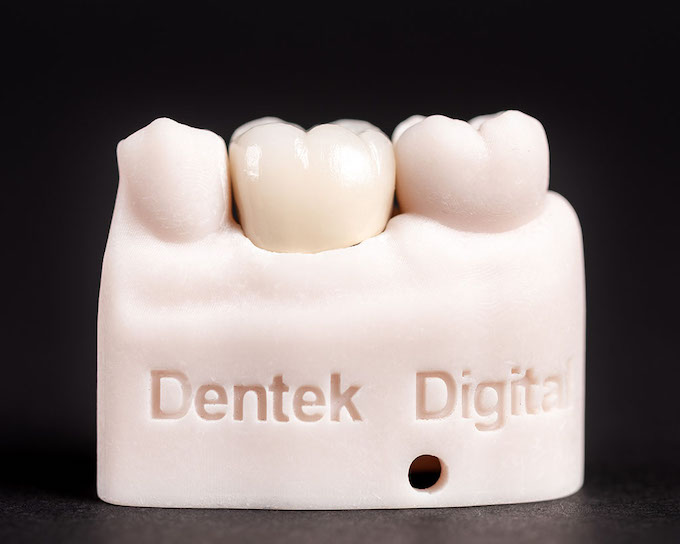
Dental implant restorations have come a long way. Today, more dental practices are choosing screw retained implant crowns for their predictability, retrievability, and clean fit. If your practice in Parkland, FL is exploring this restoration type, it helps to understand what sets them apart — and how the right dental lab partner makes all the difference.
At Dentek Digital, we fabricate high-quality implant crowns using advanced CAD/CAM technology. We work with dental practices across the country, including those far outside our Greater Phoenix, Arizona home base. Our digital workflow gives clinicians precise, reliable restorations with fast turnaround times.
In this post, we break down everything you need to know about screw retained implant crowns — from how they work to why your lab partner matters.
What Are Screw Retained Implant Crowns?
A screw retained implant crown attaches directly to the implant fixture with a screw. This is different from a cement-retained crown, which bonds to an abutment using dental cement. Because of this, the restoration can be removed and reseated without damaging the surrounding tissue or structure.
This retrievability is one of the biggest advantages of the screw retained design. Additionally, it eliminates the risk of excess cement migrating into the sulcus — a concern that has drawn significant attention in implant dentistry over the years.
How the Screw Retained Design Works
The crown and abutment are typically milled or fabricated as a single unit. A small access hole runs through the crown to accommodate the retaining screw. After seating, the access hole is sealed with composite or a similar material.
This design requires precise angulation and implant positioning. Therefore, it works best when implant placement is planned thoroughly in advance. At Dentek Digital, we support this process with digital implant planning services that help clinicians achieve ideal positioning before surgery.
Screw Retained vs. Cement Retained: A Quick Comparison
Both designs have their place in implant dentistry. However, screw retained crowns are often preferred for their retrievability and cleaner tissue response. Cement retained crowns may be appropriate when implant angulation makes screw access difficult.
On the other hand, advances in digital design now allow labs to compensate for challenging angles more effectively than ever before. As a result, screw retained restorations are becoming the go-to choice for a growing number of clinicians.
Why Digital Fabrication Elevates Screw Retained Crowns
Traditional lab methods rely heavily on manual processes. Digital fabrication, by contrast, uses CAD/CAM software and milling technology to achieve extremely consistent results. At Dentek Digital, we were among the earliest adopters of the digital workflow in the country.
Furthermore, digital fabrication reduces human error at every step. The result is a restoration with better marginal fit, accurate occlusion, and a more predictable outcome for the patient.
The CAD/CAM Advantage for Implant Crowns
CAD/CAM stands for Computer-Aided Design and Computer-Aided Manufacturing. In simple terms, we design the crown digitally and mill it from a high-quality material block. This process is fast, precise, and highly repeatable.
For screw retained implant crowns, this precision matters especially. The screw access channel must be positioned accurately. Additionally, the emergence profile — the shape of the crown as it exits the gumline — must be carefully contoured. Digital design makes both of these elements much easier to control.
Materials We Use for Screw Retained Crowns
Material selection depends on the clinical situation. Zirconia is a popular choice because of its strength and natural appearance. It works well for posterior restorations where bite forces are highest.
Meanwhile, layered zirconia or lithium disilicate may be preferred for anterior cases where aesthetics are the priority. Our team at Dentek Digital helps clinicians choose the right material for each case based on function, location, and patient needs.
How Dentek Digital Supports Your Implant Cases
We work with dental practices of all sizes, from solo practitioners to multi-location groups. Our team provides a streamlined digital workflow that makes case submission simple and turnaround times fast. Moreover, we offer direct communication with our lab technicians when case-specific questions arise.
Practices in Parkland, FL trust us because we deliver consistent quality without the delays that come with less organized lab operations. We treat every case with the same level of care and attention to detail.
Digital Implant Planning
One of our advanced services is digital implant planning. This service helps clinicians map out implant position before surgery. Because of this, the final restoration fits with greater precision and less chair time for adjustments.
Proper planning is especially important for screw retained cases. The implant must be positioned with the screw access channel in mind. Therefore, pre-surgical collaboration between the clinician and the lab is a significant advantage.
Sending Us a Case Is Simple
Our case submission process is designed for busy dental practices. You can submit digital scans, prescriptions, and shade information through our streamlined online system. Then, our team reviews the case and begins fabrication quickly.
We also offer support throughout the process. If questions come up about design, material, or timing, our team is available to help. This level of communication sets Dentek Digital apart from traditional lab relationships.
- Submit digital scans directly from your intraoral scanner
- Specify your preferred material and shade with the prescription
- Receive digital design previews for complex or aesthetic cases
- Get fast turnaround with reliable delivery timelines
- Communicate directly with our technicians when needed
The Role of Local Expertise in a National Lab Network
Dentek Digital is based in Phoenix, Arizona. We serve dentists across the Greater Phoenix area, including communities like Mesa, Tempe, Chandler, Gilbert, and Scottsdale. Our roots in this region gave us the foundation to build a high-quality, technology-first dental lab.
However, our capabilities extend well beyond Arizona. We partner with practices across the country, including those in Florida, because digital workflows eliminate geographic barriers. Your scans reach us instantly, and your restorations ship with the same care regardless of distance.
Furthermore, our experience serving diverse markets — from fast-growing suburbs like Gilbert to established urban cores like Scottsdale and Tempe — means we understand a wide range of clinical needs. That knowledge benefits every practice we work with, no matter where they are located.
Tips for Dental Practices Considering Screw Retained Crowns
Switching to or expanding your use of screw retained implant restorations takes some planning. Here are a few practical considerations to keep in mind as you evaluate this option for your practice.
- Evaluate implant positioning carefully. Screw retained designs work best when the implant is ideally angulated. Plan ahead to avoid compromised outcomes.
- Partner with a digital lab early. Bringing your lab into the conversation during treatment planning leads to better results.
- Choose materials based on function and location. Anterior and posterior cases have different demands. Your lab should guide material selection.
- Use digital scanning whenever possible. Accurate scans lead to better-fitting restorations and fewer remakes.
- Communicate shade and contour preferences clearly. Detailed prescriptions help the lab meet your clinical and aesthetic goals.
Frequently Asked Questions About Screw Retained Implant Crowns
What makes screw retained crowns retrievable?
The screw that holds the crown in place can be removed without damaging the restoration or surrounding tissue. Therefore, the crown can be taken off if adjustments or repairs are ever needed. This is a major clinical advantage over cemented restorations.
Are screw retained crowns suitable for all implant cases?
Not always. The implant must be positioned so the screw access channel does not compromise the occlusal surface or aesthetics. However, digital planning and CAD/CAM design make it possible to accommodate more cases than traditional methods allowed.
How do I submit an implant crown case to Dentek Digital?
You can submit your case digitally through our case submission portal. Send your digital scan, prescription, shade, and any case notes. Our team reviews each case and begins fabrication promptly. We also follow up if we have questions before milling begins.
What materials does Dentek Digital use for screw retained crowns?
We work with a range of high-quality materials, including full-contour zirconia, layered zirconia, and lithium disilicate. Material selection depends on the case location, function, and aesthetic goals. Our team can recommend the best option for each specific situation.
Can Dentek Digital support digital implant planning for my cases?
Yes. We offer digital implant planning as an advanced service. This helps clinicians position implants with the final restoration in mind. As a result, screw retained cases come together more predictably and with less chair time at delivery.
Partner With Dentek Digital for Your Implant Crown Cases
Screw retained implant crowns represent one of the most reliable and clinician-friendly restoration options available today. When paired with a skilled, technology-driven dental lab, they deliver outstanding outcomes for patients and practices alike.
Dentek Digital brings together advanced CAD/CAM fabrication, experienced lab technicians, and a seamless digital workflow. We have proudly served dental practices in the Greater Phoenix area — from Chandler and Mesa to Scottsdale and beyond — and we bring that same level of excellence to practices across the country.
If your practice in Parkland, FL is ready to elevate its implant restorations, we are here to help. Contact Dentek Digital today to send us a case or explore your options with our experienced team.