
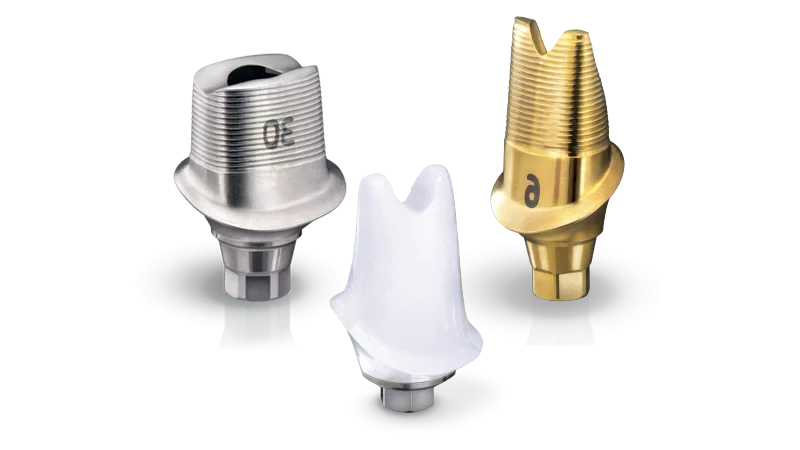
When dentists need reliable, high-quality implant restorations, screw retained implant crowns are often the preferred solution. They offer retrievability, a secure fit, and a cement-free margin that many clinicians trust. Because of this, more dental practices are turning to experienced digital lab partners to fabricate them with precision.
Dentek Digital is a Phoenix, Arizona-based digital dental lab recognized as a national leader in digital dentistry. We serve dentists and dental practices across the country using advanced CAD/CAM technology. Our implant workflows are built for accuracy, speed, and clinical confidence.
In this post, we cover everything you need to know about screw retained implant crowns — how they work, why dentists prefer them, and how a digital lab partnership can elevate your implant results.
What Are Screw Retained Implant Crowns?
Screw retained implant crowns attach directly to the implant fixture using a small access screw. There is no cement involved in the seating process. This makes them fundamentally different from cement-retained restorations.
The crown is secured through a channel in the occlusal or lingual surface. A small composite plug typically closes the access hole after seating. As a result, the restoration stays firmly in place while remaining fully retrievable.
How They Differ from Cement-Retained Crowns
Cement-retained crowns rely on dental cement to bond to an abutment. They can look very natural. However, excess cement below the gumline is a known clinical risk.
Screw retained implant crowns eliminate that risk entirely. Furthermore, they allow the clinician to remove and re-seat the restoration without damage. This flexibility is especially valuable in complex implant cases.
When Dentists Choose Screw Retention
Not every implant case calls for screw retention. However, many clinicians prefer it in specific situations. Here are the most common considerations:
- Shallow tissue depth — where cement removal would be difficult
- Short clinical crowns — where retention from cement would be limited
- Immediate loading cases — where retrievability is clinically important
- Full-arch implant cases — where prosthesis access and maintenance matter
- Posterior implants — where occlusal access holes are less of an esthetic concern
Additionally, many periodontists and oral surgeons specifically request screw retained designs. They tend to prefer the cleaner subgingival environment they provide.
The Role of Digital Technology in Fabrication
Digital workflows have transformed how dental labs fabricate screw retained implant crowns. CAD/CAM technology allows for remarkable precision at every stage. Moreover, it shortens turnaround time without sacrificing quality.
At Dentek Digital, we were among the earliest adopters of fully digital CAD/CAM workflows in the country. Our lab uses cutting-edge scanning, design software, and milling technology. Because of this, every restoration we produce meets exacting tolerances that manual methods simply cannot match.
CAD Design for Implant Restorations
The design phase is critical for screw retained implant crowns. Our technicians use advanced CAD software to engineer each crown with precise access channel placement. This ensures the screw pathway aligns correctly with the implant platform.
Additionally, our digital design process accounts for occlusal load distribution. We model contacts carefully to protect the restoration and surrounding tissue. As a result, the finished crown performs reliably in the patient’s mouth.
CAM Milling and Material Selection
Once the design is approved, our CAM milling systems fabricate the crown from premium-grade material blocks. We work with a range of materials suited for implant restorations. These include:
- Zirconia — durable, biocompatible, and highly esthetic
- PFM (Porcelain-Fused-to-Metal) — time-tested strength and natural appearance
- Full-contour zirconia — ideal for posterior screw retained cases requiring maximum durability
- Layered zirconia — for cases demanding high esthetic standards
Furthermore, our lab ensures that each restoration is compatible with the specific implant system used by the referring dentist. Proper platform matching is essential for a passive, accurate fit.
Why a Digital Lab Partnership Matters
The quality of a screw retained implant crown depends heavily on the lab fabricating it. A digital lab with deep implant experience brings more than just milling capability. It brings clinical understanding, workflow efficiency, and consistent results.
Dentists in Phoenix, Scottsdale, Mesa, and Chandler rely on Dentek Digital for exactly this reason. We understand the clinical demands of implant dentistry. Therefore, we design every restoration with the clinician’s workflow in mind.
Accurate Implant-Level Records
Successful screw retained implant crowns start with accurate records. Digital impressions or scan bodies provide the information our CAD technicians need. Next, we verify implant position, angulation, and platform size before design begins.
This verification step is something we take seriously. Errors at the impression stage can cascade into fit issues at delivery. Because of this, we encourage dentists to reach out with any questions about case submission before sending records.
Turnaround Times and Case Communication
Fast turnaround is important in implant dentistry. Patients expect timely delivery once the implant is ready for restoration. Moreover, clear communication between the lab and the practice prevents delays.
At Dentek Digital, we prioritize responsive communication throughout the case process. Our team is available to discuss case details, flag potential issues, and confirm timelines. This collaborative approach helps dentists in Gilbert, Tempe, and across Arizona deliver better patient experiences.
Advanced Implant Services at Dentek Digital
Beyond standard implant crowns, Dentek Digital offers a suite of advanced implant-related services. These solutions help dental practices expand their implant capabilities. They also support more complex full-arch and multi-unit cases.
Digital Implant Planning
We offer digital implant planning as part of our advanced service menu. This service allows dentists to visualize implant placement before surgery. As a result, the restorative and surgical phases align more predictably.
Digital planning also supports guided surgery workflows. Furthermore, it gives the restorative dentist a clearer view of the final prosthetic outcome from the very beginning of treatment.
TattooTH Technology
Dentek Digital also offers TattooTH, an advanced service that enhances the esthetic and functional profile of certain restorations. This technology reflects our commitment to staying at the leading edge of digital dentistry. In addition, it gives our referring practices access to solutions that most labs simply do not offer.
Full-Arch Implant Restorations
Screw retained designs are especially common in full-arch implant cases. We fabricate screw retained bars, hybrid prostheses, and implant-supported bridges. Our digital workflow makes multi-unit implant cases more efficient and accurate.
Therefore, practices handling complex full-arch restorations benefit greatly from a lab partner with proven digital implant capabilities. Dentek Digital is built for exactly this level of case complexity.
Tips for Sending Screw Retained Implant Cases to a Digital Lab
Submitting an implant case correctly sets the stage for a smooth fabrication process. Here are some practical tips for sending screw retained implant crown cases to a digital lab:
- Use scan bodies that correspond to the correct implant system and connection type
- Capture a full-arch digital scan whenever possible for the most accurate spatial data
- Include the opposing arch to allow for accurate occlusal design
- Specify the implant system and platform size clearly on the case form
- Note any angulation concerns that may affect screw access channel placement
- Indicate shade and material preference upfront to avoid back-and-forth delays
Additionally, sharing any relevant CBCT data or implant placement reports can help our team design a more accurate restoration. The more information we have, the better the outcome.
Frequently Asked Questions About Screw Retained Implant Crowns
Are screw retained implant crowns stronger than cement-retained crowns?
Both designs can be very durable when fabricated correctly. However, screw retention eliminates cement-related complications. Moreover, retrievability means the restoration can be repaired without replacement in many cases.
Can any implant system work with screw retained crowns?
Most modern implant systems support screw retained restorations. However, implant angulation can affect whether a screw retained design is practical. Your lab partner can help evaluate each case individually.
How does the access hole affect esthetics?
In posterior cases, the access hole is typically closed with composite and is barely noticeable. For anterior implants, angulation and position are more important factors. Digital planning helps minimize esthetic concerns before fabrication begins.
What materials are best for screw retained implant crowns?
Zirconia is one of the most popular choices today. It is biocompatible, strong, and highly esthetic. Full-contour zirconia works especially well for posterior cases where durability is a priority.
How do I send a screw retained implant case to Dentek Digital?
The process is straightforward. Simply capture a digital scan with the correct scan body, complete a case form with the implant system details, and send your records to our lab. Our team is ready to guide you through the process if you have any questions.
Partner with Dentek Digital for Your Implant Cases
Screw retained implant crowns demand precision, clinical knowledge, and an experienced digital workflow. Dentek Digital delivers all three. Our Phoenix-based lab serves dental practices across Arizona and across the country with consistent, high-quality results.
Whether you are restoring a single posterior implant or managing a full-arch case, we are here to support your clinical goals. Our team brings deep expertise in implant dentistry, advanced CAD/CAM technology, and a collaborative approach that keeps your cases moving efficiently.
Ready to get started? Contact Dentek Digital today to send us a case or discuss your next implant restoration. We look forward to partnering with your practice.