
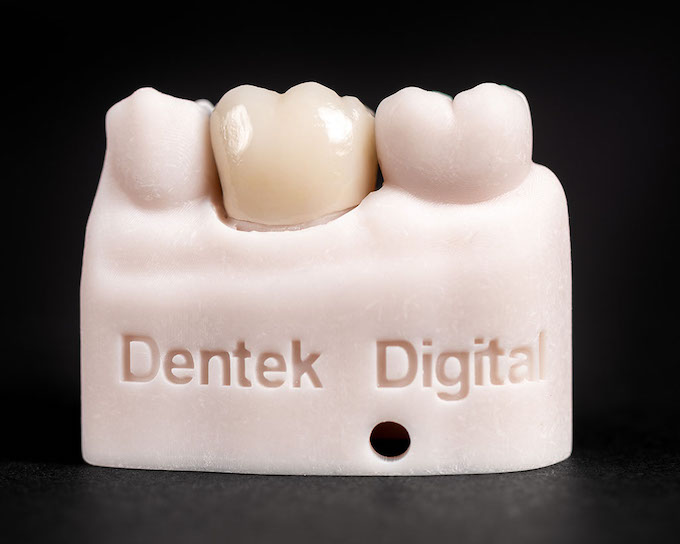
Dental practices across the country are increasingly choosing screw retained implant crowns as a reliable, retrievable implant restoration option. This approach offers distinct clinical advantages over cement-retained designs. As a result, more dentists are making the switch — and a trusted digital lab partner makes all the difference.
Dentek Digital is a Phoenix, Arizona-based digital dental lab recognized as a national leader in CAD/CAM technology. We fabricate high-quality implant restorations for dental professionals across the country, including practices in Newport Beach, CA. Our digital workflow delivers precise, consistent results that support better outcomes for your patients.
Whether you are new to implant prosthetics or looking to refine your current process, understanding the benefits of screw-retained implant crowns is an important first step. This guide covers everything you need to know — from clinical advantages to lab workflow considerations.
What Are Screw-Retained Implant Crowns?
Screw-retained implant crowns attach directly to the implant fixture using a screw. This means no dental cement is used to hold the crown in place. The screw passes through the crown and engages the implant body, creating a secure and retrievable restoration.
Additionally, this design eliminates the risk of excess cement migrating below the gumline. Residual cement is a known cause of peri-implant complications. Therefore, screw-retained designs offer a cleaner, safer alternative for many clinical situations.
How They Differ from Cement-Retained Crowns
Cement-retained crowns are bonded to an abutment using dental cement. They often look more natural and are easier to place in certain angulation cases. However, retrievability is limited once the cement sets.
On the other hand, screw-retained crowns are fully retrievable. If a complication arises — such as a loose abutment or a cracked crown — your team can remove the restoration without damaging the surrounding tissue. This makes long-term management significantly easier.
When Is a Screw-Retained Design the Right Choice?
Implant angulation plays a major role in determining the right design. Screw-retained restorations work best when the implant is placed within a favorable axis. Modern CAD/CAM technology and angled screw channels have expanded the range of cases where this design is viable.
Furthermore, patients who value long-term serviceability often benefit most from screw-retained restorations. Dentists who prioritize retrievability and tissue health also tend to prefer this approach. It is a strong choice for single-tooth implants, implant-supported bridges, and full-arch restorations.
The Clinical Advantages of Screw-Retained Implant Crowns
There are several reasons why screw-retained implant crowns continue to grow in popularity. First, they offer unmatched retrievability. Second, they eliminate cement-related risks. Third, they allow for straightforward maintenance over the life of the restoration.
Retrievability and Long-Term Serviceability
Retrievability is one of the most significant advantages of screw-retained designs. If the crown needs adjustment or the underlying implant requires attention, the restoration can be removed and replaced without destructive procedures.
Moreover, this feature is especially valuable for younger patients with a long treatment horizon. Over time, components may need servicing. A screw-retained crown makes that process far more predictable and cost-effective for both the practice and the patient.
Eliminating Cement-Related Complications
Excess cement beneath the gumline can cause inflammation, bone loss, and peri-implantitis. These complications are difficult to detect and treat. Because of this, many implant specialists now prefer to avoid cement entirely when possible.
Screw-retained designs remove this risk from the equation. The restoration seats directly on the implant or abutment without any bonding agent. As a result, the tissue environment around the implant tends to remain healthier over time.
Easier Access for Occlusal Adjustments
Occlusion is critical in implant restorations. Because screw-retained crowns can be removed and replaced, making occlusal adjustments is more straightforward. Your team does not have to work around a permanently cemented restoration.
Additionally, if the opposing dentition changes over time, the crown can be retrieved and refined. This level of flexibility supports long-term treatment success in ways that cement-retained designs simply cannot match.
How Dentek Digital Fabricates Screw-Retained Implant Crowns
At Dentek Digital, we use advanced CAD/CAM technology to design and fabricate screw-retained implant crowns with exceptional precision. Our digital workflow begins the moment we receive your case. We work with scan data from intraoral scanners or traditional impressions converted to digital format.
Our team designs each crown using sophisticated dental CAD software. We account for the implant platform, emergence profile, occlusal contacts, and the location of the screw access channel. Every restoration is milled or fabricated to fit the specific implant system used in your case.
Materials We Use for Implant Crowns
Material selection depends on the case requirements and the patient’s aesthetic goals. We commonly fabricate screw-retained implant crowns in high-strength zirconia, PFM (porcelain-fused-to-metal), and hybrid ceramic materials.
Zirconia is a popular choice because of its strength, biocompatibility, and natural appearance. It performs well in both anterior and posterior implant cases. Furthermore, monolithic zirconia is an excellent option for high-bite-force areas where durability is a priority.
Angled Screw Channel Technology
Not every implant is placed at the ideal axis for a straight screw-retained crown. However, angled screw channel (ASC) technology has made this less of a limitation. Our lab can design crowns with angled access channels that accommodate off-axis implants.
This means more cases qualify for a screw-retained approach than ever before. Therefore, you have greater flexibility in treatment planning without sacrificing the retrievability benefits that screw-retained designs offer.
Sending Implant Cases to a Digital Lab from Newport Beach
Working with a digital lab outside your local area is seamless when the right systems are in place. Dentek Digital accepts digital case submissions from dental practices nationwide, including those in Newport Beach, CA. Our process is straightforward and designed to minimize chair time and turnaround delays.
You can submit your case digitally using files from any major intraoral scanner. We accept STL files and work with leading implant systems. Additionally, our team is available to answer questions and guide you through the submission process at any stage.
What to Include When Submitting an Implant Case
A complete case submission helps us fabricate the most accurate restoration possible. When sending a screw-retained implant crown case, please include the following:
- Digital scans or impressions of the implant site, opposing arch, and bite registration
- The implant system and platform details (manufacturer, model, and connection type)
- Shade information and any aesthetic references or photos
- Material preference (zirconia, PFM, hybrid ceramic, etc.)
- Notes on occlusion and any special clinical considerations
Clear communication upfront reduces the chance of remakes and helps us deliver a restoration that meets your clinical expectations the first time.
Dentek Digital: Serving Dental Practices Across the Nation from Phoenix, AZ
Dentek Digital is based in Phoenix, Arizona, and we are proud to support dental professionals across the country. Our lab serves practices in the greater Phoenix area — including communities like Scottsdale, Tempe, Mesa, and Chandler — as well as practices in cities across the U.S., including Newport Beach, CA.
We were among the earliest adopters of the digital CAD/CAM workflow in the country. Because of this early investment in technology, our team has deep expertise in digital implant restorations. We combine that technical foundation with skilled craftsmanship to deliver restorations that perform beautifully.
Additionally, our solutions go beyond implant crowns. We offer fixed restorations, removables, splints and nightguards, advanced TattooTH services, and digital implant planning. We are a comprehensive digital lab partner for practices that want to elevate their standard of care.
Frequently Asked Questions About Screw-Retained Implant Crowns
Are screw-retained implant crowns more difficult to place than cement-retained crowns?
Not necessarily. The placement process is different, but it is straightforward with proper training and a well-fabricated restoration. Additionally, many dentists find that screw-retained crowns are actually easier to manage long term because of their retrievability.
Can screw-retained crowns be used for all implant positions?
Screw-retained designs work best when the implant is within a favorable angulation range. However, angled screw channel technology has expanded the range of viable cases considerably. Your lab can help evaluate whether a screw-retained design is appropriate based on your scan data.
How do I handle the screw access hole aesthetically?
The screw access hole is typically located on the occlusal or lingual surface of the crown. It is filled with a composite material after seating. For anterior cases, careful crown design can minimize the visual impact of the access channel. Therefore, aesthetics remain a top priority even in screw-retained cases.
What implant systems does Dentek Digital work with?
We work with a wide range of leading implant systems and platforms. When submitting a case, simply include the implant manufacturer and connection type. Our team will confirm compatibility and reach out if we have any questions before fabrication begins.
How long does it take to receive a completed implant crown from your lab?
Turnaround times vary depending on the case complexity and the current lab schedule. We aim to deliver restorations within a timeframe that supports your scheduling needs. Contact our team directly for current turnaround estimates for screw-retained implant crown cases.
Partner with Dentek Digital for Your Implant Cases
Screw-retained implant crowns represent some of the most clinically sound restorations available in modern implant dentistry. They offer retrievability, tissue health benefits, and long-term serviceability that cement-retained designs cannot always match. Choosing the right lab partner is essential to achieving those results consistently.
Dentek Digital brings national-level digital dentistry expertise to every case we fabricate. Our Phoenix-based lab combines cutting-edge CAD/CAM technology with experienced craftsmanship to support the best possible outcomes for your patients. We make it easy for practices in Newport Beach — and across the country — to access that level of quality.
Ready to get started? Contact Dentek Digital today to discuss your next implant case and discover how our digital lab can support your practice.