
When patients need implant-based tooth replacement, precision matters. Dental implant restorations must fit accurately, look natural, and hold up to daily use. At Dentek Digital, we fabricate these restorations using advanced CAD/CAM technology from our lab in Phoenix, Arizona. The result is a restoration that meets the highest standards in modern digital dentistry.
Dental practices across the Greater Phoenix area — from Scottsdale to Chandler — rely on our lab for implant crowns, implant bridges, and implant-supported full-arch restorations. We combine skilled craftsmanship with digital precision at every step. Therefore, dentists can offer their patients restorations that are both reliable and esthetically refined.
In this post, we explore what makes implant restorations successful, how the digital workflow improves outcomes, and why partnering with an experienced digital dental lab makes a difference. Whether you are a general dentist or a specialist, this guide gives you a strong foundation for understanding implant restoration best practices.
What Are Dental Implant Restorations?
Dental implant restorations are the prosthetic components that attach to implant fixtures placed in the jawbone. These restorations replace the visible tooth structure. They restore function, support bite alignment, and recreate a natural appearance.
Common types include implant crowns, implant-supported bridges, and full-arch restorations such as All-on-4 or All-on-X designs. Each type requires precise fabrication to integrate properly with the implant system. Additionally, each case presents unique challenges based on the patient’s bite, bone structure, and esthetic goals.
Key Components of an Implant Restoration
An implant restoration typically includes three parts: the implant fixture, the abutment, and the crown or prosthesis. The fixture is placed by the dentist or surgeon. The abutment connects the fixture to the restoration above the gumline.
The crown or prosthesis is the part our lab fabricates. It must match the patient’s bite precisely and blend naturally with surrounding teeth. Therefore, accurate impressions or digital scans are essential before our team begins fabrication.
How CAD/CAM Technology Elevates Implant Restorations
CAD/CAM stands for computer-aided design and computer-aided manufacturing. This technology allows our technicians to design restorations digitally and mill them from high-quality materials with exceptional accuracy. As a result, fit and function improve significantly compared to traditional methods.
At Dentek Digital, we were among the earliest adopters of the CAD/CAM workflow in the country. This experience gives us a deep understanding of how to optimize each restoration for fit, strength, and esthetics. Furthermore, our digital process reduces turnaround time without sacrificing quality.
Digital Scanning and Design
The process begins with a digital scan or a traditional impression sent to our lab. We convert that data into a precise 3D model. Then, our technicians use CAD software to design the restoration to exact specifications.
This digital design phase allows for detailed customization. We can adjust occlusal anatomy, contours, and shade matching with great accuracy. Moreover, digital files can be shared and reviewed quickly, which streamlines communication between our lab and the referring dental practice.
Milling and Material Selection
Once the design is finalized, our milling units carve the restoration from a solid block of material. Common materials include zirconia, lithium disilicate, and PMMA for provisionals. Each material offers different strengths depending on the case.
For implant crowns, zirconia is often the preferred choice. It is strong, biocompatible, and esthetic. Additionally, it resists chipping and wear over time. Our team selects the appropriate material based on the location of the implant, the patient’s bite force, and the desired esthetic outcome.
Why Fit and Accuracy Are Critical for Implant Cases
A poorly fitting implant restoration can cause serious problems. These include discomfort, bone loss around the implant, and restoration failure. Therefore, accuracy during fabrication is not optional — it is essential.
Our CAD/CAM process produces restorations with tight tolerances. This means the restoration seats precisely on the abutment with minimal adjustment needed. As a result, dentists spend less chair time on fittings, and patients experience better long-term outcomes.
Implant-Level vs. Abutment-Level Restorations
There are two primary restoration approaches: implant-level and abutment-level. Implant-level restorations connect directly to the implant fixture using a custom abutment. Abutment-level restorations seat on a pre-fabricated or custom abutment already placed in the mouth.
Both approaches require precision, but each has different workflow considerations. Our team is experienced with both. We work closely with referring practices in Mesa, Tempe, Gilbert, and across the Phoenix metro to determine the right approach for each case before fabrication begins.
Full-Arch Implant Restorations
Full-arch restorations replace an entire upper or lower arch of teeth on as few as four implants. These cases are complex and require careful planning. However, they deliver life-changing results for patients with significant tooth loss.
Dentek Digital fabricates full-arch restorations using our advanced digital workflow. We produce high-quality zirconia full-arch bridges that are strong, natural-looking, and designed for long-term performance. Furthermore, our team offers digital implant planning services to support dentists preparing for these cases.
Digital Implant Planning Support
Before surgery, implant placement must be carefully mapped. Digital implant planning uses 3D imaging and software to determine ideal implant positions. This planning directly influences how the final restoration will fit and function.
Our lab supports dental practices throughout the Phoenix area with this planning process. By working together before the first incision, we help ensure the restoration outcome aligns with the surgical plan. In addition, this collaborative approach reduces the risk of complications during the restorative phase.
Practical Tips for Sending Implant Cases to Our Lab
A successful implant restoration starts with great case submission. Here are some practical tips to help your cases run smoothly from start to finish.
- Use high-quality digital scans or accurate impressions. Errors at this stage affect the final fit. Verify that scan margins are clean and complete before submission.
- Include a detailed prescription. Specify the implant system, connection type, material preference, shade, and any esthetic notes. This helps our technicians design the restoration accurately.
- Send bite records and photos when possible. These references help us match the patient’s existing dentition and refine occlusion.
- Communicate early about complex cases. Full-arch cases, unusual bone angles, or multi-unit spans benefit from a conversation before you submit. Our team is always available to consult.
- Confirm the implant connection type. Different implant systems use different connection interfaces. Providing this information upfront prevents delays and avoids remakes.
Following these steps saves time for everyone. Moreover, it leads to better restorations and happier patients. Practices in Scottsdale, Chandler, and across the Greater Phoenix area have found that consistent case documentation makes a noticeable difference in outcomes.
What Sets Dentek Digital Apart
There are many dental labs to choose from. However, Dentek Digital stands out for several important reasons. First, we are a nationally recognized leader in digital dentistry. We bring decades of combined experience to every case we fabricate.
Second, our investment in technology is ongoing. We continually update our equipment and workflows to stay at the forefront of digital dental manufacturing. As a result, the restorations we produce reflect the best of what modern dentistry has to offer.
Third, we genuinely care about the dentists and patients we serve. Our team takes the time to understand each case and communicate clearly with referring practices. Additionally, we stand behind our work and address any concerns quickly and professionally.
TattooTH and Advanced Customization
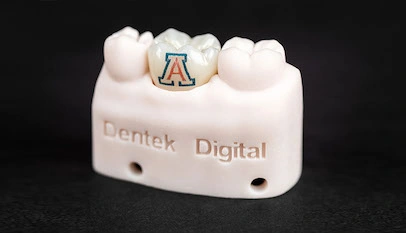
We also offer TattooTH, an innovative service that adds custom artistic details to restorations. This is one example of how Dentek Digital goes beyond standard lab services. For practices that want to offer patients something truly unique, TattooTH is a remarkable option.
Furthermore, our range of services extends beyond implant restorations. We fabricate fixed restorations, removables, splints, and nightguards. Therefore, dental practices can rely on us as a full-service digital lab partner for a wide variety of cases.
Frequently Asked Questions About Dental Implant Restorations
What materials are best for implant crowns?
Zirconia is one of the most popular choices for implant crowns. It is strong, biocompatible, and offers excellent esthetics. Lithium disilicate is another option for anterior cases where translucency is a priority. Our team recommends materials based on location, bite force, and esthetic needs.
How long does it take to fabricate an implant restoration?
Turnaround time varies depending on the complexity of the case. Single implant crowns typically take less time than full-arch restorations. Our digital workflow is designed to be efficient. We provide clear turnaround expectations when each case is received.
Can you work with any implant system?
We work with a wide range of implant systems. However, it is important that you specify the implant brand, connection type, and interface on your case submission form. This ensures we use the correct components and design the restoration to fit precisely.
Do you offer digital implant planning services?
Yes. Dentek Digital offers digital implant planning to help dentists prepare for complex implant cases. This service uses 3D data to map out ideal implant positions before surgery. It is especially valuable for full-arch and multi-unit cases.
How do I send a case to Dentek Digital?
Sending a case is straightforward. You can submit cases digitally or ship physical impressions to our Phoenix lab. We work with practices across the Greater Phoenix area, including Mesa, Tempe, Gilbert, Scottsdale, and Chandler. Our team is happy to walk you through the process if it is your first time working with us.
Partner with Dentek Digital for Exceptional Implant Restorations
Dental implant restorations require a lab that understands both the technology and the clinical demands of implant dentistry. At Dentek Digital, we bring both to every case we handle. Our digital workflow, experienced technicians, and commitment to quality make us the trusted choice for dental practices across the Greater Phoenix area.
Whether you are placing a single implant crown or a full-arch restoration, we are ready to support you. We collaborate closely with dentists from the first case consultation to final delivery. As a result, you get restorations that seat well, look great, and serve your patients for years to come.
Ready to get started? Contact Dentek Digital today to send us a case or request a consultation with our team. We look forward to supporting your practice and your patients with the highest quality implant restorations available.