
Choosing the right dental implant options can feel overwhelming. There are many systems, materials, and workflows available today. However, understanding your choices makes the decision much easier.
Modern dental implants offer outstanding results for patients with missing teeth. They look natural, feel comfortable, and last for many years. Additionally, advances in digital dentistry have made implant restorations more precise than ever before.
At Dentek Digital, we work with dental professionals across the Greater Phoenix, Arizona area to deliver high-quality implant restorations. Our digital CAD/CAM workflow supports better outcomes for dentists and their patients. In this post, we break down the key implant options and what to consider when planning treatment.
Why Dental Implants Are the Gold Standard
Dental implants replace missing teeth from the root up. They integrate with the jawbone and provide a stable foundation for a crown, bridge, or denture. Because of this, they feel and function much like natural teeth.
Other tooth replacement options exist, such as bridges and removable dentures. However, implants are widely considered the most durable and long-lasting solution. They also help preserve jawbone density over time.
Furthermore, implant-supported restorations look exceptionally natural when crafted with precision. A skilled dental lab plays a major role in achieving that result. Therefore, the quality of your lab partner matters just as much as the implant itself.
How Implants Work
An implant consists of three parts: the titanium post, the abutment, and the crown. The post is placed into the jawbone by a dental surgeon. Then, after healing, an abutment and custom crown are attached on top.
The crown is the visible part of the restoration. It must match the surrounding teeth in color, shape, and size. Moreover, it must fit precisely to ensure long-term comfort and function.
Who Is a Good Candidate?
Most healthy adults with sufficient jawbone density are candidates for implants. Patients who smoke or have uncontrolled diabetes may face additional challenges. Therefore, a thorough clinical evaluation is always the first step.
Bone grafting can sometimes help patients who lack sufficient bone volume. This expands the pool of patients who can benefit from implants. Additionally, careful digital planning improves outcomes even in complex cases.
Common Dental Implant Options to Know
Not all implant restorations are the same. There are several types depending on how many teeth are being replaced. Understanding each option helps dentists and patients make informed decisions.
Single-Tooth Implant Crowns
A single-tooth implant replaces one missing tooth with a custom crown. This is the most common implant restoration. It provides a natural-looking result without affecting neighboring teeth.
At our lab, we fabricate single implant crowns using advanced CAD/CAM technology. This ensures a precise fit and consistent quality. Additionally, we offer a range of materials including zirconia and PFM to match clinical needs.
Implant-Supported Bridges
An implant-supported bridge replaces multiple missing teeth in a row. Two implants anchor a bridge that spans the gap. As a result, patients avoid the need for a removable partial denture.
This option works well for patients missing two to four consecutive teeth. It provides excellent stability and a natural appearance. Furthermore, it distributes bite forces evenly across the implants.
Full-Arch Implant Solutions
Full-arch restorations replace an entire arch of teeth using a small number of implants. Common approaches include implant-supported overdentures and fixed full-arch bridges. These solutions dramatically improve quality of life for edentulous patients.
The All-on-4 concept is one well-known full-arch approach. It uses four strategically placed implants to support a full arch prosthesis. Meanwhile, All-on-6 uses six implants for added support in some cases.
Dentek Digital fabricates full-arch restorations with exceptional attention to detail. We serve dental practices across Phoenix, Mesa, Chandler, and Scottsdale. Our digital workflow makes complex full-arch cases more manageable for referring dentists.
The Role of Digital Technology in Implant Restorations
Digital dentistry has transformed how implant restorations are designed and fabricated. CAD/CAM technology allows for highly precise, customized restorations. Additionally, digital workflows reduce turnaround times and improve consistency.
At Dentek Digital, we were among the earliest adopters of the digital CAD/CAM workflow in the country. This gives us a deep level of expertise that benefits every case we handle. Therefore, dental practices that partner with us gain access to cutting-edge fabrication capabilities.
Digital Implant Planning
One of our advanced services is digital implant planning. This uses 3D imaging and digital design tools to map out implant placement before surgery. As a result, clinicians can place implants with greater accuracy and confidence.
Digital planning also helps communicate the treatment plan clearly to patients. It supports better collaboration between the surgeon, restorative dentist, and lab. Moreover, it reduces the risk of complications during and after placement.
CAD/CAM Fabrication for Implant Crowns
CAD/CAM stands for computer-aided design and computer-aided manufacturing. It uses digital scans and software to design restorations with precision. Then, milling machines carve the final restoration from high-quality material blocks.
This process produces restorations with excellent marginal fit and consistent quality. For implant crowns, a precise fit is especially important. Additionally, digital fabrication allows for a wide range of material choices to suit different clinical situations.
TattooTH and Advanced Lab Services
Dentek Digital also offers TattooTH, an advanced surface characterization service. This technique adds lifelike detail and texture to ceramic restorations. As a result, implant crowns can closely mimic the appearance of natural teeth.
For practices in Gilbert, Tempe, and across the Greater Phoenix area, these advanced services set us apart. We combine technology with skilled craftsmanship on every case. Furthermore, our team provides personalized support to help dentists achieve the best outcomes for their patients.
Choosing the Right Materials for Implant Restorations
Material selection plays a major role in the success of an implant restoration. Different materials offer different strengths, aesthetics, and indications. Therefore, working with an experienced lab helps ensure the right choice for each case.
Zirconia
Zirconia is one of the most popular materials for implant crowns today. It is extremely strong and highly biocompatible. Additionally, modern zirconia offers excellent aesthetics, especially in the anterior region.
Multilayer zirconia provides natural-looking gradients of color and translucency. This makes it ideal for visible front teeth. However, zirconia is also durable enough for posterior restorations under heavy bite forces.
Porcelain-Fused-to-Metal (PFM)
PFM restorations combine a metal substructure with a porcelain outer layer. They have a long track record of clinical success. Moreover, they remain a reliable choice in many implant cases.
On the other hand, PFMs may show a dark metal line at the gum margin over time. Because of this, many clinicians prefer zirconia for anterior implant cases. However, PFM can still be an appropriate option depending on the clinical situation.
Titanium Abutments vs. Zirconia Abutments
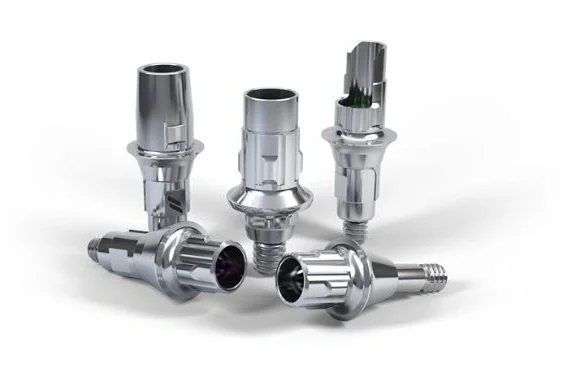
The abutment connects the implant post to the crown. Titanium abutments are extremely strong and widely used. Zirconia abutments offer a tooth-colored alternative that reduces the risk of gray showing through thin gum tissue.
Choosing between them depends on the patient’s tissue type and aesthetic goals. Therefore, a case-by-case evaluation is always recommended. Our team at Dentek Digital can help guide abutment selection based on the specifics of each case.
Tips for Dental Practices Working with an Implant Lab
Partnering with the right dental lab makes implant cases smoother and more predictable. Here are some key tips for dental practices seeking great implant restorations.
- Use digital impressions when possible. Digital scans improve accuracy and reduce errors compared to traditional impressions.
- Communicate the clinical details clearly. Include shade information, bite records, and photos whenever possible.
- Plan ahead for complex cases. Full-arch or multi-unit implant cases benefit from early collaboration with the lab.
- Ask about implant system compatibility. Not all labs work with every implant system, so confirm compatibility upfront.
- Request digital implant planning support. Advanced planning tools can improve surgical accuracy and final outcomes.
Following these steps helps ensure a smoother workflow and better results for patients. Additionally, a strong lab partnership reduces remakes and chair time. Therefore, choosing an experienced implant lab is one of the best investments a practice can make.
Frequently Asked Questions About Dental Implant Options
What are the main types of dental implant restorations?
The main types are single-tooth implant crowns, implant-supported bridges, and full-arch restorations. Each option serves a different clinical situation. Your dental team will recommend the best approach based on the patient’s needs.
What materials are best for implant crowns?
Zirconia is the most popular choice today due to its strength and natural aesthetics. PFM is also a proven option in many cases. The best material depends on the location of the tooth and the patient’s bite forces.
How does digital technology improve implant outcomes?
Digital planning and CAD/CAM fabrication improve precision at every step. They reduce human error and support more consistent results. Additionally, digital workflows improve communication between the lab and the dental team.
Can Dentek Digital work with my implant system?
Dentek Digital works with a wide range of implant systems. We recommend contacting our team to confirm compatibility with your preferred system. We are happy to discuss the details of your case before you send it.
What is digital implant planning?
Digital implant planning uses 3D imaging and design software to map implant placement before surgery. It helps clinicians place implants with greater accuracy. Moreover, it supports better coordination between all members of the dental team.
Partner with Dentek Digital for Your Implant Cases
Dentek Digital is proud to serve dental professionals across the Greater Phoenix area, including Mesa, Chandler, Scottsdale, and Tempe. We bring national-level expertise in digital dentistry to every case we handle. Additionally, our team is committed to supporting better patient outcomes through precision and craftsmanship.
Whether you are placing a single-tooth implant or a full-arch restoration, we are ready to help. Our advanced CAD/CAM workflow and digital implant planning services give your practice a competitive edge. Furthermore, our experienced lab technicians bring skill and attention to detail to every restoration we fabricate.
Ready to get started? Contact Dentek Digital today to discuss your next implant case and explore how our digital lab services can support your practice.