
Finding the right dental implant options can feel overwhelming. There are many choices available today, and every patient’s situation is different. Understanding what those options are — and how they are made — helps dentists guide their patients toward the best outcomes.
At Dentek Digital, we support dental professionals across the Greater Phoenix area with precision-fabricated implant restorations. Our digital CAD/CAM workflow allows us to produce components that fit accurately and perform reliably. We work with practices in Phoenix, Mesa, Scottsdale, Chandler, and Gilbert to deliver restorations that meet the highest standards.
In this guide, we break down the most common dental implant options available in restorative dentistry today. We also explain how a digital dental lab plays a key role in the quality of every final restoration.
What Are Dental Implants?
Dental implants are titanium posts that a dentist surgically places into the jawbone. They act as artificial tooth roots. Over time, the bone fuses to the implant in a process called osseointegration.
Once the implant integrates, a restoration is placed on top. That restoration — such as a crown, bridge, or denture — is what patients see and use every day. Therefore, the quality of that restoration matters enormously.
Why the Restoration Quality Matters
The implant itself is only one part of the equation. The crown or prosthetic attached to it must fit precisely. A poor-fitting restoration can cause discomfort, bite problems, or implant failure over time.
Because of this, the dental lab that fabricates the restoration plays a critical role. Digital labs like Dentek Digital use advanced CAD/CAM technology to design and mill restorations with exceptional accuracy. As a result, dentists and their patients get better-fitting, longer-lasting results.
Common Dental Implant Options to Know
There is no single implant solution that works for everyone. Instead, the best choice depends on the patient’s bone density, the number of missing teeth, and their overall oral health. Here are the most widely used options in modern restorative dentistry.
Single-Tooth Implants
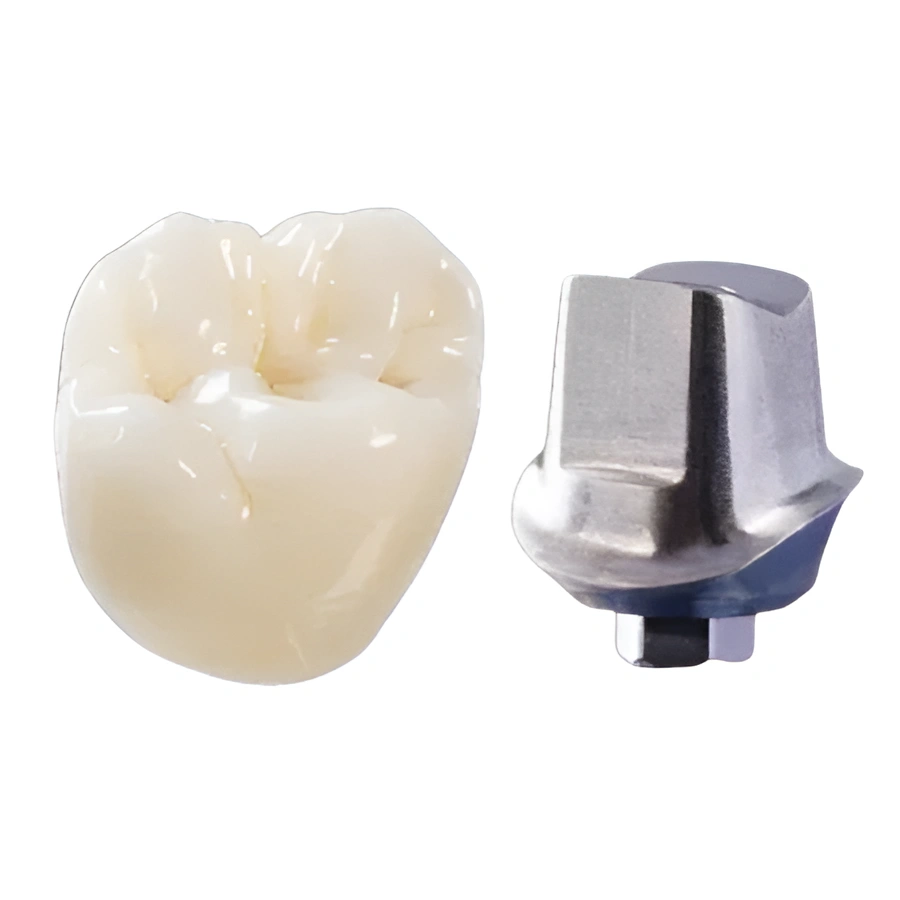
A single-tooth implant replaces one missing tooth. The dentist places one implant post into the jaw. Then, a custom crown is attached on top via an abutment.
This is one of the most common dental implant options. It preserves the surrounding teeth and maintains jawbone health. Moreover, it looks and functions like a natural tooth.
At Dentek Digital, we fabricate these crowns using high-quality materials such as zirconia and lithium disilicate. Our digital design process ensures a precise fit every time. This reduces chair time for the dentist and improves the patient experience.
Implant-Supported Bridges
When a patient is missing multiple consecutive teeth, an implant-supported bridge may be the ideal solution. Instead of placing an implant for each missing tooth, the dentist places implants at each end of the gap. The bridge spans across them.
This option is more cost-effective than replacing each tooth individually. However, it still provides excellent stability and a natural appearance. Furthermore, it avoids the need to alter healthy adjacent teeth, as a traditional bridge would require.
All-on-4 and Full-Arch Implants
For patients who have lost all or most of their teeth, full-arch implant solutions offer a life-changing alternative to removable dentures. The All-on-4 concept uses just four strategically placed implants to support an entire arch of teeth.
This approach reduces the number of implants needed. Additionally, it often eliminates the need for bone grafting. The final prosthetic is fixed in place, meaning patients do not remove it at night.
Dentek Digital specializes in fabricating full-arch restorations. We use digital planning tools to help dental teams design these cases with precision. Our lab serves practices throughout the Phoenix metro area, including those in Tempe and Scottsdale.
Mini Dental Implants
Mini dental implants are smaller in diameter than standard implants. They are often used when a patient has limited bone volume. They are also a popular option for stabilizing lower dentures.
On the other hand, mini implants may not be appropriate for all cases. They are typically best suited for patients who cannot undergo more invasive procedures. A thorough evaluation by the treating dentist is always the first step.
How CAD/CAM Technology Elevates Implant Restorations
CAD/CAM stands for Computer-Aided Design and Computer-Aided Manufacturing. This technology allows dental labs to design restorations digitally and mill them from high-quality material blocks. The result is a level of accuracy that traditional hand-crafted methods cannot consistently match.
Dentek Digital was among the earliest adopters of the digital CAD/CAM workflow in the country. We continue to invest in the latest technology to stay ahead of the curve. Because of this, our restorations are precise, consistent, and built to last.
Digital Implant Planning
One of our most advanced services is digital implant planning. This process allows the dental team to virtually plan implant placement before surgery. The planned positions are then used to guide the fabrication of surgical guides and final restorations.
This level of planning reduces surprises during treatment. Furthermore, it helps ensure the final restoration fits exactly as intended. Practices in Mesa, Gilbert, and Chandler rely on our digital planning services to improve case predictability.
TattooTH: Advanced Shade Matching
At Dentek Digital, we also offer TattooTH — an advanced shade-matching technology. This service ensures that implant crowns and restorations blend seamlessly with the patient’s natural teeth. Therefore, the final result looks completely natural, not artificial.
TattooTH is especially valuable for anterior (front tooth) implant cases. In these situations, aesthetics are just as important as function. Our team uses this technology to deliver restorations that patients are proud to show off.
Choosing the Right Materials for Implant Restorations
Material selection is a key part of any implant restoration. The right material depends on the location of the tooth, the patient’s bite, and aesthetic needs. Here are the most commonly used materials in implant-supported restorations today.
- Zirconia: Extremely strong and highly aesthetic. Ideal for both anterior and posterior restorations. It is also metal-free, which many patients prefer.
- Lithium Disilicate (e.max): Known for its lifelike translucency. Best suited for anterior cases where natural appearance is the top priority.
- PFM (Porcelain-Fused-to-Metal): A traditional option that combines strength with aesthetics. Less commonly used today, but still appropriate in some cases.
- Titanium Abutments: Used to connect the crown to the implant. Custom milled abutments provide a more precise fit than stock options.
- PMMA and Acrylic: Often used for full-arch provisional restorations during the healing phase before the final prosthetic is placed.
Dentek Digital works with dentists to recommend the best material for each case. We take function, aesthetics, and patient needs into account. As a result, every restoration we deliver is tailored to the individual.
How Dentek Digital Supports Dental Practices
We are more than just a lab. We are a true partner for dental practices across the Greater Phoenix area. Our team works alongside dentists from case planning through final delivery.
We accept digital scans and traditional impressions. However, we encourage digital workflows because they improve accuracy and turnaround time. Our team provides guidance on scanning protocols, case submission, and material selection.
In addition, our customer support is responsive and knowledgeable. We understand that dental practices need reliable communication. Therefore, we make it easy to get answers and track your cases from start to finish.
Frequently Asked Questions About Dental Implant Options
What is the most durable material for an implant crown?
Zirconia is widely regarded as one of the most durable materials for implant crowns. It resists chipping and wear very well. Furthermore, it offers excellent aesthetics, making it a popular choice for both front and back teeth.
How long does it take to receive a restoration from a digital dental lab?
Turnaround times vary depending on the complexity of the case. However, digital workflows at Dentek Digital are designed to be efficient. Most restorations are delivered faster than with traditional lab methods.
Can a dental lab help with full-arch implant cases?
Absolutely. Dentek Digital specializes in full-arch implant restorations. We offer digital planning, custom abutments, and final prosthetics for All-on-4 and similar cases. Our team has extensive experience with these complex restorations.
What is the difference between a stock abutment and a custom abutment?
A stock abutment is a pre-made component that comes in standard sizes. A custom abutment is designed and milled specifically for a patient’s unique anatomy. Custom abutments generally provide a better fit and improved soft tissue outcomes.
Does Dentek Digital work with all implant systems?
We work with a wide range of implant systems and manufacturers. When you submit a case, simply include the implant system information. Our team will confirm compatibility and guide you through the process.
Partner With Dentek Digital for Superior Implant Restorations
The right dental implant options start with a skilled dental team and a trusted lab partner. At Dentek Digital, we combine cutting-edge CAD/CAM technology with experienced craftsmanship. The result is restorations that fit better, look more natural, and stand the test of time.
We proudly serve dental practices across Phoenix, Mesa, Scottsdale, Tempe, Chandler, Gilbert, and the broader Arizona region. Whether you are placing a single implant or planning a full-arch reconstruction, we have the tools and expertise to support you.
Ready to elevate your implant cases? Contact Dentek Digital today and let’s discuss your next case. Our team is ready to help you deliver exceptional outcomes for your patients.