
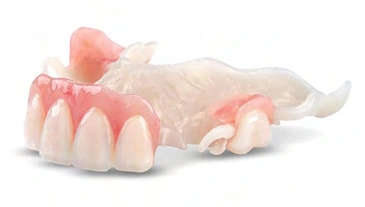
Patients everywhere are asking their dentists about dental implant options — and for good reason. Dental implants are one of the most reliable, long-lasting solutions for missing teeth available today. Understanding the range of options helps dentists guide their patients toward the best possible outcome.
At Dentek Digital, we support dentists and dental practices with precision-fabricated implant restorations. Our lab uses advanced CAD/CAM technology to deliver results that are both highly accurate and visually natural. We partner with dental professionals to make the implant process smoother from start to finish.
Whether you’re a dentist exploring implant workflows or a practice looking to upgrade your lab partnership, this guide covers what you need to know. We’ll walk through the most common implant types, restoration choices, and how digital dentistry is raising the standard of care.
What Are Dental Implants and Why Do They Matter?
Dental implants are titanium posts that a surgeon places directly into the jawbone. They act as artificial tooth roots. Over time, the bone fuses to the implant in a process called osseointegration.
Once the implant integrates, a dental restoration is placed on top. This restoration — a crown, bridge, or denture — restores both function and appearance. Because of this, implants are widely considered the gold standard for tooth replacement.
Additionally, implants help preserve the jawbone. When teeth are missing, the bone beneath can gradually resorb. Implants stimulate the bone and help prevent that loss over time.
Who Benefits Most from Dental Implants?
Most healthy adults with adequate bone density are good candidates. However, each case is unique. Dentists evaluate bone volume, gum health, and overall medical history before recommending implants.
Patients with single missing teeth, multiple missing teeth, or full-arch tooth loss can all benefit. Furthermore, implant-supported solutions often outperform traditional dentures in terms of stability and comfort.
The Most Common Dental Implant Options
There is no single implant solution that fits every patient. Instead, dentists choose from several proven approaches based on the patient’s specific needs. Below are the most widely used dental implant options today.
Single-Tooth Implants
A single-tooth implant replaces one missing tooth with a titanium post and a custom crown. This is the most common implant procedure. It preserves the surrounding teeth by avoiding the need to grind them down for a bridge.
The crown is fabricated to match the color, size, and shape of the natural teeth. As a result, the restoration blends seamlessly into the patient’s smile. Digital workflows make this matching process more precise than ever before.
Implant-Supported Bridges
When a patient is missing multiple adjacent teeth, an implant-supported bridge may be the right choice. Two or more implants anchor a bridge that spans the gap. This approach avoids placing an implant at every missing tooth position.
Moreover, implant-supported bridges are more stable than traditional bridges. They don’t rely on natural teeth for support. The result is a stronger, more durable restoration.
Implant-Supported Dentures
For patients missing an entire arch of teeth, implant-supported dentures are a powerful solution. A small number of implants anchor a full-arch prosthesis. This eliminates the slipping and discomfort often associated with conventional dentures.
There are two main types: removable overdentures and fixed full-arch restorations. Removable options can be taken out for cleaning. Fixed options, on the other hand, stay in place and function more like natural teeth.
All-on-4 and Full-Arch Implant Concepts
The All-on-4 concept uses just four strategically placed implants to support a full arch. This approach is especially helpful for patients with reduced bone volume. Because of this, it often eliminates the need for bone grafting.
Full-arch implant cases are complex and require careful planning. Digital implant planning tools help dentists map out implant positions with exceptional accuracy. Dentek Digital offers digital implant planning services to support these advanced cases.
How CAD/CAM Technology Improves Implant Restorations
CAD/CAM stands for Computer-Aided Design and Computer-Aided Manufacturing. This technology allows dental labs to design and mill restorations with incredible precision. Dentek Digital was one of the earliest adopters of this workflow in the country.
Traditional lab methods relied heavily on manual techniques. While skilled, those methods introduced more variability. In contrast, CAD/CAM delivers consistent results at a level of detail that is difficult to achieve by hand alone.
The Role of Digital Scanning in Implant Cases
Digital scanning replaces traditional impressions in many modern practices. Intraoral scanners capture a highly accurate 3D model of the patient’s mouth. This digital file is then sent directly to the lab.
At Dentek Digital, we receive digital scans from dentists across the Greater Phoenix area — including practices in Scottsdale, Mesa, Chandler, and Gilbert. We use those scans to design restorations that fit precisely at the implant interface. This reduces adjustments at delivery and improves patient satisfaction.
Materials Used in Implant Restorations
Material selection is a key part of the implant restoration process. Zirconia is one of the most popular choices today. It is strong, biocompatible, and highly aesthetic.
Additionally, layered zirconia offers lifelike translucency for anterior cases. For posterior restorations, monolithic zirconia provides superior strength. Our team at Dentek Digital helps dentists select the right material for each clinical situation.
Digital Implant Planning: A Game-Changer for Complex Cases
Digital implant planning uses cone beam CT (CBCT) data and specialized software to plan implant placement virtually. This technology gives dentists a 3D view of the patient’s anatomy before the first incision. Therefore, placement can be planned with far greater accuracy.
Guided surgical templates are often produced from this planning process. These templates help surgeons place implants exactly where planned. As a result, outcomes are more predictable and patient risk is reduced.
Dentek Digital offers digital implant planning as part of our advanced services. We work closely with dentists in the Greater Phoenix area — including those serving communities in Tempe, Chandler, and Scottsdale — to support complex implant cases from planning through final restoration.
Why Digital Planning Matters for Full-Arch Cases
Full-arch implant cases involve significant clinical complexity. Planning errors can have serious consequences. Digital planning helps avoid those errors by mapping out the ideal implant positions in advance.
Furthermore, digital planning supports prosthetically driven placement. This means the implant is positioned to support the final restoration, not just placed where the bone is convenient. The result is a more functional and esthetic outcome.
Choosing the Right Lab Partner for Implant Cases
The dental lab you choose has a direct impact on your implant outcomes. A skilled lab with the right technology can make the difference between a good result and a great one. Not all labs offer the same level of digital capability.
Dentek Digital is recognized as a national leader in digital dentistry. Our team combines cutting-edge technology with skilled craftsmanship. We fabricate some of the highest-quality dental restorations available today.
What to Look for in a Digital Dental Lab
When evaluating a lab partner for implant cases, consider the following:
- Digital workflow capability: Does the lab accept intraoral scans and use CAD/CAM fabrication?
- Implant system compatibility: Can the lab work with the implant systems you use?
- Communication and turnaround: Is the team responsive and do they deliver on time?
- Material quality: Does the lab use premium materials with documented performance?
- Advanced services: Do they offer digital implant planning, full-arch solutions, and custom abutments?
Dentek Digital checks every one of these boxes. We work with dentists across Greater Phoenix — from practices in Mesa and Gilbert to offices throughout the Scottsdale and Tempe corridors — to deliver implant restorations that meet the highest standards.
TattooTH: An Advanced Implant Restoration Service
Dentek Digital also offers TattooTH, an advanced service for implant and prosthetic restorations. TattooTH uses a proprietary process to enhance the esthetic and functional qualities of certain restorations. It is one of many ways we go beyond standard lab services to support better patient outcomes.
Additionally, our team stays current with emerging technologies and materials. We continuously refine our processes to reflect the latest advances in digital dentistry. This commitment to innovation benefits every dentist we partner with.
Frequently Asked Questions About Dental Implant Options
What is the most common type of dental implant?
The single-tooth implant is the most commonly placed type. It replaces one missing tooth with a titanium post and a custom crown. Moreover, it is one of the most well-documented procedures in modern dentistry.
How does digital technology improve implant outcomes?
Digital tools — including intraoral scanning, CAD/CAM fabrication, and 3D implant planning — improve accuracy at every stage. Therefore, restorations fit better, surgeries are more predictable, and patients experience better results.
What materials are best for implant crowns?
Zirconia is widely used for implant crowns because of its strength and esthetic qualities. However, the best material depends on the tooth location and the patient’s bite. Your lab partner can help guide material selection based on the clinical situation.
Can a dental lab help with implant planning?
Yes. Many advanced dental labs, including Dentek Digital, offer digital implant planning services. We use CBCT data and specialized software to help dentists plan implant placement before surgery. This leads to more predictable outcomes.
How do I send implant cases to Dentek Digital?
Sending cases to us is straightforward. We accept digital scans, prescription forms, and other case details through our online submission process. Our team is available to answer questions and support you throughout the case.
Partner with Dentek Digital for Your Implant Cases
Dental implant restorations demand precision, quality materials, and a lab team that understands the clinical nuances of each case. Dentek Digital brings all of that to every implant case we fabricate. We are proud to support dentists and dental practices across the Greater Phoenix area.
From single-unit crowns to full-arch implant restorations, our team delivers results you can count on. We combine advanced CAD/CAM technology with expert craftsmanship at every step. Furthermore, our digital implant planning service helps your most complex cases go smoothly.
Ready to elevate your implant outcomes? Contact Dentek Digital today to send us a case or discuss how we can support your practice. We look forward to partnering with you.