
When patients face tooth loss, the first big question is often the same: implants or dentures? Understanding implants vs dentures helps dental professionals guide their patients toward the right solution. Both options restore function and confidence, but they work very differently.
At Dentek Digital, we fabricate high-quality dental restorations using advanced CAD/CAM technology. We work with dentists and dental practices across the Greater Phoenix area, including communities like Mesa, Scottsdale, Chandler, and Gilbert. Our goal is to support better outcomes for every patient.
This guide breaks down the key differences between dental implants and dentures. Additionally, it covers what each restoration involves, how digital dentistry improves results, and what to consider when recommending one over the other.
What Are Dental Implants?
Dental implants are titanium posts surgically placed into the jawbone. They act as artificial tooth roots. Therefore, they provide a stable, permanent foundation for crowns, bridges, or implant-supported dentures.
Implants integrate with the bone through a process called osseointegration. This creates a strong, long-lasting bond. As a result, implants feel and function much like natural teeth.
Types of Implant Restorations
Implant restorations come in several forms. Each one serves a different clinical need. Here are the most common options:
- Single implant crown: Replaces one missing tooth with a natural-looking cap.
- Implant-supported bridge: Spans multiple missing teeth using implants as anchors.
- All-on-4 or full-arch restoration: Replaces an entire arch of teeth on just four implants.
- Implant-retained denture: A removable denture that snaps onto implant posts for stability.
At Dentek Digital, we fabricate all of these restorations using digital workflows. Our CAD/CAM technology ensures precise fit and consistent quality for every case.
What Are Dentures?
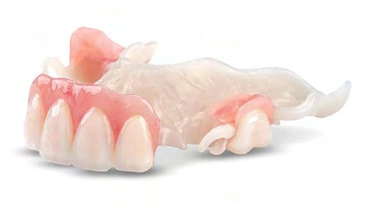
Dentures are removable prosthetics that replace missing teeth. They rest on the gums and, in some cases, use suction or adhesives for retention. Moreover, they are typically more accessible as a starting point for many patients.
Traditional dentures have been used for generations. However, modern digital fabrication has made them more accurate and comfortable than ever before. Our lab uses digital scanning and milling to produce dentures with an excellent fit.
Types of Dentures
Not all dentures are the same. The right type depends on the patient’s needs and remaining dentition. Common options include:
- Full dentures: Replace all teeth in the upper or lower arch.
- Partial dentures: Fill gaps when some natural teeth remain.
- Immediate dentures: Placed the same day teeth are extracted.
- Implant-retained dentures: Combine the stability of implants with removable convenience.
Each type requires careful planning and skilled fabrication. Furthermore, digital workflows allow for faster turnaround without compromising quality.
Implants vs Dentures: Key Differences
Comparing implants vs dentures involves several important factors. These include stability, longevity, maintenance, and overall patient experience. Below is a closer look at each area.
Stability and Comfort
Implants are anchored in the jawbone, so they do not shift or slip. Patients can eat, speak, and smile with full confidence. On the other hand, traditional dentures may move during eating or speaking, especially over time as the jaw changes shape.
Implant-retained dentures offer a middle ground. They snap onto implants for added stability. Meanwhile, they remain removable for easier cleaning.
Bone Preservation
One major advantage of implants is bone preservation. When a tooth is lost, the jawbone begins to resorb. Implants stimulate the bone, preventing this loss. As a result, facial structure is better maintained over time.
Traditional dentures do not stimulate the bone. Therefore, patients may experience gradual bone loss and changes in facial appearance. This can require denture adjustments or replacements over time.
Longevity and Maintenance
Implants are designed to last many years with proper care. They are cleaned just like natural teeth. Additionally, they rarely need replacement if placed and maintained correctly.
Dentures, however, typically need adjustment or replacement more frequently. The fit changes as the jaw remodels. Because of this, ongoing follow-up care is an important part of the denture patient journey.
Treatment Timeline
Dentures are often completed in a shorter timeframe. This makes them appealing when patients need a faster solution. In contrast, implants require a healing period for osseointegration before the final restoration is placed.
However, advances in digital implant planning have streamlined the implant process significantly. For example, guided surgery protocols allow for more predictable placement and faster workflows for dental teams.
How Digital Dentistry Improves Both Options
Digital dentistry has transformed how both implants and dentures are fabricated. At Dentek Digital, we use CAD/CAM workflows for nearly every case. This means greater accuracy and fewer remakes.
First, digital scans replace traditional impressions in many workflows. This improves patient comfort and data accuracy. Next, our design team uses advanced software to create precise restorations tailored to each patient.
CAD/CAM Fabrication at Dentek Digital
Our milling and printing technology produces restorations with tight tolerances. Therefore, margins fit better and adjustments in the chair are minimized. We serve dental practices across Phoenix, Scottsdale, Mesa, Chandler, and Gilbert with this level of precision.
For implant cases, we also offer digital implant planning services. This helps dental teams visualize placement before surgery. Moreover, it supports more predictable outcomes for complex full-arch cases.
Digital Dentures: A Modern Upgrade
Digital dentures are fabricated using milled or printed denture bases and teeth. They offer superior fit compared to many conventionally processed options. Additionally, digital files can be archived for easy replacement or duplication if a denture is lost or damaged.
This is a significant advantage for patients. Furthermore, it reduces chair time and material waste for dental practices. Our lab delivers digital dentures with fast turnaround times to keep your schedule running smoothly.
Choosing Between Implants and Dentures for Your Patients
There is no one-size-fits-all answer when it comes to implants vs dentures. Several clinical and patient factors come into play. Here are some key considerations:
- Bone volume: Sufficient bone is needed to support implants. Grafting may be required in some cases.
- Overall health: Certain systemic conditions may affect implant candidacy.
- Patient preference: Some patients prefer the non-surgical nature of dentures.
- Budget considerations: Implants generally involve a higher initial investment, while dentures may be more accessible upfront.
- Long-term goals: Patients seeking a permanent, low-maintenance solution often prefer implants.
As a dental professional, you are best positioned to evaluate each patient’s situation. However, having a reliable lab partner makes the clinical decision easier to execute. Our team at Dentek Digital is ready to support you.
Explore your options and contact Dentek Digital to discuss your next implant or denture case with our experienced team.
Frequently Asked Questions: Implants vs Dentures
Can a patient switch from dentures to implants later?
Yes, many patients transition from dentures to implants over time. However, bone loss from wearing dentures may require grafting first. A thorough evaluation helps determine the best path forward.
How do implant-retained dentures compare to traditional dentures?
Implant-retained dentures offer significantly better stability. They snap onto implant posts, which prevents slipping. Additionally, they still allow for easy removal for cleaning.
What materials does Dentek Digital use for implant restorations?
We fabricate implant crowns and bridges using high-strength zirconia, PFM, and other proven materials. Our CAD/CAM process ensures precise fit and excellent aesthetics for every case.
How long does it take to receive a restoration from Dentek Digital?
Turnaround times vary by restoration type and complexity. However, our digital workflow allows for faster production than many traditional labs. Contact our team for specific timeline information.
Do you offer digital implant planning services?
Yes, we offer digital implant planning to support dental teams in case design before surgery. This service is especially useful for full-arch and complex implant cases. It helps improve predictability and communication between the lab and the clinical team.
Partner with Dentek Digital for Implant and Denture Cases
Whether you are restoring a single tooth or a full arch, quality fabrication makes all the difference. Dentek Digital has been a national leader in digital dentistry since the earliest days of CAD/CAM technology. We bring that experience to every case we produce.
We proudly serve dental practices throughout the Greater Phoenix area, including Scottsdale, Mesa, Chandler, and Gilbert. Our lab combines advanced technology with skilled craftsmanship to deliver restorations your patients can count on.
Send us a case today and experience the Dentek Digital difference. Our team is ready to support your practice with precision restorations, fast turnaround, and expert clinical collaboration.