
Choosing between implants vs dentures is one of the most important decisions a patient can make about their oral health. Both options restore missing teeth. However, they work very differently and suit different needs.
Dentists across the Greater Phoenix area — from Scottsdale to Chandler — are helping patients navigate this choice every day. Understanding the key differences makes that conversation easier. This guide breaks down both options in clear, practical terms.
At Dentek Digital, we fabricate high-quality dental restorations using advanced CAD/CAM technology. We partner with dental professionals to support the best possible outcomes for their patients. Here is what you and your patients need to know.
What Are Dental Implants?
Dental implants are titanium posts that a dentist surgically places into the jawbone. They act as artificial tooth roots. Over time, the bone fuses around the post in a process called osseointegration.
Once the implant integrates, a dental lab fabricates a custom crown to attach on top. At Dentek Digital, we design and mill these crowns using precise CAD/CAM workflows. The result is a restoration that looks, feels, and functions like a natural tooth.
Key Benefits of Dental Implants
- Long-lasting: Implants can serve patients for many years with proper care.
- Bone preservation: The implant stimulates the jawbone, helping prevent bone loss.
- Stability: Implants do not slip or shift during eating or speaking.
- Natural appearance: Custom crowns are matched precisely to surrounding teeth.
- Easy maintenance: Patients brush and floss implants just like natural teeth.
Furthermore, implants do not rely on neighboring teeth for support. This makes them a conservative and effective long-term solution for many patients.
Who Is a Good Candidate for Implants?
Good candidates typically have adequate bone density and healthy gum tissue. Additionally, they should be free of uncontrolled systemic conditions that could affect healing. A dentist in Mesa, Tempe, or anywhere across the Valley will evaluate these factors before recommending implants.
Because implants require surgery and a healing period, they are not the right fit for every patient. However, for those who qualify, they represent one of the most reliable restoration options available today.
What Are Dentures?
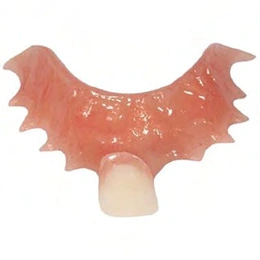
Dentures are removable appliances that replace missing teeth and surrounding tissue. They rest on the gum line and, in some cases, attach to remaining teeth. Dentures come in two main types: full dentures and partial dentures.
Full dentures replace an entire arch of teeth. On the other hand, partial dentures fill in gaps when some natural teeth remain. Both types restore basic chewing function and improve facial appearance.
Key Benefits of Dentures
- No surgery required: Dentures are a non-invasive tooth replacement option.
- Faster process: The overall treatment timeline is typically shorter than implants.
- Cost accessibility: Dentures are often more accessible for patients with budget concerns.
- Versatility: Partial dentures work well when several teeth are missing across different areas.
- Adjustable: Dentures can be relined or adjusted as the mouth changes over time.
Moreover, modern denture fabrication has advanced significantly. At Dentek Digital, we use digital workflows to design and mill removable prosthetics with improved fit and aesthetics compared to traditional methods.
What Are the Limitations of Dentures?
Dentures require daily removal and cleaning. They may also shift or loosen over time as the jawbone changes shape. Because dentures do not stimulate the bone like implants do, some bone resorption can occur gradually.
Additionally, patients may need periodic adjustments or replacements. However, with proper care and routine dental visits, dentures can serve patients comfortably for many years.
Implants vs Dentures: A Side-by-Side Comparison
Both options have real advantages. The right choice depends on the patient’s health, lifestyle, and goals. Therefore, it helps to look at the two options together.
- Stability: Implants are fixed and stable. Dentures are removable and may require adhesives.
- Bone health: Implants preserve bone. Dentures do not stimulate the jawbone.
- Maintenance: Implants are maintained like natural teeth. Dentures require separate daily cleaning.
- Surgery: Implants require a surgical procedure. Dentures do not.
- Timeline: Implants involve a longer treatment process. Dentures can be placed more quickly.
- Longevity: Implants typically last longer with proper care. Dentures may need replacement sooner.
In addition, implant-supported dentures offer a hybrid option. These combine the stability of implants with the coverage of a full denture. Many dental practices in Gilbert and Chandler are offering this solution to patients who want the best of both worlds.
The Role of the Dental Lab in Your Restoration
No matter which option a patient chooses, the quality of the restoration matters enormously. This is where a skilled digital dental lab makes a significant difference. At Dentek Digital, we use CAD/CAM technology to design and fabricate restorations with exceptional precision.
CAD/CAM stands for Computer-Aided Design and Computer-Aided Manufacturing. In simple terms, we use digital scans and milling machines to create restorations that fit precisely and look natural. This technology reduces human error and delivers consistent, high-quality results.
How Dentek Digital Supports Implant Restorations
We fabricate implant crowns, abutments, and implant-supported prosthetics for dental practices across the Greater Phoenix area. First, we receive a digital scan from the treating dentist. Next, our technicians design the restoration using advanced CAD software. Then, we mill or print the restoration and finish it by hand for a natural, aesthetic result.
We also offer digital implant planning services. This helps dental teams plan implant placement with greater accuracy before the procedure even begins. As a result, outcomes improve and complications are reduced.
How Dentek Digital Supports Removable Restorations
Our digital workflow also applies to removable prosthetics. We design and fabricate full and partial dentures using digital impressions and milling technology. This means better fit, better aesthetics, and a faster turnaround for dental practices in Scottsdale, Mesa, and beyond.
Additionally, we offer TattooTH, a unique identification system for removable prosthetics. This is especially valuable for patients in care facilities or those who manage multiple appliances.
What Dentists Should Consider When Presenting Both Options
When presenting implants vs dentures to patients, a thorough evaluation is essential. Every patient brings unique health history, bone quality, and personal priorities. Therefore, a one-size-fits-all recommendation rarely serves patients well.
Here are several factors to evaluate together:
- Bone density: Is there enough bone volume to support an implant?
- Overall health: Are there systemic conditions that could affect healing or candidacy?
- Number of missing teeth: Single tooth vs. full arch replacement changes the equation significantly.
- Patient lifestyle: Does the patient prefer a fixed or removable solution?
- Treatment timeline: How quickly does the patient need functional teeth?
- Budget and insurance: What coverage and financial options are available?
Moreover, patient education plays a huge role in satisfaction. When patients understand their options clearly, they are more likely to comply with care instructions and report positive outcomes.
Frequently Asked Questions: Implants vs Dentures
Are dental implants always better than dentures?
Not necessarily. Implants offer significant advantages in stability and bone health. However, dentures may be the right choice for patients who are not surgical candidates or who prefer a non-invasive option. The best choice depends on the individual patient’s needs.
How long does the implant process take compared to dentures?
The implant process typically takes several months from placement to final restoration. This includes healing time for osseointegration. Dentures, on the other hand, can often be delivered in a shorter timeframe. Therefore, patients who need quick results may prefer dentures initially.
Can a patient switch from dentures to implants later?
In many cases, yes. However, bone loss from wearing dentures over time can complicate implant placement. A dentist will need to assess available bone volume before recommending implants. Bone grafting may be required in some situations.
What are implant-supported dentures?
Implant-supported dentures use a small number of implants to anchor a full denture in place. As a result, the denture is far more stable than a traditional removable denture. This is a popular option for patients who want improved stability without individual implants for every tooth.
How does a digital dental lab improve the quality of my restoration?
A digital dental lab like Dentek Digital uses CAD/CAM technology to design restorations with precise measurements and consistent quality. Additionally, digital workflows reduce production time and improve fit accuracy. This translates to better outcomes and fewer adjustments for dental practices and their patients.
Partner with Dentek Digital for High-Quality Restorations
Whether your patients choose implants, dentures, or an implant-supported solution, the quality of the lab work directly affects their outcome. At Dentek Digital, we are proud to be a national leader in digital dentistry. We serve dental practices across Phoenix, Scottsdale, Gilbert, Chandler, Mesa, Tempe, and the entire Greater Phoenix area.
Our team combines advanced CAD/CAM technology with skilled craftsmanship. We deliver precise, beautiful restorations that dental professionals and their patients can rely on. Furthermore, we make the process simple and efficient for every practice we partner with.
Ready to elevate the quality of your restorations? Contact Dentek Digital today to send us a case or discuss your next implant or removable case with our experienced team.