
When patients face significant tooth loss, one question comes up more than almost any other: implants vs dentures — which is the better choice? It is a genuinely important decision, and it deserves a thoughtful answer. Understanding the key differences helps both patients and dental professionals make confident, well-informed choices.
At Dentek Digital, we are a digital dental lab based in Phoenix, Arizona. We partner with dentists and dental practices across the Greater Phoenix area, including communities like Mesa, Scottsdale, Chandler, and Gilbert. We fabricate high-quality dental restorations using advanced CAD/CAM technology, and we see firsthand how the right restoration changes outcomes for patients.
This guide breaks down both options clearly. We cover how each works, who benefits most, and what the fabrication process looks like from the lab side. Whether you are a dental professional researching options or exploring this topic for your patients, this guide is for you.
What Are Dental Implants?
Dental implants are titanium posts surgically placed into the jawbone. They function as artificial tooth roots. Once placed and integrated, they support crowns, bridges, or implant-supported dentures on top.
Implants are considered the gold standard for tooth replacement today. They closely mimic the look, feel, and function of natural teeth. Additionally, they help preserve the jawbone, which can deteriorate after tooth loss.
How Implants Are Fabricated at the Lab
At Dentek Digital, we use a fully digital CAD/CAM workflow to design and mill implant restorations. CAD/CAM stands for Computer-Aided Design and Computer-Aided Manufacturing. This technology allows us to produce restorations with exceptional precision and fit.
We also offer advanced digital implant planning services. This means dentists can collaborate with our lab before the surgical phase. As a result, the final restoration is planned from the start, improving accuracy and reducing chair time.
Our implant solutions include single crowns, implant bridges, and full-arch implant restorations. Furthermore, we support modern workflows like same-day and digital scan submissions, making the process smoother for dental practices across Phoenix and beyond.
What Are Dentures?
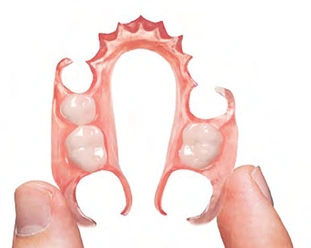
Dentures are removable appliances that replace missing teeth and surrounding gum tissue. They come in two main types: complete dentures for patients missing all teeth, and partial dentures for those missing only some teeth.
Dentures have been used successfully for generations. However, modern digital fabrication has significantly improved their fit, comfort, and aesthetics. Today’s dentures look far more natural than older versions did.
Digital Dentures and the CAD/CAM Difference
Traditional denture fabrication relied heavily on manual processes. Meanwhile, digital dentures use CAD/CAM milling or 3D printing to produce a more precise fit. This reduces the number of adjustments needed after delivery.
At Dentek Digital, we were one of the earliest adopters of the digital workflow in the country. Because of this, our removable solutions benefit from years of refined technique and advanced equipment. Dentists in Mesa, Scottsdale, Gilbert, and Chandler trust us to deliver dentures that look great and fit well.
Digital records also make it easier to reproduce or modify a denture if it is lost or damaged. That is a meaningful advantage for both the dental practice and the patient.
Implants vs Dentures: Key Differences to Know
Both options replace missing teeth, but they differ in several important ways. Here is a clear breakdown for easy comparison.
Stability and Comfort
Implants are fixed in the jaw. Therefore, they do not shift, slip, or require adhesives. Patients often report that implants feel the most like natural teeth. On the other hand, traditional dentures can shift over time, especially as the jawbone changes shape.
Implant-supported dentures offer a middle ground. They snap onto implant posts for added stability while still being removable for cleaning. Many patients in the Greater Phoenix area find this option highly appealing.
Bone Health and Long-Term Outcomes
One of the most significant advantages of implants is bone preservation. When teeth are lost, the jawbone begins to resorb, or shrink, over time. Implants stimulate the bone the way natural tooth roots do, slowing or preventing this process.
Traditional dentures do not offer this benefit. In fact, bone loss under a denture can cause the appliance to fit less well over time. Moreover, this can change the shape of the face and jaw gradually.
Maintenance and Care
Implant crowns are cleaned just like natural teeth — brushing, flossing, and regular hygiene visits. They do not need to be removed at night. Conversely, dentures require removal for nightly soaking and careful daily cleaning.
Both options require ongoing dental care and monitoring. However, implants generally require less day-to-day management once fully integrated.
Treatment Timeline
Implants involve a multi-phase process. First, the implant post is placed surgically. Next, a healing period allows the implant to integrate with the bone. Then, the final restoration is attached. The entire process can span several months.
Dentures, by comparison, can often be delivered more quickly. Additionally, immediate or temporary dentures are sometimes placed the same day as extractions. This makes dentures a faster path to tooth replacement for some patients.
Patient Candidacy
Not every patient is an ideal candidate for implants. Adequate bone volume, healthy gums, and overall health are important factors. Patients who smoke heavily or have uncontrolled systemic conditions may face additional considerations.
Dentures, on the other hand, are suitable for a broader range of patients. They do not require surgery, which makes them accessible to patients who may not tolerate or qualify for implant placement.
Implant-Supported Dentures: The Best of Both Worlds?
Implant-supported dentures are worth special attention. They combine the stability of implants with the affordability and accessibility of dentures. For many patients, they represent an excellent middle-ground solution.
These restorations use a small number of implants — often two to four — to anchor a full denture. Because of this, they offer significantly better stability than conventional dentures alone. Patients can eat, speak, and smile with greater confidence.
At Dentek Digital, we fabricate high-quality implant-supported denture components using our digital CAD/CAM workflow. Our team works closely with dentists across Phoenix, Mesa, and the surrounding area to ensure precise fit and natural aesthetics.
The Role of the Dental Lab in Your Restoration
Many patients and even some dental professionals focus primarily on the clinical side of tooth replacement. However, the dental lab plays a critical role in the final outcome. The quality of the restoration — its fit, strength, and appearance — depends largely on the lab’s technology and expertise.
Dentek Digital is recognized as a national leader in digital dentistry. We combine rapidly evolving CAD/CAM technology with skilled craftsmanship. Furthermore, we offer services like TattooTH and digital implant planning that give dental practices a real competitive edge.
When you partner with a high-quality digital lab, your patients benefit from restorations that are precise, durable, and esthetic. That is why dental practices across Greater Phoenix choose to work with our team.
Frequently Asked Questions: Implants vs Dentures
Are dental implants always better than dentures?
Not necessarily. Implants are an excellent solution for many patients, but they are not right for everyone. Patient health, bone volume, and personal preference all matter. A thorough clinical evaluation is essential before recommending one over the other.
How long do dental implants last compared to dentures?
With proper care, implants can last for many years and are considered a long-term solution. Dentures typically need to be relined, adjusted, or replaced over time as the jawbone changes. However, both options require ongoing dental monitoring.
What is the difference between a digital denture and a traditional denture?
Digital dentures are designed and fabricated using CAD/CAM software and milling equipment. This results in a more precise fit and better reproducibility. Traditional dentures rely on manual processes, which can introduce more variability in fit and appearance.
Can a patient switch from dentures to implants later?
In many cases, yes. However, bone loss from long-term denture wear may require a bone grafting procedure first. Your dentist can evaluate whether a patient is a good candidate for implant conversion.
How does Dentek Digital support dental practices with implant restorations?
We offer a full range of implant solutions, including crowns, bridges, and full-arch restorations. We also provide digital implant planning to support the surgical phase. Additionally, our digital workflow supports fast turnaround and precise fit for practices across Phoenix, Chandler, Gilbert, Scottsdale, and Mesa.
Choosing the Right Path for Your Patients
The implants vs dentures decision is never one-size-fits-all. Each patient brings unique health history, bone structure, lifestyle, and goals. As a dental professional, your clinical assessment and patient communication are the foundation of a great outcome.
What you can control is the quality of the restoration you deliver. Partnering with a skilled, technology-forward dental lab ensures that whatever path your patient chooses, the final product meets the highest standards.
At Dentek Digital, we are proud to support dental professionals across the Greater Phoenix area with precision restorations, advanced digital planning, and a collaborative approach to every case. We are here to make your work easier and your patients’ outcomes better.
Ready to elevate your restorations? Contact Dentek Digital today to send us a case and experience the difference a true digital lab partner makes.