
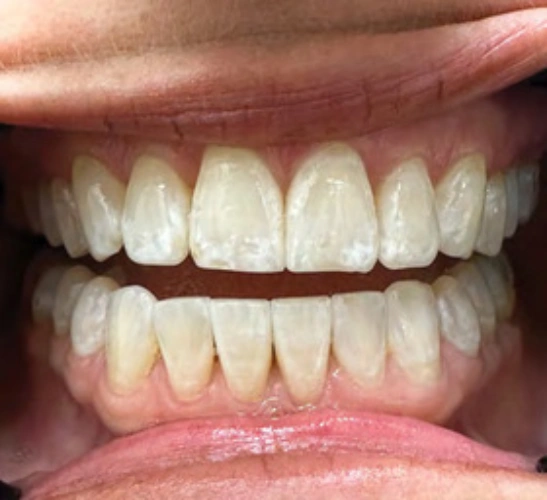
When patients lose one or more teeth, they face an important decision. The choice between implants vs dentures can shape their comfort, confidence, and oral health for years to come. Understanding each option clearly helps patients and their dental teams make the best choice.
Dental technology has advanced significantly in recent years. Today, digital fabrication makes both implant restorations and dentures more precise, more comfortable, and more lifelike than ever before. However, not every solution fits every patient equally.
This guide breaks down the key differences between implants and dentures. Additionally, it explains how a digital dental lab like Dentek Digital supports dentists across the Greater Phoenix, Arizona area — including communities like Mesa, Chandler, Scottsdale, and Tempe — in delivering outstanding restorations for their patients.
What Are Dental Implants?
Dental implants are titanium posts placed surgically into the jawbone. They act as artificial tooth roots. Because of this, they provide a stable, permanent foundation for crowns, bridges, or implant-supported dentures.
After placement, the implant fuses with the bone over time. This process is called osseointegration. As a result, the restoration feels and functions much like a natural tooth.
Types of Implant Restorations
Implants support several types of restorations. Therefore, they offer flexible solutions for many different clinical situations. Common options include:
- Single-unit implant crowns — replace one missing tooth
- Implant-supported bridges — replace multiple adjacent missing teeth
- Implant-supported overdentures — snap onto implants for added stability
- Full-arch fixed implant restorations — replace an entire arch with a fixed prosthesis
Each of these restorations can be fabricated digitally. Furthermore, CAD/CAM technology allows labs to design them with exceptional accuracy and consistency.
What Are Dentures?
Dentures are removable prostheses that replace missing teeth and surrounding tissue. They have been a trusted solution for generations. Moreover, modern digital dentures are far more precise and comfortable than their traditional counterparts.
Dentures rest on the gums rather than being anchored to the jawbone. They can be removed for cleaning. However, some patients experience fit challenges over time as the jawbone naturally changes shape.
Types of Dentures
There are several types of dentures available today. Each serves a different clinical need. Options include:
- Complete dentures — replace all teeth in an arch
- Partial dentures — replace several missing teeth while natural teeth remain
- Immediate dentures — placed right after extractions as a temporary solution
- Implant-supported overdentures — combine the removability of dentures with implant stability
Additionally, digital workflows allow labs to mill or 3D-print denture bases and teeth with precise fit and natural aesthetics. This results in a better experience for the patient and a more predictable outcome for the dentist.
Implants vs Dentures: Key Differences
Comparing implants vs dentures involves looking at several important factors. These include stability, bone health, maintenance, cost considerations, and candidacy requirements. First, let’s look at stability.
Stability and Function
Implants are fixed in the jaw. Therefore, they provide the highest level of chewing stability. Patients can eat most foods without restriction. On the other hand, traditional dentures may shift during eating or speaking, which can feel uncomfortable.
Implant-supported dentures offer a middle ground. They snap onto implants for improved stability. Meanwhile, they remain removable for easy cleaning and maintenance.
Bone Health
One significant advantage of implants is bone preservation. Because implants stimulate the jawbone like natural tooth roots, they help prevent bone loss. In contrast, traditional dentures do not stimulate the bone. As a result, the jaw can gradually shrink over time, affecting denture fit and facial appearance.
Maintenance and Care
Implant crowns and fixed bridges are cared for much like natural teeth. Brushing, flossing, and regular dental visits are essential. However, they do not need to be removed for cleaning.
Dentures require daily removal and cleaning with specific products. Additionally, they may need periodic relining or replacement as the jaw changes shape over time. For many patients, this is a manageable routine. For others, it can be a daily inconvenience.
Treatment Timeline
Implant treatment takes longer than dentures. First, the implant is placed surgically. Then, a healing period follows before the final restoration is attached. This process can span several months in total.
Dentures, in contrast, can often be delivered much more quickly. Furthermore, immediate dentures can be placed on the same day as extractions, giving patients a functional solution right away.
Patient Candidacy
Not every patient is a candidate for implants. Sufficient bone volume, healthy gums, and good overall health are all important factors. Therefore, a thorough clinical evaluation is essential before recommending implants.
Dentures are generally accessible to a wider range of patients. Moreover, they remain a highly effective and comfortable solution for many individuals, particularly when fabricated with modern digital precision.
How Digital Technology Improves Both Options
Digital dentistry has transformed both implant restorations and dentures. CAD/CAM technology — which stands for computer-aided design and computer-aided manufacturing — allows labs to create restorations with a level of accuracy that was simply not possible with older methods.
At Dentek Digital, we were among the earliest adopters of the digital CAD/CAM workflow in the country. Because of this, our lab has deep expertise in fabricating both implant restorations and digital dentures for dentists across the Greater Phoenix area, including practices in Scottsdale, Gilbert, Tempe, and Mesa.
Digital Implant Planning
One of our most advanced services is digital implant planning. This process uses 3D imaging data to map out implant placement before surgery. As a result, dentists can place implants more precisely and predictably. Furthermore, it reduces surgical time and improves outcomes for patients.
We also offer TattooTH, an advanced digital service for implant restorations. This innovative solution supports a more streamlined and accurate restoration workflow for dental practices.
CAD/CAM Milled and 3D-Printed Restorations
Whether we are fabricating an implant crown in Chandler or a full-arch denture for a practice in Tempe, digital fabrication ensures consistent quality. Milled zirconia crowns, printed denture bases, and digitally designed frameworks all benefit from the precision that CAD/CAM technology delivers.
Additionally, digital workflows make it easier to reproduce or adjust restorations when needed. This saves time for both the dental practice and the patient.
What Dentists Should Consider When Recommending Implants vs Dentures
As a dental professional, choosing between implants and dentures for a patient involves weighing multiple clinical and personal factors. Here are some practical considerations to guide the conversation:
- Bone density and volume — sufficient bone is essential for implant success
- Systemic health conditions — certain conditions may affect healing and candidacy
- Patient lifestyle and expectations — some patients prefer fixed solutions; others prefer removability
- Number of missing teeth — single-tooth loss vs. full-arch loss calls for different approaches
- Budget and timeline — both affect which solution is realistic for each patient
Moreover, involving your dental lab early in the planning process leads to better outcomes. At Dentek Digital, we collaborate closely with dentists to support case planning from the start.
Frequently Asked Questions: Implants vs Dentures
Are implants always better than dentures?
Not necessarily. Implants offer superior stability and bone preservation. However, dentures are a valid and effective solution for many patients, especially those who may not qualify for implants or prefer a removable option.
Can dentures be converted to implant-supported restorations later?
In many cases, yes. Some patients begin with dentures and later transition to implant-supported options as their clinical situation allows. Therefore, the initial choice does not always have to be permanent.
How does digital fabrication improve denture fit?
Digital dentures are designed using precise scan data. As a result, they tend to fit more accurately than traditionally made dentures. Furthermore, digital records make it easier to reproduce or adjust the prosthesis when needed.
What is digital implant planning and how does it help?
Digital implant planning uses 3D imaging to map out implant placement virtually before surgery. This allows for more accurate, predictable placements. Additionally, it supports the fabrication of surgical guides that help dentists place implants with greater confidence.
How do I send a case to Dentek Digital?
Sending a case to us is straightforward. We work with dental practices across the Greater Phoenix area, including communities in Mesa, Scottsdale, Gilbert, and beyond. Simply reach out to our team to get started with your next implant or denture case.
Partner with Dentek Digital for Your Next Case
Whether your patient needs a single implant crown or a full-arch denture, precision fabrication makes all the difference. At Dentek Digital, we combine advanced CAD/CAM technology with skilled craftsmanship to deliver restorations that meet the highest standards.
We are proud to serve dental practices throughout the Greater Phoenix, Arizona area. From Chandler to Scottsdale, Tempe to Mesa, our lab is ready to support your clinical goals and your patients’ outcomes.
Ready to get started? Contact Dentek Digital today to discuss your next implant or denture case and discover how our digital lab can elevate your practice.