
Understanding dental implants cost is one of the first questions patients ask their dentist. The answer is rarely simple. Many variables affect pricing, and those variables matter whether you are in a small town like Hampton Falls, NH or receiving your restoration from a high-tech digital lab. Therefore, it helps to understand what actually drives cost before setting expectations.
For dentists and dental practices, the quality of the lab fabricating the implant restoration plays a major role in the final result. Additionally, the technology used during fabrication directly affects fit, longevity, and patient satisfaction. As a result, choosing the right dental lab partner is just as important as the clinical treatment itself.
At Dentek Digital, we are a digital dental lab based in Phoenix, Arizona. We work with dentists and practices across the Greater Phoenix area — including Mesa, Tempe, Chandler, and Scottsdale — to deliver precise, CAD/CAM-fabricated implant restorations. In this post, we break down the key factors behind dental implant costs and how lab quality fits into the bigger picture.
What Factors Influence Dental Implants Cost?
Dental implant pricing is not one-size-fits-all. However, most cost breakdowns fall into a few consistent categories. Understanding these categories helps dentists educate their patients and set realistic expectations from the start.
The Surgical Component
The implant post itself is the titanium fixture placed directly into the jawbone. This surgical phase involves the oral surgeon or implant dentist, the implant hardware, and any necessary pre-surgical imaging. Because this step requires specialized training and equipment, it represents a significant portion of the overall cost.
Bone grafting is another factor. Some patients need grafting before implant placement due to insufficient bone volume. This adds to both the timeline and the overall cost of treatment.
The Restorative Component
Once the implant integrates with the bone, the restorative phase begins. This includes the abutment and the crown or prosthetic that sits on top. Furthermore, this is where the dental lab plays a critical role. The quality, material, and precision of the lab-fabricated restoration directly affect how the final product looks and functions.
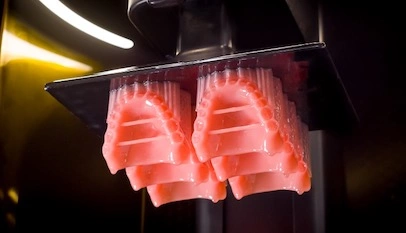
At Dentek Digital, we fabricate implant restorations using advanced CAD/CAM technology. This means digital scanning, computer-aided design, and precision milling or printing — not handmade guesswork. As a result, our restorations fit better and perform more predictably over time.
Material Selection
Material choice also affects cost. Zirconia crowns, for example, offer excellent strength and aesthetics. Meanwhile, other materials may come at different price points with different performance characteristics. Your dental lab can help you select the right material for each specific case. Additionally, newer materials available through digital fabrication often outperform older options in durability and appearance.
Why Lab Quality Matters More Than Most Patients Realize
Patients often focus only on the surgical fee. However, the lab-fabricated restoration is what they live with every day. A poorly fitting crown or prosthetic leads to complications, remakes, and patient dissatisfaction. Therefore, lab quality is a direct investment in long-term outcomes.
Digital dental labs like Dentek Digital use CAD/CAM workflows that eliminate many of the inaccuracies found in traditional lab processes. First, the dentist captures a digital impression or scan. Next, that scan is used to design the restoration on-screen with precision software. Then, the restoration is milled or printed from high-quality material blocks. Finally, skilled technicians finish and quality-check each piece before it ships.
This workflow reduces errors. It also shortens turnaround times and improves consistency from case to case. For dental practices in Phoenix, Gilbert, Scottsdale, or anywhere across the Greater Arizona area, this means fewer remakes and more confident case delivery.
CAD/CAM Technology and Implant Restorations
CAD/CAM stands for computer-aided design and computer-aided manufacturing. It is the foundation of modern digital dentistry. Because of this technology, labs can fabricate restorations with a level of precision that traditional methods simply cannot match.
For implant restorations specifically, the margin between the crown and the abutment must be extremely accurate. Even small errors create gaps where bacteria can accumulate. Additionally, occlusion — or how the teeth come together — must be dialed in correctly to avoid stress on the implant. CAD/CAM technology addresses both of these needs with consistency.
At Dentek Digital, we were among the earliest adopters of the digital CAD/CAM workflow in the country. Moreover, we continue to invest in evolving technology to stay ahead of the curve. Our Phoenix-based lab serves practices across the region with this advanced capability every day.
Types of Implant Restorations and Their Cost Implications
Not all implant cases are the same. Therefore, not all restorations carry the same fabrication complexity or associated cost. Understanding the differences helps practices communicate value to their patients.
Single-Tooth Implant Crown
This is the most straightforward implant restoration. A single crown is placed on one implant post. Because of this simplicity, it is generally the most affordable type of implant restoration. However, it still requires precise fabrication to function properly and match surrounding teeth aesthetically.
Implant-Supported Bridge
An implant-supported bridge replaces multiple missing teeth using two or more implants as anchors. This involves more complex design and fabrication. Additionally, the bridge must distribute bite forces evenly across all anchor points. As a result, both the clinical and lab work involved are more involved than a single crown.
Full-Arch Implant Restorations
Full-arch solutions like All-on-4 or All-on-X involve replacing an entire arch of teeth on four or more implants. These cases are the most complex and require close collaboration between the dentist and the lab. Furthermore, digital planning tools are essential for achieving ideal outcomes. Dentek Digital offers digital implant planning services specifically designed to support these advanced cases.
How Dentek Digital Supports Dentists With Implant Cases
We are not just a fabrication lab. We are a true partner to the dental practices we serve. From Tempe to Chandler and across the Phoenix metro area, we work closely with dentists to make implant cases more predictable and efficient.
Our services include a full range of implant restoration options. We also offer digital implant planning, which helps dental teams map out cases before treatment begins. Additionally, our TattooTH service offers a unique and innovative solution for implant identification and tracking — a capability that sets us apart in the industry.
Sending a Case to Our Lab
Working with Dentek Digital is straightforward. First, your practice captures a digital scan or prepares the case materials. Next, you send the case to our lab using our streamlined submission process. Then, our technicians review the case, design the restoration, and fabricate it using our digital workflow. Finally, the finished restoration ships back to your practice, ready for delivery.
We welcome practices from across the Greater Phoenix area — including Mesa, Gilbert, Scottsdale, and Tempe — to explore what our digital lab can do for their implant cases. Contact Dentek Digital to get started or to discuss a specific case with our team.
Educating Patients on Implant Value
One of the most effective things a dental practice can do is help patients understand value versus cost. Dental implants are a long-term investment. Moreover, when fabricated correctly, they can function like natural teeth for decades.
Patients who focus only on the lowest price often end up with poorly fitting restorations. Additionally, low-quality implant crowns may require replacement sooner, ultimately costing more over time. Therefore, helping patients see the bigger picture is an essential part of the treatment conversation.
As a dental professional, sharing information about your lab partner and the technology behind their restorations can also build trust. Patients appreciate knowing that their crown was designed digitally and fabricated with precision — not guessed at with traditional methods.
Frequently Asked Questions About Dental Implants Cost
What is the biggest factor affecting dental implant cost?
The surgical phase — including implant placement and any bone grafting — typically represents the largest portion of the total cost. However, the restorative component, including the lab-fabricated crown or prosthetic, also plays a significant role in both cost and outcome quality.
Does the dental lab affect the overall cost of an implant?
Yes. Lab fees are part of the restorative cost. Furthermore, labs that use advanced CAD/CAM technology may charge differently than traditional labs. However, the precision and quality of a digitally fabricated restoration often reduces remakes and complications, which saves money over time.
What materials are used for implant crowns?
Zirconia is one of the most popular materials for implant crowns today. It offers excellent strength and a natural appearance. Additionally, other materials like layered zirconia or PFM (porcelain-fused-to-metal) may be appropriate depending on the case. Your dental lab can help you select the best option for each patient.
How does digital implant planning reduce costs?
Digital implant planning helps map out the surgical and restorative phases before treatment begins. Because of this, dentists can place implants in positions that optimize the final restoration. As a result, cases go more smoothly, and the risk of costly complications decreases significantly.
Can a dental lab outside my region still serve my practice effectively?
Absolutely. Many dental practices work with labs that are not in their immediate area. Digital workflows make it easy to submit cases, communicate with technicians, and receive high-quality restorations by mail. Dentek Digital, for example, serves practices across the Greater Phoenix area — including Chandler, Mesa, Tempe, and Scottsdale — using fully digital case submission and communication.
Partner With a Digital Lab That Delivers Results
Dental implants cost is a topic every practice should be ready to address clearly and confidently. However, beyond the numbers, the quality of the restoration matters enormously. Therefore, choosing the right lab partner is one of the most important decisions a dental practice can make.
At Dentek Digital, we combine cutting-edge CAD/CAM technology with skilled craftsmanship to produce implant restorations that meet the highest standards in digital dentistry. We are proud to serve dental practices across Phoenix, Mesa, Tempe, Chandler, Gilbert, Scottsdale, and the surrounding communities. Moreover, we bring national-level expertise to every case we handle.
If you are ready to elevate your implant cases with a trusted digital dental lab, we are here to help. Explore your options, send us a case, or reach out to our team to discuss how we can support your practice and your patients.