
Understanding dental implants cost is one of the first things patients want to know before committing to treatment. It’s a significant investment, and the pricing can vary widely depending on several key factors. Whether you’re a patient researching your options or a dental provider looking to understand the lab side of implant restorations, this guide breaks it all down clearly.
Dental implants are widely regarded as the gold standard for replacing missing teeth. However, they involve multiple components and clinical steps. Therefore, the final cost reflects much more than a single procedure.
At Dentek Digital, we partner with dentists and dental practices across the Greater Phoenix, Arizona area — including communities like Mesa, Chandler, Gilbert, and Scottsdale — to fabricate precise, high-quality implant restorations. We understand how the lab side of implant work impacts both quality and cost.
What Makes Up the Cost of Dental Implants?
Dental implant pricing is not a single flat fee. Instead, it includes several individual components. Each one plays a role in the overall investment.
The Implant Post
The implant post is the titanium fixture that a surgeon places into the jawbone. This component acts as the artificial tooth root. It is typically one of the larger cost drivers in the entire process.
The Abutment
The abutment connects the implant post to the final restoration. It must be precisely designed and fabricated. A well-fitted abutment supports both function and long-term stability.
The Crown or Restoration
The final crown is the visible portion of the implant. This is where a digital dental lab like Dentek Digital plays a critical role. We use advanced CAD/CAM technology to design and mill restorations with exceptional precision and fit.
Surgical and Clinical Fees
Surgical placement, imaging, consultations, and follow-up care all contribute to the total. These fees vary by provider and geographic location. Additionally, bone grafting or sinus lifts may be needed, which increases the overall cost.
Why Dental Implants Cost Varies So Much
Many patients are surprised by the wide range in implant pricing. However, this variation makes sense once you understand what drives it. Several factors influence what a practice charges for implant treatment.
Geographic Location
Where a patient receives care affects pricing. Markets with higher overhead costs tend to have higher fees. For example, a dental practice in a premium Scottsdale neighborhood may price services differently than one in Gilbert or Chandler.
The Number of Implants Needed
A single tooth implant costs far less than a full-arch restoration. Furthermore, full-arch solutions like implant-supported dentures involve more components and more lab work. Therefore, multi-implant cases carry a higher overall investment.
Material Choices
The materials used for the restoration affect pricing as well. Zirconia crowns, for instance, are highly durable and esthetic. On the other hand, some materials may be more affordable but offer different performance characteristics.
Digital vs. Traditional Workflows
Practices using digital workflows often deliver more accurate, better-fitting restorations. Moreover, digital CAD/CAM technology can improve efficiency and reduce remakes. As a result, the value of digital dentistry often justifies its associated costs.
The Role of the Dental Lab in Implant Costs
Many patients focus on the clinical side of implant pricing. However, the dental lab plays a significant role in both quality and cost. At Dentek Digital, we are one of the earliest adopters of digital CAD/CAM workflows in the country.
We fabricate implant crowns, custom abutments, and implant-supported prosthetics for dental practices across Phoenix, Mesa, Tempe, and beyond. Our restorations are designed with precision and built to last.
CAD/CAM Technology and Precision
CAD/CAM stands for computer-aided design and computer-aided manufacturing. This technology allows our lab technicians to design restorations digitally and mill them from high-quality materials. Because of this, the fit and accuracy of our restorations are exceptional.
How Lab Quality Affects Patient Outcomes
A poorly fabricated restoration can lead to complications, remakes, and added costs. Therefore, choosing a high-quality lab matters. Dental practices that partner with Dentek Digital benefit from restorations that fit right the first time.
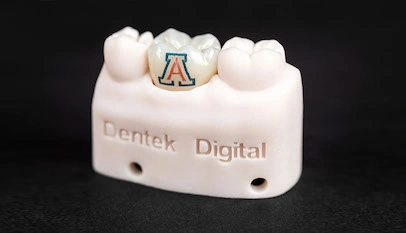
We also offer advanced services like TattooTH and digital Implant Planning to help practices deliver better results for their patients. These tools add real clinical value to the implant process.
Types of Implant Restorations and Their Cost Implications
Not all implant restorations are the same. The type of restoration a patient needs will directly influence the overall dental implants cost. Here is a breakdown of the most common options.
- Single-tooth implant crown: The most common implant restoration. It involves one post, one abutment, and one crown.
- Implant-supported bridge: Used when multiple adjacent teeth are missing. It relies on implants rather than natural teeth for support.
- Implant-supported denture: A full-arch solution that snaps onto or is fixed to multiple implants. It offers superior stability compared to traditional dentures.
- All-on-4 or All-on-X: A technique that uses a small number of implants to support a full arch of teeth. This is often a more cost-effective full-arch option.
Each of these options involves different amounts of lab work. Additionally, more complex cases require more clinical time and expertise. Therefore, costs increase with complexity.
Is the Investment Worth It?
Many patients ask whether dental implants are worth the cost. In most cases, the answer is yes. Implants are designed to last for many years with proper care. Moreover, they preserve bone, support facial structure, and function like natural teeth.
Traditional tooth replacement options like dentures or bridges require ongoing maintenance and eventual replacement. On the other hand, implants offer long-term value that often outweighs the initial investment.
Furthermore, the quality of the restoration matters greatly. A high-quality implant crown from a trusted digital dental lab reduces the likelihood of complications and remakes. As a result, both patients and practices benefit from investing in quality from the start.
How Dental Practices Can Manage Implant Lab Costs
For dental practices, managing lab costs is an important part of running a sustainable business. Partnering with the right lab can make a significant difference. Here are a few strategies practices in Phoenix and surrounding communities use.
- Use digital workflows: Digital impressions and CAD/CAM design reduce errors and remakes. This saves both time and money.
- Partner with a reliable lab: A lab that delivers accurate restorations the first time reduces costly chair time and adjustments.
- Plan cases thoroughly: Digital implant planning tools help practices anticipate challenges before surgery. Therefore, outcomes improve and surprises decrease.
- Standardize materials and components: Working with consistent materials simplifies workflows and can reduce per-case costs over time.
Dentek Digital supports dental practices across Chandler, Gilbert, Scottsdale, and the greater Phoenix area with all of these capabilities. We are a true partner in the digital dentistry workflow.
Frequently Asked Questions About Dental Implants Cost
What is the general price range for a single dental implant?
A single dental implant typically involves costs for the post, abutment, and crown. The total can vary widely based on location, materials, and the provider’s fees. It is best to request a detailed treatment plan from your dentist for an accurate estimate.
Does dental insurance cover implants?
Many traditional dental insurance plans do not cover implants. However, some plans offer partial coverage for certain components. Additionally, many dental offices offer financing options to help patients manage the cost.
Why do dental implant prices differ between practices?
Pricing differences reflect overhead, technology, materials, and clinical expertise. Furthermore, the dental lab a practice uses can influence the cost and quality of the final restoration. Higher-quality labs may charge more, but they often deliver better outcomes.
How does digital dentistry affect implant costs?
Digital dentistry streamlines the design and fabrication process. Because of this, it can reduce errors and remakes. Moreover, digital workflows often improve the accuracy of the final restoration, which adds long-term value.
What should I look for in a dental lab for implant restorations?
Look for a lab that uses modern CAD/CAM technology, offers a range of implant solutions, and has a strong track record with dental practices. Additionally, a lab that offers digital implant planning adds significant clinical support. Dentek Digital meets all of these criteria.
Partner with Dentek Digital for High-Quality Implant Restorations
Dentek Digital is a nationally recognized digital dental lab based in Phoenix, Arizona. We were among the first labs in the country to adopt a fully digital CAD/CAM workflow. Today, we serve dental practices across the Greater Phoenix area, including Mesa, Tempe, Chandler, Scottsdale, and Gilbert.
Our implant solutions include custom abutments, implant crowns, implant-supported bridges, and full-arch restorations. We also offer TattooTH and digital Implant Planning for practices that want to elevate their clinical workflow. Furthermore, we combine advanced technology with skilled craftsmanship to deliver restorations that fit precisely and perform reliably.
If you are a dental professional looking to improve your implant restoration outcomes, we are ready to help. Contact Dentek Digital today to send us a case or discuss how we can support your practice with industry-leading digital dental lab services.