
Finding the right dental implant specialist is one of the most important decisions a patient can make. Implants are long-term investments in oral health, function, and confidence. Because of this, every step of the process — from planning to final restoration — needs to be precise.
Dental practices that work with a high-quality digital dental lab gain a real advantage. Advanced CAD/CAM technology allows labs like Dentek Digital to fabricate restorations that fit accurately and look natural. As a result, dentists can deliver better outcomes for their patients.
Whether you are a dentist exploring implant services or a patient learning about the process, this guide covers what you need to know. We will walk through how modern digital workflows support implant success from start to finish.
What Does a Dental Implant Specialist Do?
A dental implant specialist focuses on replacing missing teeth with implant-supported restorations. These restorations mimic the look, feel, and function of natural teeth. Furthermore, they help preserve the jawbone and surrounding tissue over time.
The process involves placing a titanium post into the jawbone. Then, a custom-fabricated crown or prosthetic is attached on top. The final restoration must fit precisely to function properly and look natural.
The Role of the Dental Lab in Implant Cases
Many people focus on the surgical side of implants. However, the lab work is equally critical. A skilled dental lab fabricates the crown, bridge, or full-arch restoration that the patient actually sees and uses every day.
At Dentek Digital, we use advanced CAD/CAM technology to design and mill restorations with exceptional accuracy. Additionally, our team reviews every case carefully before fabrication begins. This attention to detail helps dentists deliver results that last.
Common Implant Restoration Types
Implant cases vary widely in complexity. Therefore, dental labs must be equipped to handle a full range of restoration types. The most common include:
- Single-tooth implant crowns — used when one tooth is missing
- Implant-supported bridges — used to replace multiple adjacent teeth
- Full-arch restorations — used when an entire arch needs replacement
- Implant-retained dentures — removable prosthetics anchored by implants
Each type requires precise design and fabrication. Moreover, the materials used must be carefully matched to the patient’s bite, tissue color, and overall esthetics.
How CAD/CAM Technology Supports Implant Success
CAD/CAM stands for computer-aided design and computer-aided manufacturing. In simple terms, it means using digital tools to design and mill dental restorations. This technology has transformed how dental labs work.
Traditional lab methods relied heavily on manual techniques. Today, digital workflows allow for far greater precision. As a result, restorations fit better, require fewer adjustments, and are delivered faster.
Digital Implant Planning
One of the most powerful services a modern dental lab can offer is digital implant planning. This process uses 3D imaging and digital design tools to plan implant placement before surgery. Therefore, dentists can anticipate challenges and plan the final restoration before the first appointment.
Dentek Digital offers digital implant planning as part of our advanced services. This helps our partner dentists approach complex cases with greater confidence. In addition, it reduces the risk of surprises during surgery or restoration.
Precision Milling and Material Selection
Once the design is finalized, CAD/CAM milling machines cut the restoration from a solid block of material. Common materials include zirconia, lithium disilicate, and PMMA. Each material has specific strengths depending on the case.
For example, zirconia is extremely strong and works well for posterior implant crowns. On the other hand, lithium disilicate offers excellent esthetics for front teeth. Our lab team helps dentists select the right material for each unique case.
Why Dentists Partner with a Digital Dental Lab
Dental practices that work with a digital lab enjoy several advantages. First, turnaround times are often faster because digital workflows eliminate several manual steps. Additionally, communication is clearer because cases can be shared digitally.
Moreover, the accuracy of CAD/CAM restorations reduces chairside adjustment time. This means patients spend less time in the chair during delivery appointments. Furthermore, it improves the overall patient experience.
Supporting Practices Across the Greater Phoenix Area
Dentek Digital proudly serves dental practices across the Greater Phoenix, Arizona area. We work with dentists in Phoenix, Scottsdale, Mesa, Tempe, Chandler, and Gilbert, among other communities. Our team understands the needs of busy dental practices throughout the region.
We were among the earliest adopters of the digital CAD/CAM workflow in the country. Because of this, we bring deep experience and refined processes to every case. Dentists across the Phoenix metro trust us with even their most complex implant restorations.
TattooTH and Advanced Esthetic Options
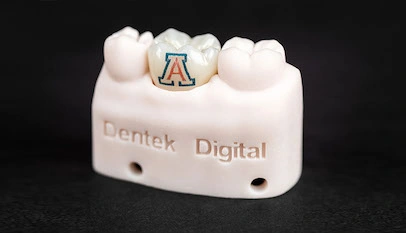
Beyond standard restorations, Dentek Digital offers TattooTH — an advanced esthetic service that allows custom artistic details to be added to restorations. This option is growing in popularity for patients who want a truly personalized result. Additionally, it helps dental practices offer something truly unique to their patients.
Tips for Dental Practices Managing Implant Cases
Whether you are new to implant dentistry or expanding your services, a few best practices can improve outcomes. These tips apply to general dentists, prosthodontists, and oral surgeons alike.
- Start with a digital scan. Intraoral scans provide more accurate impressions than traditional PVS materials. They also integrate seamlessly with digital lab workflows.
- Plan the restoration first. Backward planning — designing the final crown before placing the implant — leads to better surgical positioning. Therefore, communication with your lab early in the case is essential.
- Choose the right material for the location. Posterior cases need strength. Anterior cases often prioritize esthetics. Your lab partner can guide this decision.
- Use a lab that specializes in implants. Not every lab has deep implant expertise. Working with a specialist lab ensures your restorations are fabricated by technicians who understand implant mechanics.
- Communicate clearly and early. Send detailed case notes, photos, and shade information. Clear communication reduces remakes and delays.
What Makes a Great Implant Restoration?
A great implant restoration does several things well at once. It fits precisely at the implant interface. It matches the surrounding teeth in color and shape. Additionally, it withstands the forces of chewing over many years.
Achieving all of this requires skilled lab technicians working with high-quality materials and modern equipment. Furthermore, it requires a strong partnership between the dentist and the dental lab. When both sides communicate well, the result is almost always better.
The Importance of Margins and Fit
Margin fit is one of the most critical factors in implant crown success. A poorly fitting margin can allow bacteria to accumulate, leading to complications over time. Therefore, digital milling — which produces extremely tight tolerances — is a major advantage.
At Dentek Digital, every restoration is checked for fit, esthetics, and accuracy before it leaves our lab. We take pride in delivering restorations that are ready to seat with minimal adjustment. As a result, our partner dentists save time and deliver better care.
Esthetics and Patient Satisfaction
Patients judge implant success largely by how the restoration looks and feels. Therefore, esthetics matter as much as function. A crown that blends seamlessly with surrounding teeth gives patients confidence in their smile.
Our lab technicians are trained in shade matching and custom characterization. In addition, we offer advanced esthetic services for patients with specific cosmetic goals. The result is a restoration that patients are proud to show off.
Frequently Asked Questions About Dental Implant Restorations
What is the difference between a dental implant specialist and a general dentist?
A dental implant specialist typically has advanced training in implant placement and restoration. However, many general dentists also place and restore implants successfully. The key is experience, training, and access to high-quality lab support.
How long does it take to get an implant crown from a digital dental lab?
Turnaround times vary by lab and case complexity. However, digital labs like Dentek Digital typically fabricate restorations faster than traditional labs. Most implant crowns can be completed within a few business days of receiving a complete case.
What materials are used for implant crowns?
The most common materials include zirconia, lithium disilicate, and PFM (porcelain-fused-to-metal). Zirconia is the most popular today because of its strength and natural appearance. Your dental lab can help you choose the best material for each patient’s needs.
Can a digital dental lab help with full-arch implant cases?
Yes. Full-arch restorations, such as All-on-4 or similar designs, require precise digital planning and fabrication. Dentek Digital has the technology and expertise to support these complex cases. Additionally, digital implant planning helps ensure accurate outcomes before surgery begins.
How does digital implant planning benefit patients?
Digital implant planning allows dentists to visualize the final result before surgery. Therefore, implants can be placed in the ideal position for the planned restoration. This reduces complications and helps ensure a better long-term outcome for the patient.
Partner with Dentek Digital for Your Implant Cases
Dental practices across the Greater Phoenix area — including Scottsdale, Mesa, Chandler, Tempe, and Gilbert — trust Dentek Digital for precision implant restorations. Our team combines advanced CAD/CAM technology with skilled craftsmanship to deliver results that dentists and patients love.
We offer a full range of implant restoration services, from single crowns to full-arch cases. Furthermore, our digital implant planning service helps your team approach complex cases with greater confidence. We are proud to be a recognized leader in digital dentistry.
Ready to elevate your implant cases? Contact Dentek Digital today to send us a case or discuss how we can support your practice. Our team is ready to help you deliver exceptional outcomes for your patients.