
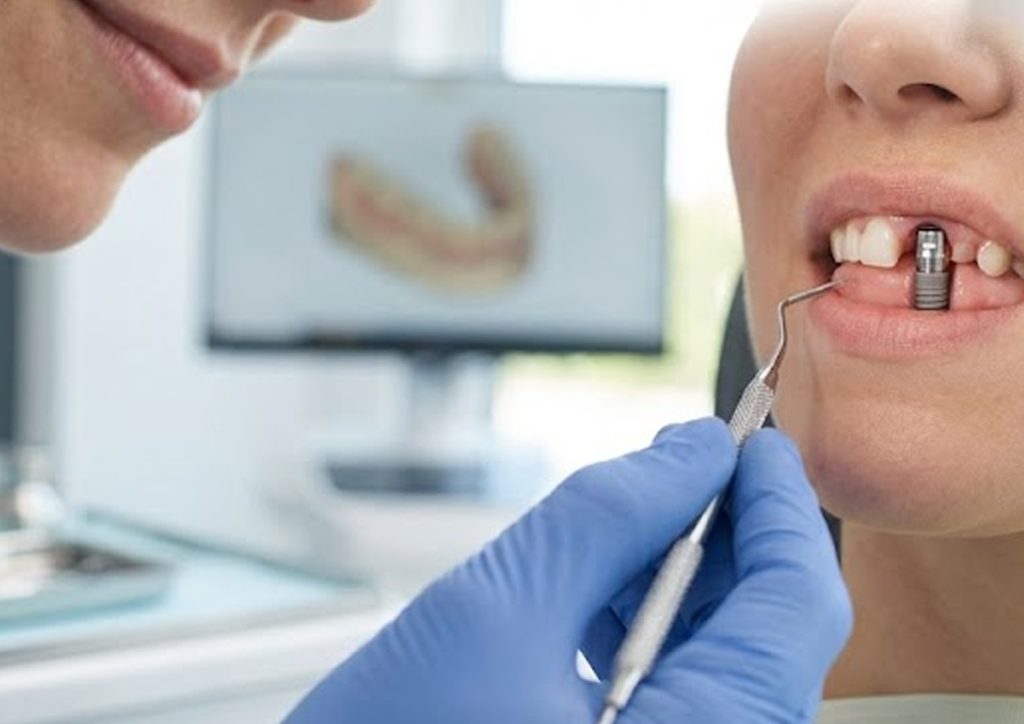
Dental Implants are one of the most reliable and long-lasting solutions for replacing missing teeth. However, many Carefree patients want to understand what happens after implant placement. Healing is a critical part of the process, and knowing what to expect at each stage can provide reassurance and confidence.
At Dentek, our experienced Implant Specialists use advanced 3D digital planning and precision surgical techniques to support smooth, predictable healing. Additionally, our Boutique Dental Lab designs restorations that align perfectly with your bite once integration is complete.
Here’s a clear breakdown of the healing stages Carefree patients should understand before beginning Dental Implant treatment.
Stage 1: Immediate Post-Surgery (First 24–72 Hours)
First and foremost, the initial healing phase begins immediately after implant placement.
During surgery, the titanium implant post is carefully inserted into the jawbone. Because modern techniques prioritize precision and minimally invasive placement, most patients experience mild to moderate discomfort rather than severe pain.
In the first few days, you may notice:
- Mild swelling
- Minor bruising
- Slight bleeding
- Tenderness at the implant site
These symptoms are normal and typically subside within several days.
To promote healing, we recommend:
- Resting for the remainder of the day
- Using cold compresses as directed
- Eating soft foods
- Avoiding vigorous rinsing
- Following prescribed medication instructions
Because our Implant Specialist uses 3D-guided planning, tissue trauma is minimized, which supports faster recovery.
Stage 2: Early Soft Tissue Healing (First 1–2 Weeks)
Next, the gums begin to heal around the implant site.
During this stage, the surface tissue closes and stabilizes. Sutures, if used, are typically removed or dissolve within one to two weeks.
Most Carefree patients can:
- Return to normal daily activities quickly
- Resume gentle brushing near the area
- Gradually reintroduce firmer foods
Although the gums may appear healed, the deeper bone integration process is still underway.
Maintaining excellent oral hygiene during this stage is essential to prevent infection and support proper healing.
Stage 3: Osseointegration (3–6 Months)
This stage is the most critical for long-term implant success.
Osseointegration is the biological process in which the titanium implant fuses with the surrounding jawbone. During this period, bone cells grow around and attach directly to the implant surface.
Because this fusion creates a stable, permanent anchor, patience during this phase is important.
Typically:
- Lower jaw implants integrate in about 3–4 months
- Upper jaw implants may require 4–6 months
During this time, the implant remains undisturbed beneath the gum tissue or under a temporary healing cap.
In some cases, immediate load Dental Implants may allow for a temporary crown to be placed sooner. However, our Implant Specialist carefully determines whether this approach is appropriate based on bone density and stability.
Stage 4: Abutment Placement
Once osseointegration is complete, the next step involves attaching the abutment.
The abutment connects the implant post to the final crown. In some cases, the abutment is placed during the initial surgery. In others, a minor follow-up procedure exposes the implant and secures the connector.
After abutment placement:
- The gums heal around the new component
- Soft tissue contours form naturally
- The site prepares for final restoration
This phase typically involves minimal discomfort and short recovery time.
Stage 5: Final Crown Placement
Finally, once healing is complete, the custom restoration is placed.
Our Boutique Dental Lab crafts each crown to replicate:
- Natural enamel translucency
- Proper tooth proportions
- Balanced bite alignment
- Seamless gum integration
At this stage, your Dental Implant functions like a natural tooth.
Because placement and design are carefully coordinated, the final result feels secure, comfortable, and stable.
Healing Factors That Influence Recovery
Every patient heals differently. Several factors influence implant healing, including:
- Bone density
- Overall health
- Smoking habits
- Oral hygiene practices
- Compliance with post-operative instructions
At Dentek, we monitor healing progress closely to ensure predictable results.
For patients who grind or clench their teeth, we may recommend custom Splints and Nightguards after final restoration to protect the implant and maintain bite stability.
Signs of Healthy Healing
During each stage, healthy healing typically includes:
- Gradual reduction in swelling
- Minimal discomfort after the first week
- No persistent bleeding
- Stable gum tissue appearance
If you experience unusual pain, swelling, or signs of infection, contacting our office promptly ensures early intervention.
Fortunately, complications are uncommon when implants are placed by an experienced Implant Specialist using advanced planning technology.
Why Carefree Patients Choose Dentek
Residents of Carefree, as well as Scottsdale, Paradise Valley, DC Ranch, Gainey Ranch, Fountain Hills, Troon North, North Scottsdale, South Scottsdale, and Tucson, trust Dentek for precision-driven implant care.
We provide:
- Experienced Implant Specialist expertise
- Advanced 3D digital diagnostics
- Careful monitoring throughout healing
- Custom restorations from a Boutique Dental Lab
- Protective Splints and Nightguards
- Comprehensive long-term follow-up care
Our focus is ensuring every stage of implant healing progresses smoothly and predictably.
Schedule Your Implant Consultation Today
If you’re considering Dental Implants in Carefree and want to understand the healing process fully, we’re here to guide you every step of the way.
At Dentek, we design personalized treatment plans focused on safety, comfort, and long-term success.
Schedule your consultation with Dentek today and take the first step toward lasting confidence and exceptional dental care.